

Jeremy Heims wants to do things right. That is what he tells me at the beginning of my tour of the business he runs with his family members.
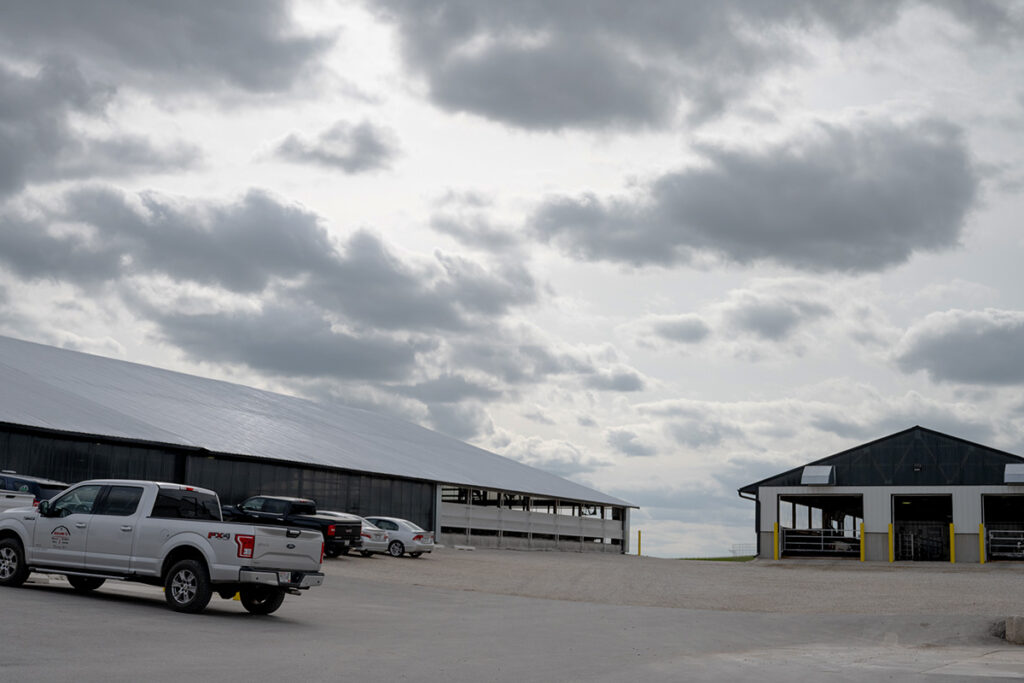
Heims Hillcrest Dairy, Heims Brothers Custom and Heims Excavating is located in Algoma. The dairy farm is a concentrated animal feeding operation, or CAFO, permitted since 2010. They have 1,283 animal units and produce 24 million gallons of milk every year. Construction is underway to double the dairy’s size.
Heims, myself, Brittiny Mueller, the DNR wastewater specialist that is responsible for oversight of CAFOs in Kewaunee and Door counties, a photographer, my three children,and a barn kitten are gathered in Heims’ office for the tour. The kitten repeatedly jumps on his desk and Heims shoos it off while answering questions.
“Not on my desk, buddy,” he says.
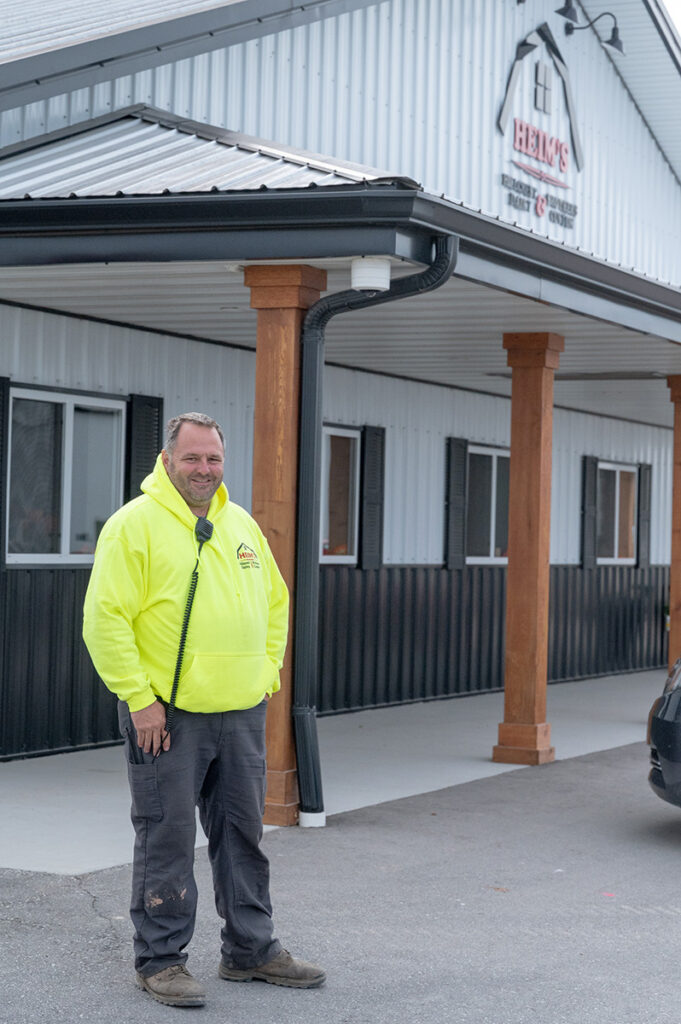
Heims says it was not easy for the farm to go from a small dairy in debt in the early 2000s to a large operation employing more than 30 people across three different industries – dairy, waste disposal and heavy equipment. It began by prioritizing goals, he says.
“We want to be profitable, but not chase profit,” Heims says. “We chase family goals, and our goal is to be part of the community and do the right things all the time, and we live by that every day.” He points to a sign in his office that reads, “Trying to build something special for the next generation. -Jeremy Heims.”

Stepping outside the clean and quiet offices, kitchen and meeting spaces inside the main building, I am struck by the smell. Not manure, not livestock, but a hoppy aroma, similar to how a brewery smells.
The smell is grain and animal feed, stored under tarps covered in tires to hold them down and keep moisture from getting in. I can look across the street from the feed storage area to the farm’s manure storage pits.
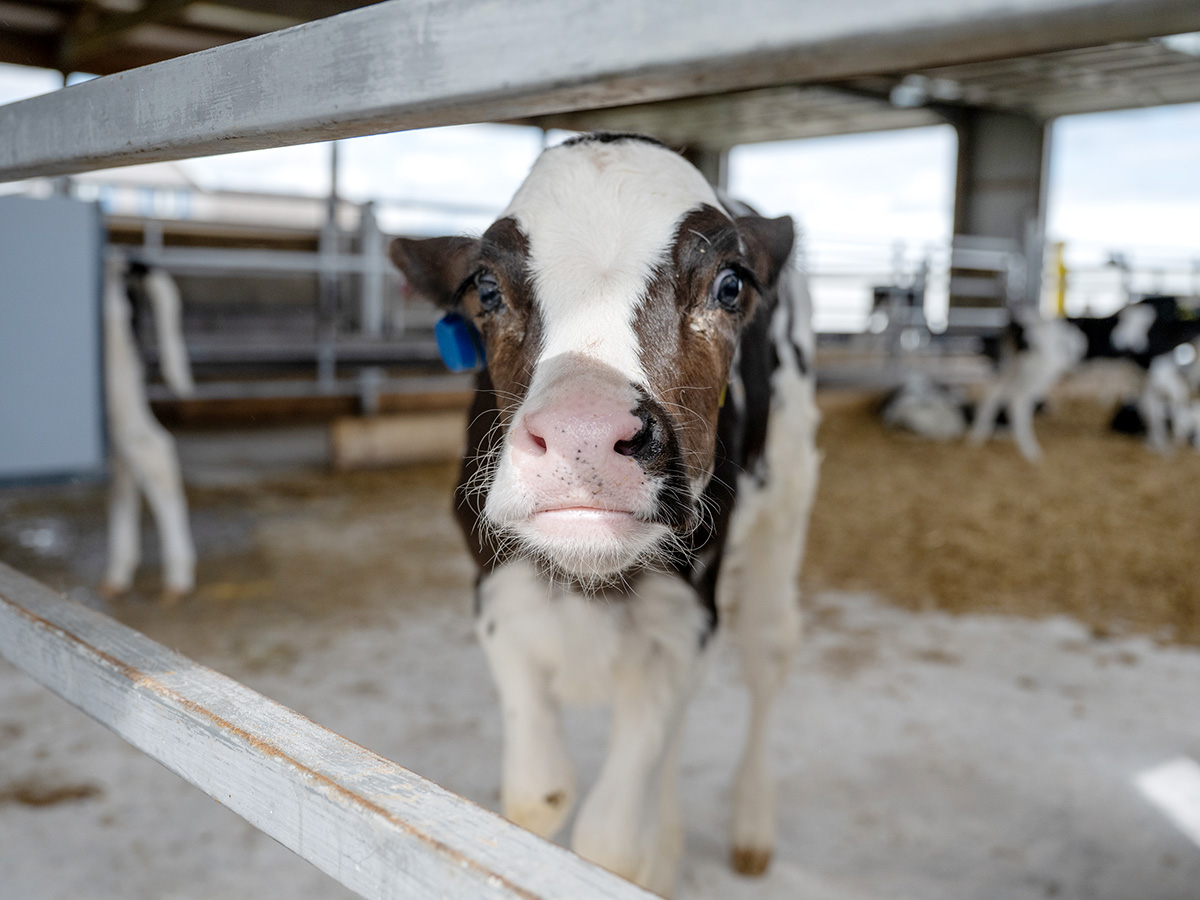
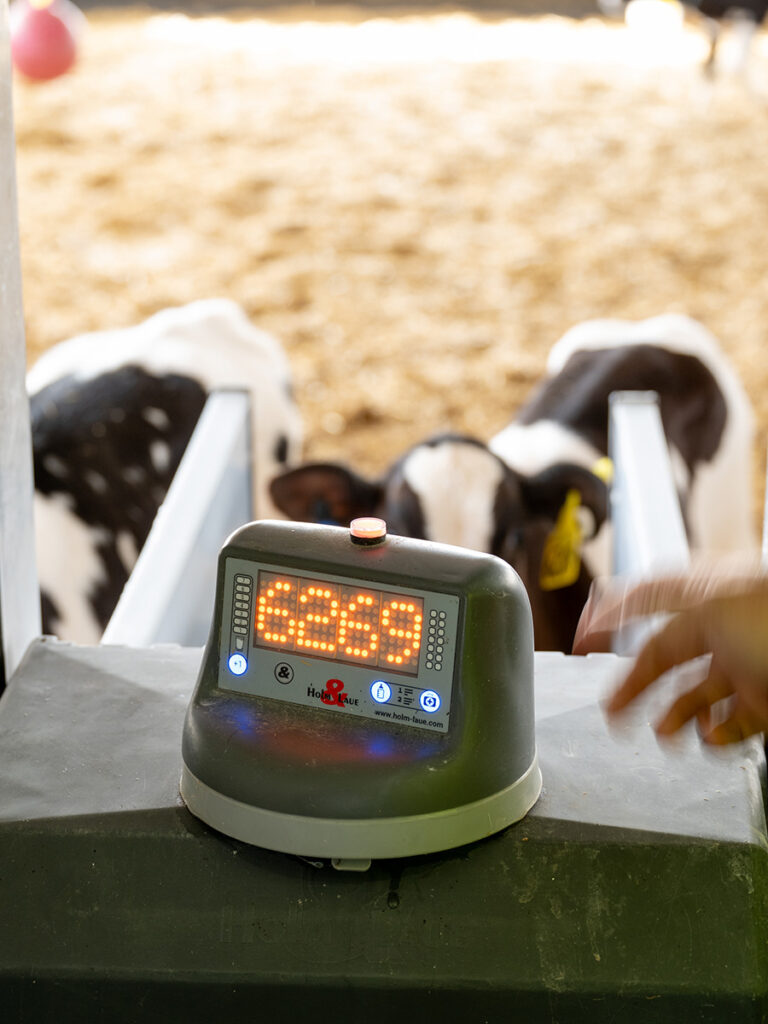
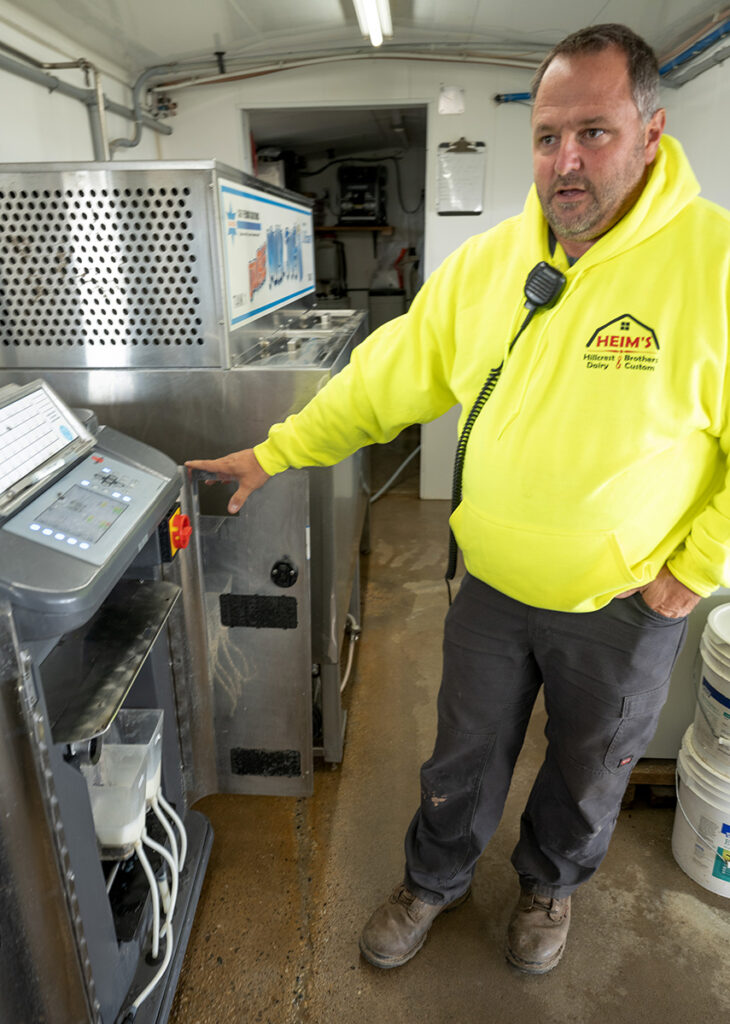
The calf barn is the second stop on the tour. Newborn calves are kept alone in a temperature-regulated room until their immune systems are developed enough to move to the calf pens, where they are put in pairs. Next they go to the calf barn, Heims explains. They are fed by an automated system that allows the calves to suckle from a nipple versus drinking out of a bucket. The calves have sensor tags in their ears that send a signal to the feeding machine to begin mixing the calf’s milk and heating it to 106 degrees.
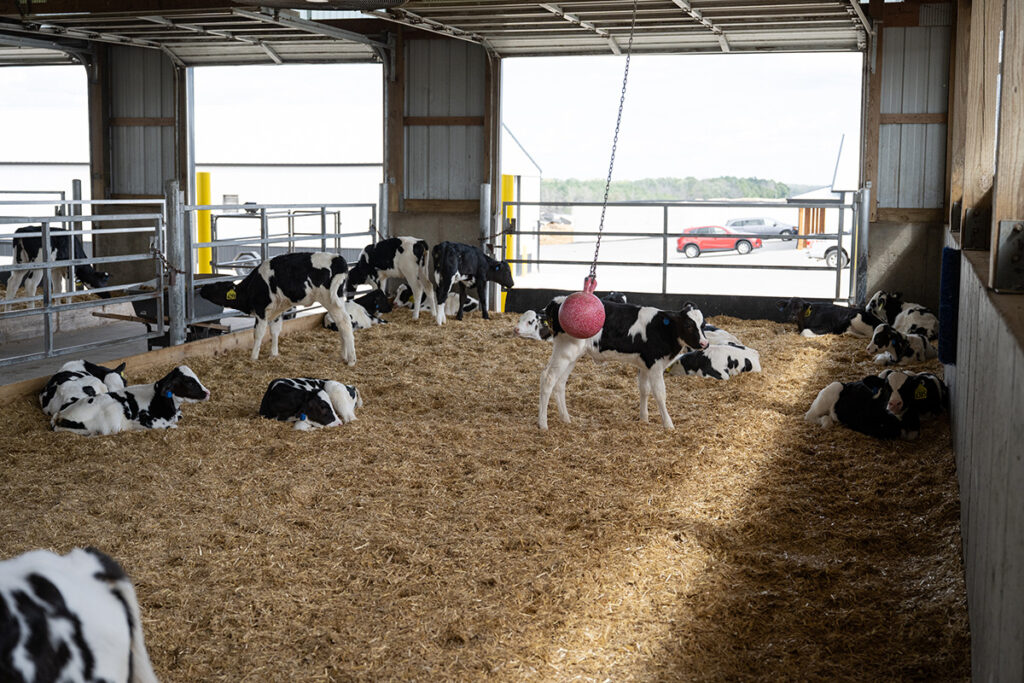
There are about two dozen calves in the barn. They romp around with each other, lie down in their bedding, and eat. Employees responsible for calf care are encouraged to “get down to the calves’ level” to experience firsthand how comfortable – or not – the barn is for them, Heims says.
All the calves in the calf barn are female. Male calves are sold to beef and veal farms. The market for a male calf has changed dramatically in a few years, according to Heims. They now get around $1,300 for one. It was not long ago that dairy farmers had to pay to have the male calves transported to a beef farm, he said.
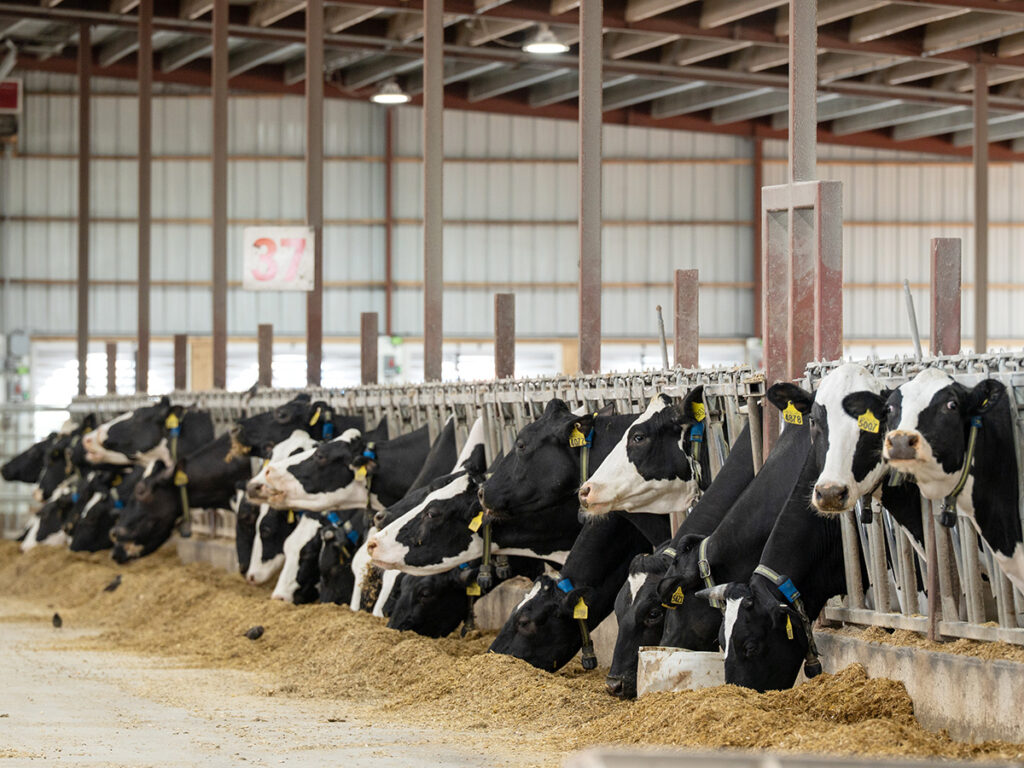
From the calf barn, the tour continues to the main barn. It is a free-stall barn, where cows are not confined in stalls, but able to roam around, eating, resting or using a self-grooming brush hanging from the ceiling to scratch themselves.
The cows’ feed, the content of which is determined by a nutritionist, is “pushed up” and freshened 12 times a day by small skid steer so it is easily accessible to the cows, Heims says.
Automated side panels and 175 industrial fans regulate the temperature, humidity and air flow in the barn. Wind speed is kept between seven and 10 miles an hour to keep flies away. The barn floor is covered in a mixture of straw and sand to keep the cows from standing and laying on hard concrete. The sand prevents the animals from slipping and falling. The bedding is replaced regularly, Heims says.
Cameras using AI technology identify when a cow is about to give birth and employees remove that cow to a separate area for birthing animals. Sick animals are also kept out of the regular herd.
There is one cow separated from the rest while we are there. She is lying on the floor, and while Heims is talking, an employee is putting a hip sling made of a strong flexible material and held by chains around the cow’s body. The chain is connected to a tractor, which attempts to hoist the animal into a standing position.
The cow is sick, Heims explains, and if they cannot get her to stand and move around, she will likely need to be euthanized. “It’s ugly,” Heims says, but a reality of the job, and his team will do anything they can to help her. Between two employees, the cows are monitored 24 hours a day.
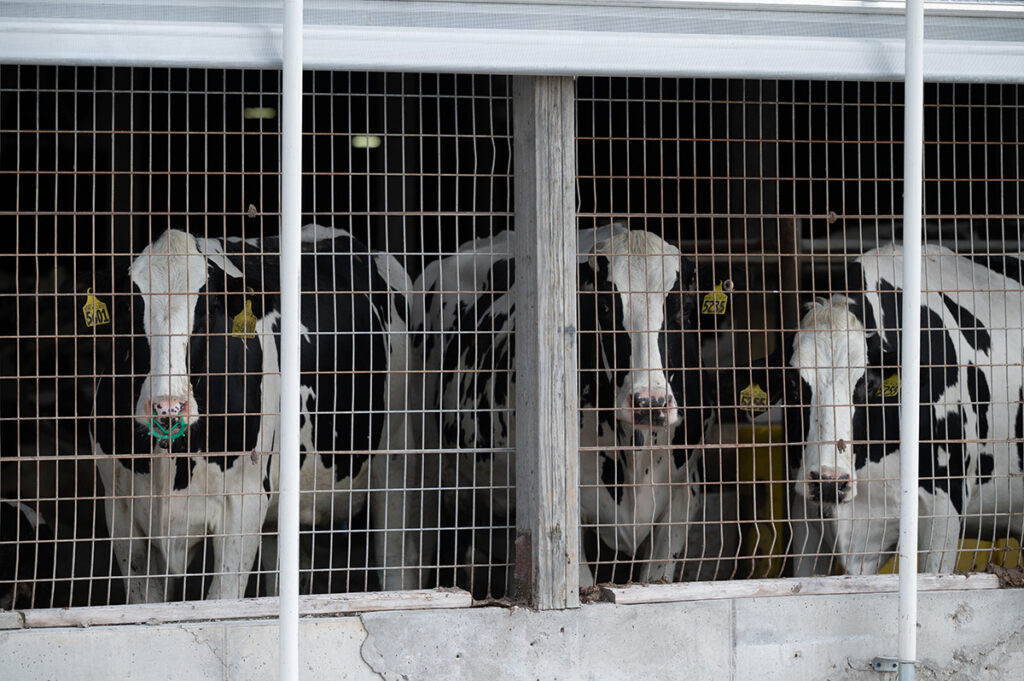
The cows are also inside 24 hours a day, a criticism leveled at the industry by animal welfare advocates.
Animal comfort and health is one of their top priorities, according to Heims.
Cows in a field are often stressed, by heat and by flies, and by herd dynamics when male cows are present, he says. Heims’ cows experience none of that stress, and contented cows produce higher-quality milk, he adds.
Spending money on technology for animal care is just good business, according to Maureen Muldoon. Muldoon, as a hydrologist and geologist who has been studying Door and Kewaunee counties’ water and geology for decades, is more interested in how farms are going above and beyond to protect the environment, she says,
In 2015, Heims started their custom hauling business, hauling and land-spreading manure for other farms, both CAFOs and smaller farms. They currently have 15 custom clients, according to Heims. Those clients spend anywhere from $2,500 to millions of dollars annually to have Heims pump wastewater from their storage areas, haul, and then land-spread it on the 26,000 acres they are contracted with, he said.
Heims has an agronomist who goes through every one of their own 1,950 acres each week and samples the soil and manure for nutrients.
“This plays a big part in making sure our (nutrient management) plans are followed,” Heims says.
Heims demonstrates the technology the custom business uses for all of its spreading fields. Through an app on his smartphone, he can pull up any tractor in any field, or any truck on the road.
Real time data that is uploaded to the cloud, shows the user how many gallons are being applied and where, the rate of application, setback distances, field geology and more, he says.
Neither Heims nor anyone else can adjust or change any of the data, he adds, except for 10 acres of leeway that he can adjust for situations when the tractors have to go back and forth over a field.
Efficiency and following regulations to protect soil and water is something Heims has been committed to for over a decade, he says.
“We decided we’re going to stop doing things cheap and just get the right equipment and the right technologies and spend the money to do things efficiently and the right way,” he says. “It’s just really brought us to a new level … to what we accept and how we purchase things … we need to be better if we want to see this industry really brought to the next level.”
Heims Brothers Custom has had to cut ties with some of their customers, he adds.
“We ended up quitting some of them because they’d ask us to do things that aren’t right,” Heims says.
On a spectrum of farms, Heims is at the far end and striving to be the “gold standard” in the industry, he says. When the farm’s most recent expansion plan was submitted for review, an Environmental Protection Agency official told Heims it was “cleanest, best written plan” they had ever seen, he adds.
While Heims is candid about his own farm, he unwilling to call any others out specifically, he says, but some CAFOs and smaller farms in the state are not all operating at the same level. .
Heims understands public mistrust of big agricultural operations, he says, especially after Kewaunee County wells were contaminated by manure and agricultural wastewater about ten years ago.
“We were the manure pit of the world,” Heims says. In the decade since, regulatory steps have been taken to rectify the situation and improve the county’s groundwater. Heims says his farm is one of several that belong to Peninsula Pride Farms, an organization of farmers developing sustainable agriculture practices to protect the environment. There are over 50 members representing farms of all sizes.
The farms are interested in earning back public trust, and transparency is a key to success, according to Heims. His farm is open to the public and anyone can request a tour.
“Send them to me, I’d love to explain things to them,” Heims says. “We’re an open book here.”