

A list of resources for affected residents can be found here.
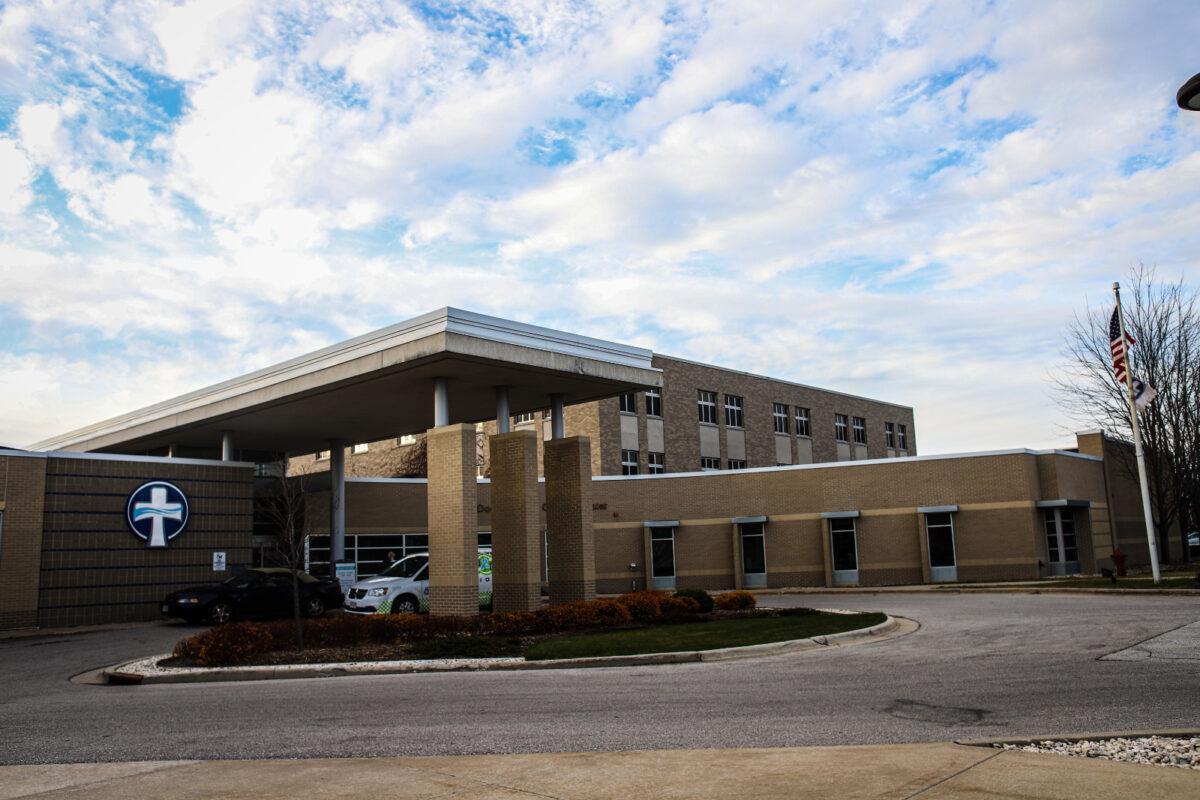
Roughly 3,700 Door County Medical Center patients will need to switch health insurance providers in order to continue to receive medical care at the hospital. UnitedHealthcare is dropping DCMC as a provider network for its Medicare Advantage policyholders by Jan 1.
The health insurance corporation’s decision is also putting a strain on local resource providers.
DCMC received a letter from UnitedHealthcare in August, according to Brian Stephens, the hospital’s CEO. The letter was “cryptic,” Stephens said, but it indicated the hospital would be dropped as an in-network provider from all United Healthcare Medicare Advantage plans.
Hospital administration followed up with a phone call with state representatives for the industry giant, where it was confirmed that DCMC would not be covered by United’s Medicare Advantage policy as of Nov. 1.
The hospital convinced the insurance company to extend that cancellation date to Jan 1, Stephens said, in order to give people time to make a decision and still be covered by insurance while they do.
Stephens said from the hospital’s perspective, being dropped came “out of the blue.”
There were no stalled contract negotiations or disagreements about reimbursement rates, like the hospital’s near-split with Common Ground Healthcare Cooperative last year. In fact, nothing in DCMC’s contract with United changed at all, Stephens said.
“Frankly when we read our contract we don’t think they should be able to do that without an amendment,” he said. “Their legal team reads it differently. They have a lot more resources. We don’t want to get into a legal battle, we don’t want to disrupt our entire contract.” Most of Door County’s biggest employers are tied to UnitedHealthcare’s commercial health insurance in some way, he added.
DCMC sent letters to the 3,700 patients treated by the hospital and related providers who were covered under United’s Medicare Advantage policy. That number is equivalent to about 10 percent of the county’s population, but some of those patients are visitors and seasonal residents with the policy who sought health care at DCMC, Stephens said.
At least 5,282 people are enrolled in Medicare Advantage plans in Door County, out of 9,954 total enrolled in Medicare, or about 53 percent. Local numbers reflect national statistics, which show 54 percent of Medicare recipients having an Advantage plan.
United Healthcare also sent letters to policy holders affected by the change. A company spokesperson provided an official statement about the decision in response to questions from Knock.
The number of people affected by the change , most of them older than 65, now have to either switch providers or switch insurance plans, a daunting task for many people, according to Jessica Flores.
Flores is the only elder benefits specialist on staff at the Door County Aging and Disability Resource Center. She is also a SHIP counselor for the state of Wisconsin. Counselors with SHIP, which stands for the State Health Insurance Assistance Program, provide free, unbiased and confidential advice to Medicare consumers. Flores said the ADRC has received a lot of calls and inquiries since the change.
“It’s a hot topic,” she said.
What’s the Advantage?
Medicare Advantage Plans differ from traditional Medicare plans in a couple of ways.
Traditional Medicare includes hospital and medical coverage and requires separate, more expensive supplements for vision, dental and prescription coverage. Medicare Advantage is run by private companies, like United, and they bundle original Medicare with the extra benefits for vision, dental and prescription drugs.
Medicare Advantage plans are also restricted to an in-network provider, and often prior authorizations, where doctors and treatment providers must get insurance company approval before administering treatment or testing, are required.
“They’re going to deny claims more heavily than a Medicaid or traditional Medicare plan would,” Stephens said. “It’s not always clear what’s covered and what’s not, until you send the claim and get the denial. You have to jump through all of those hoops.”
Behind the scenes, there are issues with Medicare Advantage plans for DCMC, he added. Traditional Medicare pays the hospital based on the hospital’s costs and then does a settlement at the end of the year. If a hospital or provider was underpaid, they get a settlement, “kind of like a tax return,” Stephens explained.
Medicare Advantage plans, on the other hand, pay based on the provider’s rates from the previous year and there is no settlement process.
“So they’re always a year behind, because of inflation. They’re always kind of underpaying us our costs,” he said. The popularity of Medicare Advantage plans has been steadily increasing, and now those policy holders make up about half of DCMC’s Medicare patients.
“As we’ve seen the Advantage program grow over the years, we’ve essentially seen less reimbursement for what we do,” Stephens said.
The split was entirely UnitedHealthcare’s decision, however, he said, and DCMC would have been happy to continue working through their issues with the Advantage plans because ultimately the hospital “just wants to serve our patients.”
Only one other provider network has been dropped from UH’s Medicare Advantage plans in the state. Mayo Clinic providers in Wisconsin are out-of-network as of Jan 1.
During a call with company representatives, DCMC was told United was “exiting low-performing areas.”
This does not refer to DCMC’s quality of care or patient experience, he added. It was clear that UnitedHealthcare is trying to cut a large number of their Medicare Advantage patients out of coverage because it is not profitable enough for the company, he said.
“They’re not making as much money in Door County as they would in other areas, but I doubt they’re actually losing money,” he said.
UnitedHealthcare brought in $371.6 billion in revenue in 2023, and $400.3 billion in 2024, a record for the company. Its net profit in 2023 was about $22 billion. That number decreased in 2024 for a variety of factors, but the company still earned about $14 billion in profits last year.
The health insurance company is also in the midst of responding to a civil and criminal probe by the U.S. Department of Justice into its Medicare Advantage business practices, though it is unknown whether that has anything to do with the company dropping provider networks.
Stephens expressed the hope that Medicare Advantage patients will switch plans, either to another insurance company or to traditional Medicare, in order to stay with DCMC.
“We want people to stay here, stay local for their care, and continue to trust us,” he said.
Ripple effect
The UnitedHealthcare decision is impacting not just policy holders, but local agents and resource agencies, as well, according to Stephens. He said they have been hearing from contacts being overwhelmed by questions and people needing assistance navigating the change.
Phones have been ringing a lot more frequently at the ADRC since news got around of the change, according to Flores. The elder benefits specialist has a long history of seeing changes like this, how they evolve, and how they impact the community, she said. Prior to coming to the ADRC in 2022, her whole career has been focused on income maintenance and eligibility for public programs, she said.
Medicare alone is a complex system, she said.
“The number one comment I hear is, why is this so complicated?” she said, and it can be stressful for people to navigate Medicare once they turn 65 and are eligible.
In fact, the ADRC sponsors a “Welcome to Medicare” class that is also recorded on their website. There are two versions of Medicare, dozens of plans within those versions, and many “complex nuances” to understand, Flores said.
People are worried, she said, worried about keeping their providers, not wanting to change, not being able to change. The sheer number of choices and decisions is causing people anxiety, she said.
That anxiety is exacerbated, like so much else, by Door County geography.
“We’re one border short of a full island,” Flores said.
People do not have the option to just go to another hospital easily, she said. When companies make changes like this, they are ignoring how much it means to people to stay with their trusted providers, she added, and just because there are other options does not mean there is going to be a cost-effective plan for some people. .
While the Medicare website is clear and helpful, Flores said, many of her clients are not tech-savvy, or do not have reliable internet access to navigate their options online. Even just setting up a new online account might be difficult.
Benefits specialists are great “red-tape cutters,” she said, and often she serves as tech support. That works out well when she has enough time to work with each person. Despite a handful of volunteers, most of whom are seasonal Door County residents, Flores is fielding hundreds of inquiries and requests for assistance by herself.
She said she wished policy decision-makers would make a more simplified and affordable version of Medicare. Supplements to traditional Medicare are not cheap, especially as people age and need more care.
“Medicare itself is expensive for people on a fixed income,” Flores said. “The dream would be that it becomes much more affordable.”
Next steps for affected policy holders
Stephens said he hopes all patients will change their plan in order to remain with DCMC, but he is especially concerned for the hospital’s cancer patients. DCMC partners with St. Vincent Cancer Center in Green Bay and offers cancer treatment in Door County.
Right now cancer patients can receive treatments like radiation therapy or infusions, which can be necessary several times a week, without traveling to Green Bay, Stephens said.
Cancer patients who stay with their United Healthcare Medicare Advantage insurance will still be able to receive cancer treatment at DCMC, because St. Vincent remains in-network, but any labs, tests or radiology would need to be done somewhere else to be covered.
The extra travel and scheduling could be excessive, Stephens said.
“That would be incredibly, incredibly frustrating for us and for our patients,” he said.
DCMC has sent out a letter alerting all United Healthcare Medicare Advantage patients in their database. United Healthcare has also sent a letter to policy holders. Flores advised people affected by the change to contact a SHIP counselor, the ADRC, contact Medicare directly via the website or toll-free line, or another trusted insurance benefits agent.
For affected policy holders who are worried, experiencing stress or confusion about the change, Flores said it might be comforting to know “you have options … You know, there’s a lot of people dealing with the same thing, so we’ll all figure it out. You have lots of people to help you … You’re not alone. Go talk with someone.”
If someone is struggling to afford their health care anytime, she said talking to a benefits counselor or agent can help, and an individual might be eligible for Medicaid or the Medicare Savings Program and not even know it.
“There are many people out there that probably qualify, that have never applied,” Flores said.
Regardless of whether someone is affected by the UnitedHealthcare change, Flores said it is important for anybody on Medicare to do a “checkup” on their policy information every fall. Call an insurance agent, a resource agency like the ADRC, or the company or agency holding the policy itself and ask questions, she said.
“These are the providers I’m hoping to keep. These are the medications I need covered,” Flores said. “You might be able to save $1,000 just by switching to another company. Sometimes people don’t know you have the right to change.”
“Networks aren’t guaranteed,” she added. “They can switch at any time.“
Open enrollment for Medicare began Oct. 15 and runs until Dec. 7. If you have a Medicare Advantage plan and miss that window, she said, there’s a second window that runs January through March.