

In June, Wisconsin child care programs are losing state funding many have been relying on since the Covid pandemic. Industry advocates are warning that this “fiscal cliff” will potentially put hundreds of facilities out of business or require them to raise tuition for families already struggling to pay.
While Door County programs are going to weather this storm, according to local industry professionals, the centers are impossible to sustain without fundraising, and the workforce remains undercompensated.
Advocates say child care is critical infrastructure, and extensive research shows the positive impact of quality care on children’s development. But most families cannot afford what it would cost to pay child care workers adequately.
The business model is broken, according to United Way of Door County Child Care Community Coordinator Molly Gary, and the loss of state funding is highlighting the problem. (Disclosure: Knock receives grant funding from United Way of Door County. Donors have no editorial control over Knock.)
In fact, the merger of two Door County facilities in 2024 was more an issue of affordability rather than availability, she said, a result of that broken child care model.
Child Care Counts: What it did and did not do
During the Covid pandemic, the federal government designated funds to subsidize child care programs.
In Wisconsin the funding is called Child Care Counts. It was intended to cover providers’ operating budgets while they weathered the pandemic, according to a statement from the Administration for Children and Families in 2021.
The state legislature extended funding to child care providers after the federal funding ran out in 2023. It was extended once again as “bridge funding” until the end of June 2026.
Child Care Counts funds raised wages and provided some stability to the industry, according to Gary. Some centers were able to increase wages, she added, but being a child care worker is one of the lowest paid professions.
She described one early education teacher in Door County who is leaving the job for one in retail.
“When you’re leaving a profession to move to unskilled labor that is able to pay more and provide benefits, that is a sad state of affairs,” Gary said.
In Wisconsin, the average hourly wage across employment sectors is $28.34, but lead teachers in child care centers are paid an average of $13.55 per hour, according to the Wisconsin Department of Children and Families. More than half of child care centers nationally do not offer benefits.
Federal funding, Child Care Counts and state bridge funding did not solve the overall problems in the industry. Lack of benefits and unlivable wages, long term financial stability, and fundraising dependence are still issues.
Advocates have been sounding the alarm about what will happen to child care after the funds dry up this June. One in four child care centers are in danger of closing, according to a brief released recently by the Wisconsin Early Childhood Association.
Door County’s licensed child care centers will remain open, thanks to careful planning and fundraising, Gary said.
Weathering the storm
“All of our centers knew this was on the horizon,” Gary said, and she does not anticipate tuition increases or staff layoffs.
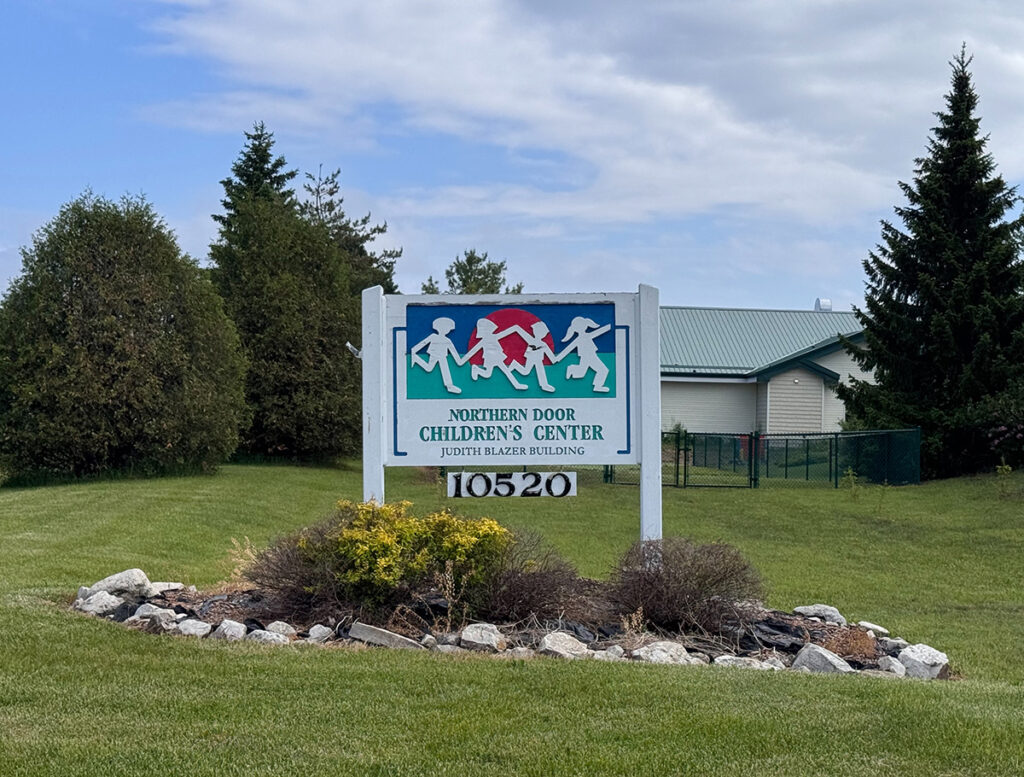
There are three licensed full-time child care centers in Door County: Doorway to Learning in Sturgeon Bay, Northern Door Children’s Center in Sister Bay, and Washington Island Child Care on Washington Island. The YMCA in Sturgeon Bay also provides part-time child care.
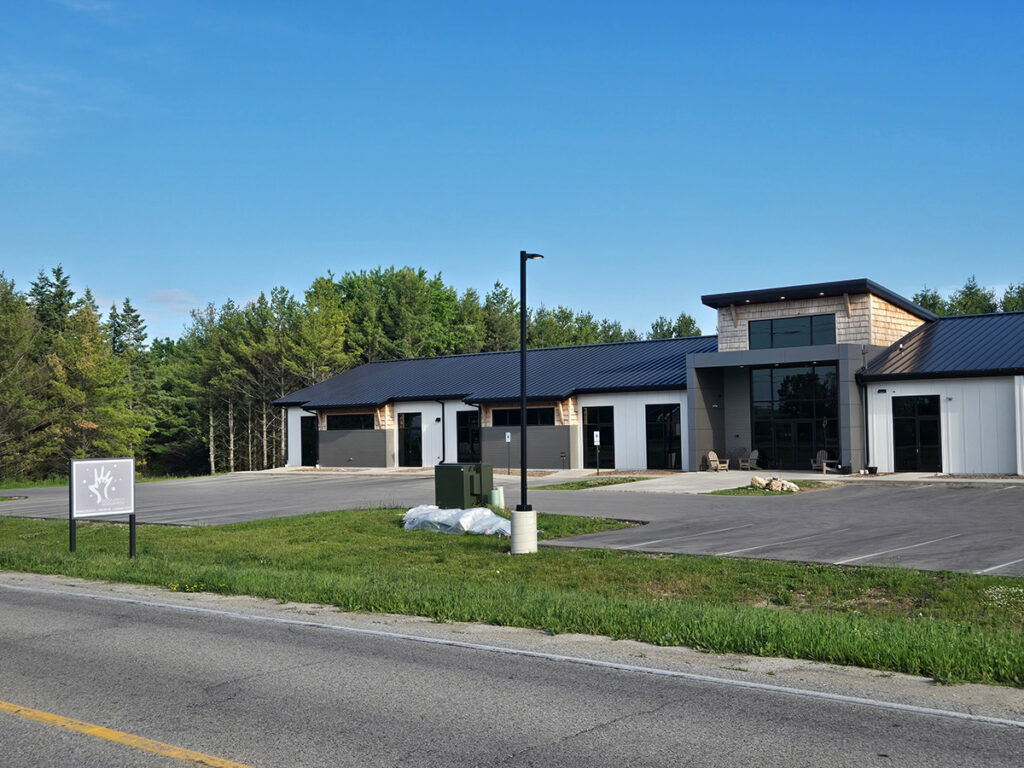
Michelle Jacobson is the executive director at Doorway to Learning. She said the center has been “creative” with renting out its other building. DOCO Child Development Center and Children First merged into one location to become Doorway to Learning.
The other thing keeping local child care afloat is philanthropy, according to leaders.
Northern Door and Doorway to Learning are both fundraising for about 25 percent of their operating budgets, Jacobson said. In order to create a sustainable workforce with good pay and benefits, fundraising would have to be even more, she added.
Washington Island Child Care, which opened in fall 2024, has not received any Child Care Counts funding, according to Jake Dahlke, the center’s board president. About half of its revenue comes from fundraised contributions as opposed to tuition, according to Board Treasurer Alex McDonald.
WICC’s tuition is $50 per day or $25 for a half-day. The center accepts families who receive state subsidies through the Wisconsin Shares program. That program will not experience any funding disruption when Child Care Counts ends.
Northern Door has a rate of about $52 per day for infants, and less for toddlers or older children. Northern Door also accepts state subsidies and provides some scholarships for families.
Doorway to Learning has the highest tuition of the three programs, at $300 per week for infants and about $240 per week for older toddlers and preschoolers. Doorway also provides some scholarships and accepts subsidies.
The YMCA charges $65 to $120 per week for its preschool readiness program, and $25 to $87 per week per child for school-age wraparound care, depending on whether it is morning or afternoon care, how many days the child attends the program and whether they are YMCA members. Wraparound care is only offered for a few hours before and after the school day ends.
“We are dependent on fundraising to make our child care centers work, and that should not be the case,” Gary said.
In the past five years, child care in Door County has also become more centralized, she added, and parts of the county now have to travel farther for licensed care. Communities south of Sturgeon Bay, in particular, lack child care.
“We’ve lost some of the community-oriented feel,” Gary said.
The Door County Child Care Task Force meets regularly to work on fundraising and making child care sustainable. It has about 35 members, according to Gary.
“We have four stable, well-managed, well-run boards for child care centers,” she said. “We’re in good shape overall. … It’s a good investment and a good return on investment (for donors), but I hope someday they won’t have to do it.”
All of Door County’s state-licensed child care programs are non-profit organizations, making it relatively unique. There are no nonprofit child care programs in Ozaukee, Kewaunee, and Bayfield counties, all comparable in size and rural status to Door County. Larger neighboring counties have more child care programs in total, but only a few are nonprofits. There are two nonprofit childcare programs in Marinette, three in Oconto, three in Manitowoc, and four in Sheboygan.
Availability versus affordability
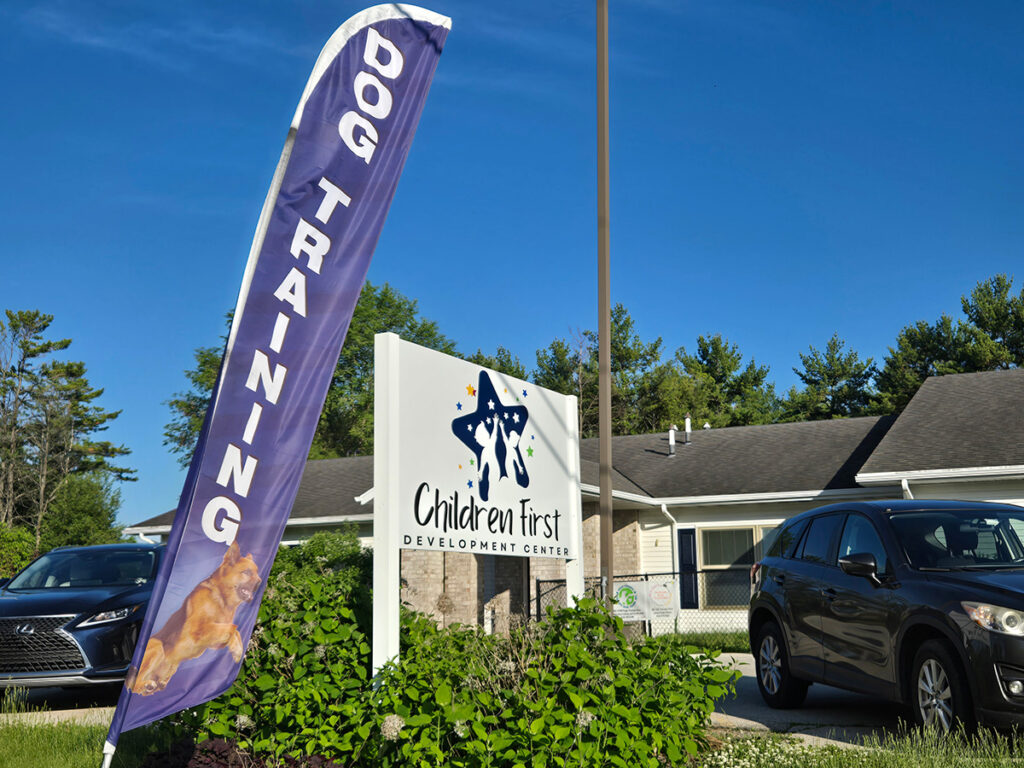
In 2024, DOCO Child Development Center and Children First merged despite surveys, waitlists and the community showing a high demand for more child care spots.
There were a lot of complicated issues at that time, according to Gary, including high staffing costs and the centers’ debt. The merger combined administration and supply expenses, and allowed them to rent out the second facility and offer school age care in the summer, she said.
Gary said so much money was going to wages—80 percent of the centers’ income—there was hardly anything left for operating costs, let alone capital improvements.
One example was when a freezer at Children First malfunctioned. It was a $6,000 expense, she said.
“They don’t have money in the margins for things that are bound to happen in any business or building operation…it totally throws you off,” she said.
The merger came down to affordability rather than availability. In 2021, United Way of Door County received a $3.5 million Workforce Innovation grant from Gov. Tony Evers’ allocation of American Rescue Plan Act funds. Some of that money went to child care expansion, after need was identified through surveys and waitlists.
The DOCO Child Development Center on Gordon Road in Sevastopol was constructed using the grant money. The center broke ground on March 2023. Children First, located on Egg Harbor Road in Sturgeon Bay, was already operating.
By March 2025, just two years later, DOCO and Children First merged to become Doorway to Learning at the Gordon Road location. Children First’s former home is still used for school-age child care in summer months and rented out to other organizations.
Soon after DOCO opened, the need seemed to dry up, Gary said. Those people needing child care did not disappear, she said. Rather, they made other arrangements because child care is simply not affordable.
“Families are paying as much as 25 percent of their income or more,” she said. “If we could bring it down to 12-15 percent of income, there’d be more families looking for child care.”
With high costs suppressing demand, some centers like WICC keep tuition as low as possible, but then everything depends on fundraising.
Tuition is generally highest for the youngest children because more staff members are needed for them. In order to be state-licensed, centers are required to adhere to strict teacher to child ratios: 1 teacher to 4 infants, 1 to 6 toddlers, 1 to 8 young preschoolers, and up to 1 to 18 for older children.
Before the Covid pandemic, by 2017, almost all of Wisconsin public school districts offered 4-year-old kindergarten, essentially causing centers to lose the age group that funded them, according to Gary.
Door County economy specifics
“Child care workers do the work that makes all other work possible,” Gary said.
The last census for Door County, with data from 2021 and earlier, showed there was a six percent decrease in participation in the workforce for women with children six years old and younger, she said. The county’s child care task force believes this indicates that families are choosing to have one adult stay home rather than pay for child care, she added, and that is very likely a trend that contributed to the drop-off in demand here.
A 2023 report by Forward Analytics also indicated that child care costs are driving more women to leave the workforce. The Wisconsin-based, nonpartisan research organization, using data up to 2021, identified women between the ages of 35 and 44 leaving the workforce at higher rates than other demographics.
“This group may be opting to leave the workforce in larger numbers for family reasons, the inability to find a child care opening, or due to the rising cost of child care,” according to the report.
The seasonal economy in Door County is another hurdle for child care sustainability, Gary added. It is difficult for families who work seasonally to find care and be able to afford it. Often seasonal wages are going directly to child care costs in a zero-sum game, she said.
Door County is seeing the results of this every summer, Gary said. Restaurants and other businesses that cater to tourists have cut their hours or limited their availability because they are losing staff. Many of those employees cannot afford child care, she surmised.
Many Baby Boomers are employed in “regular” industries—not seasonal—she said, and they are retiring. “If they are looking at younger people to fill those jobs, then child care will become an issue,” she said.
The Door County Economic Development Corporation has been building awareness of the issue, and employers are beginning to pay attention. A couple of local employers are part of the child care task force, Gary said.
A valuable profession
Study after study shows the value of high-quality early childhood care and education. The positive impacts are demonstrated across race, geography and socioeconomic levels.
Children learn the most when they are very young, Jacobson said, and their brains are growing.
“Our staff is everything. PE, art, music, the teacher is everything, all subjects,” she said. Early education teachers are also providing bodily care and keeping track of all the toileting, napping, eating and other moving parts of infant and toddler care.
“They’re doing it with not as much education or pay,” Jacobson said. “They’re doing it because they love the kids.”
Washington Island Child Care has one full-time lead teacher and a part-time assistant teacher. The program also employed a high school student this year through a work-study arrangement, McDonald said.
The center provides stability through consistent year-round work, she added, but someone can make more money waiting tables during the busy tourism season. There are also “a lot of hoops” to being a child care teacher at a state-licensed program, McDonald said.
Requirements include: first aid and CPR training, background checks, fingerprints, a tuberculosis screening and additional training through the Wisconsin Department of Children and Families.
“We have them go through all this and then can’t even give them benefits,” she said.
Gary said she thinks early childhood education should be handled the same way public school is. Seventy percent or more of state education funding goes toward staffing, she said, and public school teachers have good retirement plans, benefits and time off.
“We function like a school, but are not funded like a school,” she said.