

August 9 started like any other busy summer Saturday in Door County. The weather forecast called for some isolated thunderstorms and rain in the afternoon, nothing unusual for late summer in the Midwest.
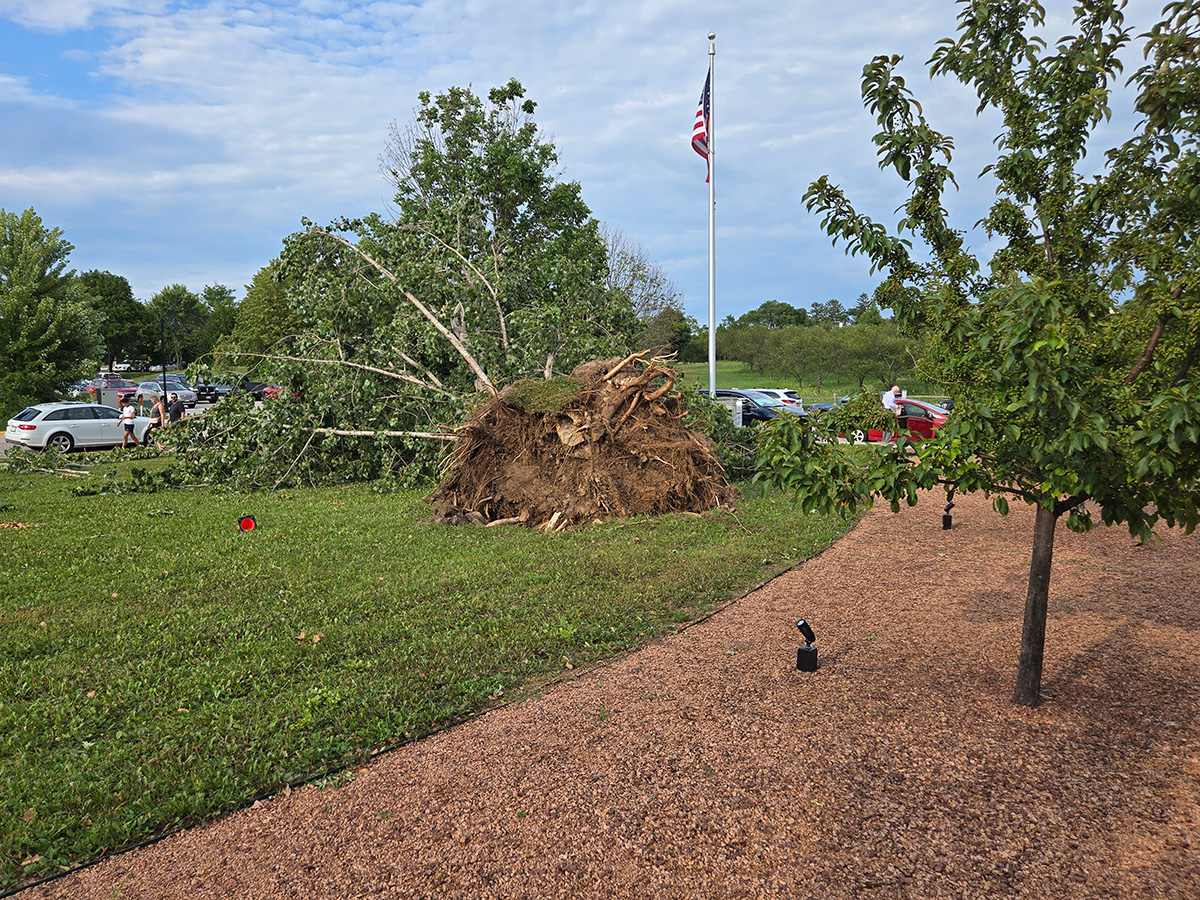
But, just before 4 p.m., winds reaching speeds between 60 and 80 miles per hour and torrential rain hit several locations on the peninsula, causing widespread damage, road closures and power outages.
“I was shocked no one was hurt or killed,” Patrol Sgt. Tom Lemke with the Door County Sheriff’s Office said. He was on duty when the storms hit and credited Door County dispatch staff with making sense of the “chaos” after the storm.
“We were overwhelmed,” Brenda Bley, the county communications director said. From about 3:30 until 5:00 p.m., the five dispatchers fielded 570 calls reporting downed power lines, people trapped by fallen trees and various other storm impacts.
“When it was all done, we took a deep breath and said, holy cats what just happened?” she said.
What happened
The municipal airport in Oconto, across the bay of Green Bay from the Door County peninsula, took a reading of 46 mph winds within the storm system that made its way across the water. There was “incredible intensification” of wind as the storm traveled across the bay, said Kurt Kotenberg, a warning coordination meteorologist for the National Weather Service in Green Bay.
Wind gusts reached 60 to 80 mph once the storm hit land in Ephraim and Egg Harbor. The widespread nature of the storm and its magnitude were unusual, according to Kotenberg. There are no wind reports that strong in over 20 years of data, he said, and the NWS is doing further research to understand the mechanics behind this storm and how it intensified so rapidly.
The NWS did confirm recently that a brief and narrow tornado touched down on the northern edge of the Peninsula State Park golf course on Aug. 9. The tornado was only about 35 yards across, Kotenberg said, and it crossed into Eagle Harbor as a waterspout until eventually fizzling out over the water. The tornado’s winds were measured at 73 mph.
A severe thunderstorm warning was issued by NWS at 2:07 p.m. for Sturgeon Bay and Southern Door, a marine warning for Door County was issued at 3:32 p.m. and another severe thunderstorm warning for Middle and Northern Door at 3:47 p.m., according to Kotenberg and Door County Emergency Management Director Jeb Saelens.
Alerts were sent out through the Door County Ready system to individuals who were signed up, Saelens said. The NWS targets warnings to areas expected to be impacted, he added, and not everyone in the county received an alert.
“Delivery depended on where residents live and whether they had the Smart911 app and if they were in an area that was expected to be impacted,” Saelens said in an email.
Reports of trees down and damage came from up and down the peninsula, from Rowleys Bay to southern Door County, including Sturgeon Bay. The same storm system was responsible for historic flooding in Milwaukee, as well.
The first indication Sergeant Lemke had that this storm was going to be a rough one was when a message board tipped over on County Road C in Southern Door, he said. Shortly after that report, a sheriff’s deputy in Ephraim reported high winds and trees down “all over the place”, Lemke said, followed by similar reports from Egg Harbor and Baileys Harbor areas.
Lemke called back the day-shift officers to assist, as well as Department of Natural Resources wardens, and Baileys Harbor Constable Mark Merrill. Officers, town and village fire department employees and volunteers, and highway department staff focused on clearing State Highways 42 and 57 first, he said, and then moved on to the county and smaller roads.
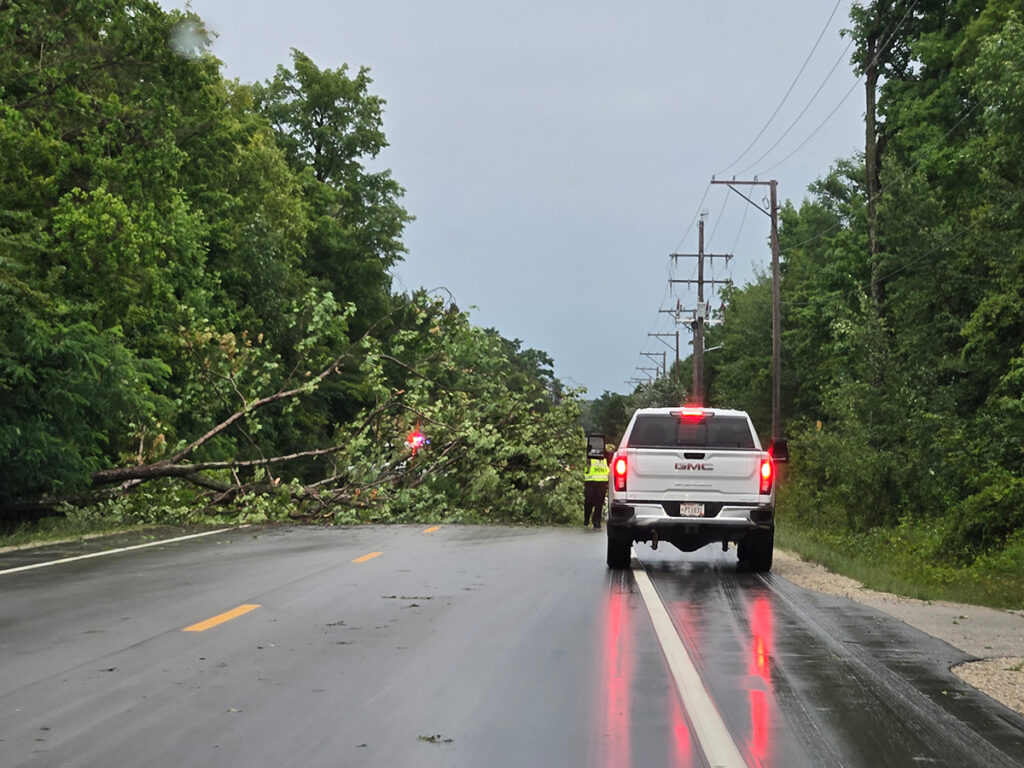
Some town roads, like County Road G near Egg Harbor, required another week or more of cleanup to open, he added.
“A lot of good people and assets came together to solve a problem,” Lemke said, and added in his 28 years with the Sheriff’s Office, he has not seen a storm like this with such widespread damage and impact on so many people.
Despite historically high wind speeds, storm intensification with little warning, hundreds of trees down, power lines in roadways, driveways and yards, thousands of people working or vacationing, full campgrounds at Peninsula State Park and Newport State Park, and events like weddings, parties and performances planned all over Door County, there were no major injuries reported, no deaths, not even a water rescue.
There were stories however. Stories of trees falling on buildings, people coming together to make the best of it, and what it takes to make the show go on – or not.
Theater
As the producing artistic director of an outdoor theater venue, Amy Ensign said she looked at the weather report frequently throughout the day on Aug. 9. She and the rest of the “Great Expectations” cast and crew at Door Shakespeare knew there was a strong chance of rain that day.
“If you don’t like the weather, wait ten minutes. You hear it everywhere,” Ensign said, “But in Door County it’s really true.”
More often than not, the weather lends a positive effect to what is happening onstage at Door Shakespeare, she said. She recalled a 2022 performance of “The Tempest” where characters onstage were pointing to dark clouds as scripted, and there were actually dark clouds looming toward the stage.
“When those clouds don’t cause electricity to go out or trees to go down, it can be fun,” Ensign added. Outdoor theater is about embracing the elements that heighten the whole experience, she said, and sometimes an unexpected weather event makes a show perfectly unique.

But the unexpected can also be problematic. When the storms hit Door County on Aug. 9, Ensign was about to drive from the company’s daytime box office in Liberty Grove to the evening performance space at Bjorklunden.
Glass doors, even the locked ones, blew open and concession items on shelves tipped over, she said. Trees had fallen to both the north and south of the office, effectively hemming everyone in, so cars started streaming into the Door Shakespeare office parking lot.
After several minutes of chaos, Ensign learned the power was out at Bjorklunden, where their outdoor stage is located, and Door County emergency services were warning people to stay off the roads.
That combination of things led the company to cancel the evening’s performance. Ensign spent the next few hours trying to contact patrons and get the word out. It was tricky, she said, because many guests were traveling from places that had not been affected by the storm, so they had no idea what had happened in Door County.
It was the fourth show Door Shakespeare had to cancel due to weather this year, Ensign said. The most they have had to cancel in seasons past was six.
The following night, the show did go on. The stage lighting and equipment was unharmed, the towering maple that the stage hugs remained upright, and crews were able to get downed trees cleared in time for Sunday’s performance. Power was back at Bjorklunden by 8 p.m. on Saturday.
“It was remarkable,” Ensign said. “A testament to working together.”
Gallery
Jodi Rose Gonzales’s art is featured in a gallery show called “The Searching Eye” at the Peninsula School of Art. Opening night on Aug. 9 went differently than planned, but for Gonzalez, nature’s artistry added another layer to her own.
The event had just gotten started when the power went out. PenArt staff almost immediately distributed small flashlights to attendees, Gonzales said, demonstrating a calm preparedness.
“It was so classy,” she said. “And the audience was the most engaged I’ve seen.” She described an intimate experience of artists talking about their work, flashlights spotlighting the presenters and the artwork, rain pounding on the roof.
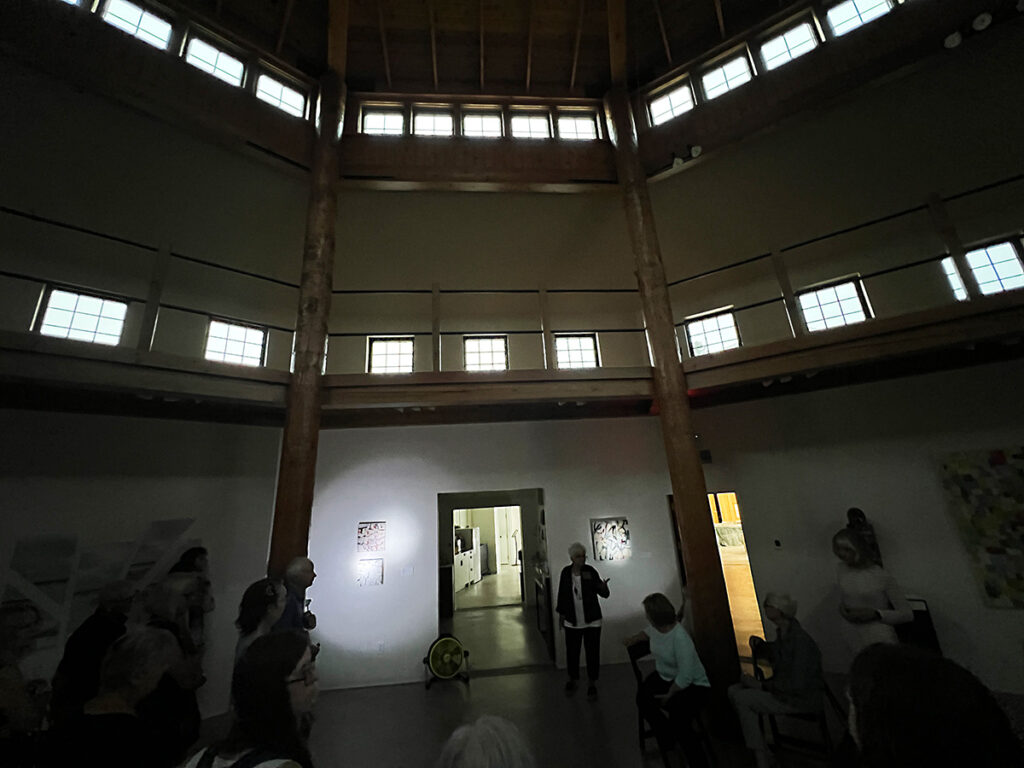
Inside that cozy space, gallery attendees had no idea of the severity of the storm outside. When Sturgeon Bay glass artist Jeremy Popelka arrived from a harrowing journey through the peninsula, he shared stories of standing water in Egg Harbor, trees blocking roads and power outages.
As the artists and guests began to realize the broader impact of the storm, Gonzales said it made the feeling of safety and connection within the gallery feel stronger. Her own body of artwork depicts a hero’s journey through the wilderness, in sculpture and prose. Titled “Girl in the Woods,” Gonzales’s story begins with her character falling out of a tree in a storm.
The work contains seven pieces, and Gonzales was finishing the sixth during an April 2024 ice storm that took out power for days in Door County. It is fitting that yet another memorable storm blew in while the final piece of her body of work was on display.
“It felt full circle,” Gonzales said.
Party
Dawn Carroll was going all out for her 60th birthday. She lives in Arizona now, but grew up in Green Bay and worked as a member of the Peninsula Players for eight years.
“Door County was the first place I ‘adulted’,” she said, and the friendships she made during that time continue to this day. When one of those friends asked her if she could celebrate her 60th birthday anywhere, where would it be, “Door County” popped out of her mouth before she even gave it any thought, Carroll said.
Planning went on for a year and the week of Aug. 9, Carroll’s friends and extended family descended on Chatham Hills in Ephraim, a group vacation rental that sleeps 35 people. The group spent their week doing idyllic Door County things, like e-bike tours;, a sunset cruise;, a trolley rental; and days spent relaxing, shopping and dining. The entire week’s events were set to culminate in a party on Saturday.
A DJ and caterer were hired, lights strung, a photo booth set up, Carroll said, and “strangely enough, with all that planning I didn’t have a Plan B.”
As clouds grew darker, guests frequently checked the weather forecast and said things like, “it’s going to miss us,” according to Carroll. Indeed, most future indications showed the storm breaking up over the bay.
Then the lights flickered for a moment before the power went off.
Babies as young as six months old to people in their 70s were all part of the guest list. An unexpected problem quickly became clear: Because the lodging used a well with an electric pump, that meant no water. And that meant no flushing toilets, so the party’s first improvisation was to use the hot tub’s water to flush toilets.
The bar was still standing after the storm, and the caterer was able to set up the food station, Carroll said. One of Carroll’s cousins had a power inverter in their car. They backed the vehicle up to the party, ran an extension cord to the DJ’s system, and played music all night.
“We had no power, no water, no nothing,” she said. “And we had just an awesome evening,” she said.
Chatham Hills is surrounded by acres of trees but sustained no damage, which was a miracle in itself according to Carroll.
She credits a creative arts background to party guests being quick on their feet and able to think outside the box to salvage the celebration. “It’s a crisis, but everyone was healthy and safe,” she said. “We’re all still here together.”
The event revitalized her connection to Door County, Carroll said, and she remembered how life is different in rural communities like the peninsula.
“When services go down, it might take awhile to get power back,” she said. “Patience and an attitude of making the best of things goes a long way.”
Before the storm, what to do
-Sign up for various app notifications. DC Ready is one. NOAA’s weather radio and wireless weather alerts provide current information as possible. NOAA also posts on social media sites and sends alerts directly to local television stations
-Set up app notifications properly.
“Use the technology to its full capabilities,” Aaron LeClair said. LeClair is the emergency services director for Door County. Edit settings to allow notifications from weather alert apps to come through, and set them as “important,” he added.
-Remove dead or dying trees and limbs from your property before high winds have the opportunity to take them down.
-Invest in a portable or home generator, water storage and emergency kits. Have them in an easily-accessible location with batteries, fuel, flashlights and first aid equipment. Being self-sufficient is critical because “there are not enough public safety resources in this county to take care of everybody at the same time when something as large as this storm happens,” LeClair said.
-Be aware of the weather before it strikes. Create a habit of looking at the weather forecast every morning. If severe weather is predicted, look into it in greater detail, meteorologist Kotenberg said.
“Where will you be?,” he said. If the answer is away from home, identify a place to shelter safely in the event of severe weather.
-For visitors, situational awareness is especially important. When people travel, they sometimes lose normal situational awareness, Sgt. Lemke explained. Make sure you know where you are, so in an emergency, you can relay the correct information to authorities.
“People are responsible for their own situation,” LeClair said. “You can have all the apps in the world, but there are parts of the country where you might not have cell reception. Before you go on a 10 mile hike, look at the hourly forecast. Be self-reliant, be responsible.”
During and after the storm, what to do
“Stay put,” Sgt. Lemke said. The number one thing residents can do in a major storm like the one on Aug. 9 is to stay where they are until the storm passes and monitor local emergency services alerts, he said.
Do not try to drive around emergency vehicles and barricades, LeClair said, and sheltering in place is very important in a bad storm.
Public safety personnel’s priority when roads are blocked by trees and wires is to clear them, so EMS workers can do their jobs and get where they are needed, he added.
NWS researchers have noticed a trend with tornado intensity nationwide, according to meteorologist Kotenberg. The number of days tornados occur is decreasing, but the number of tornados that occur on those days is increasing.
“The ceiling of how bad it can get is getting worse,” Kotenberg said.
With that in mind, public safety officials had additional advice for what to do when an intense and destructive storm comes along, as well as how to prepare in advance:
-Stay away from downed power lines and treat them as energized no matter what. Report any downed power lines to your utility company. For most Door County residents, their utility company is Wisconsin Public Service.
“The danger of downed lines is hard to comprehend,” LeClair said. “With how many people that have generators, they can backfeed through lines and re-energize them.”
For those who do own backup generators, do not plug a portable electric generator into a wall outlet or connect directly to a building’s wiring. It can energize utility lines and injure oneself or line workers. The electrical backfeed can also damage the generator and other electrical equipment in a home.
-When your power is out, alert the local utility company. Do not call 911.
Door County dispatchers received several calls from visitors whose vacation rental or resort information directed them to call 911 if the power went out, according to Communications Director Bley.
“Unless there’s a fire or live wires on the house, call WPS,” she added.
-If there is no accident or immediate medical emergency, call the non-emergent number for dispatch: (920) 746-2400
-If there is an emergency but you cannot get through to 911, be patient and keep trying. When Door County dispatch is overwhelmed, calls get rerouted to Brown County and prioritized by nature of emergency. This occurred on Aug. 9, according to dispatcher Bley.
“Your emergency is your emergency,” LeClair said. “But we have to prioritize, move from big to small.”