

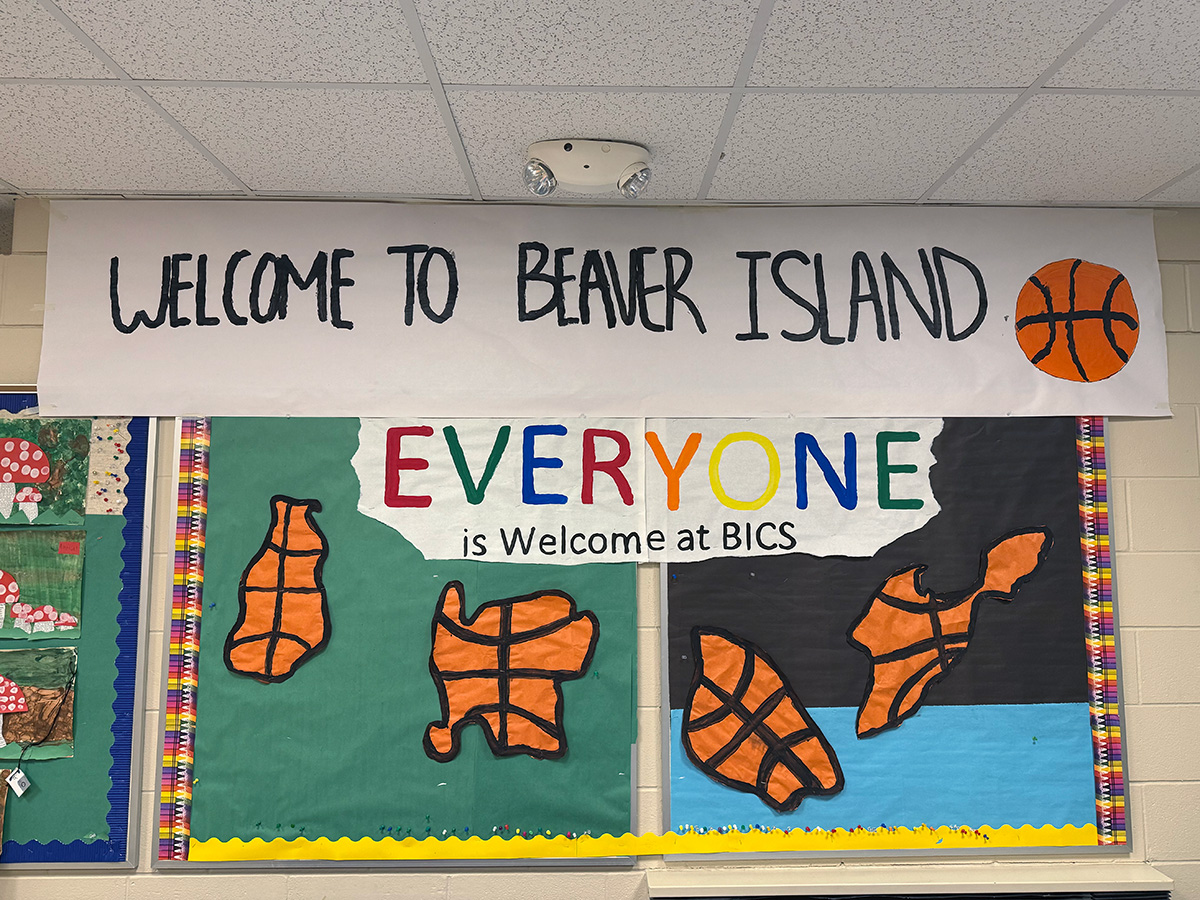
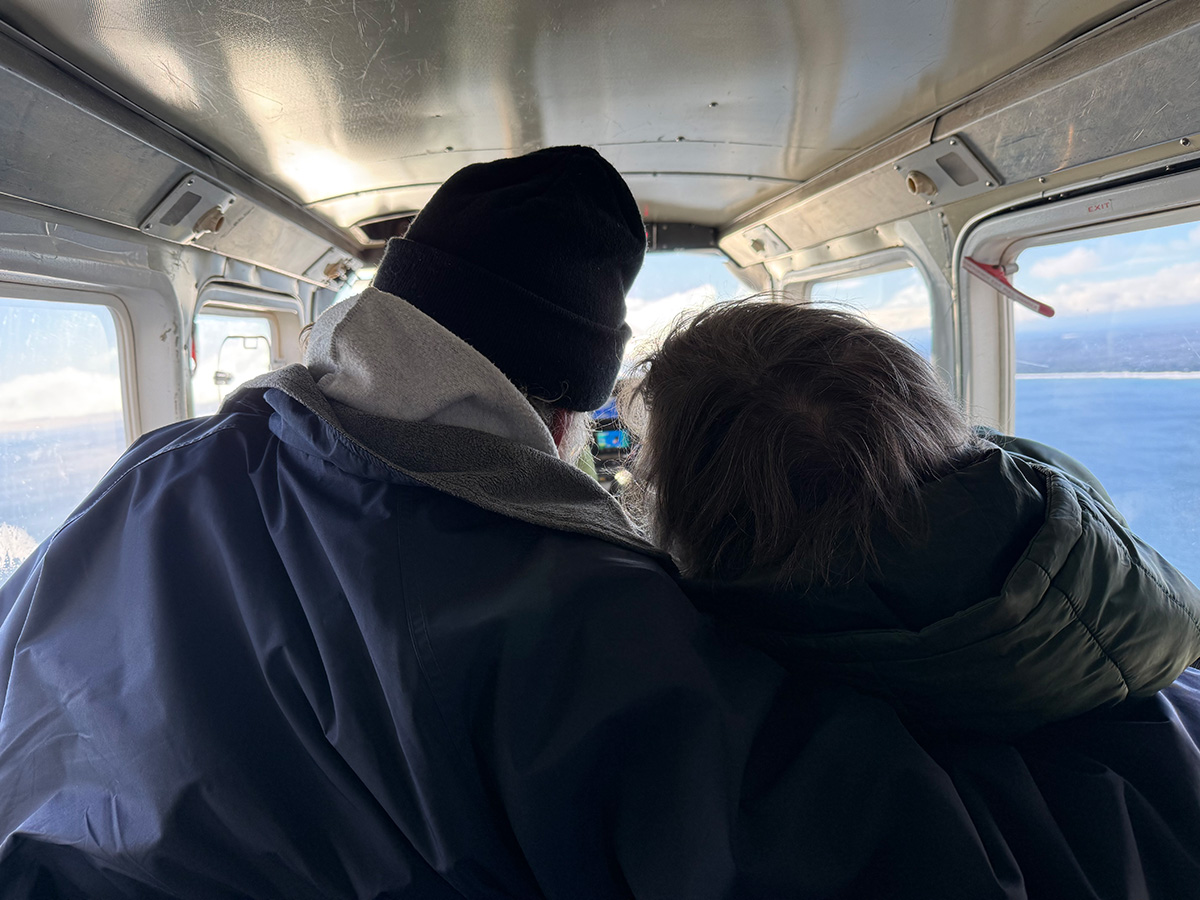
I expected Beaver Island to feel familiar. I live on an island too, after all. But from the minute the nine-passenger propeller plane got within sight of “America’s Emerald Isle”–a reference to its Irish heritage–on Dec. 12, it was clear that was not going to be the case.
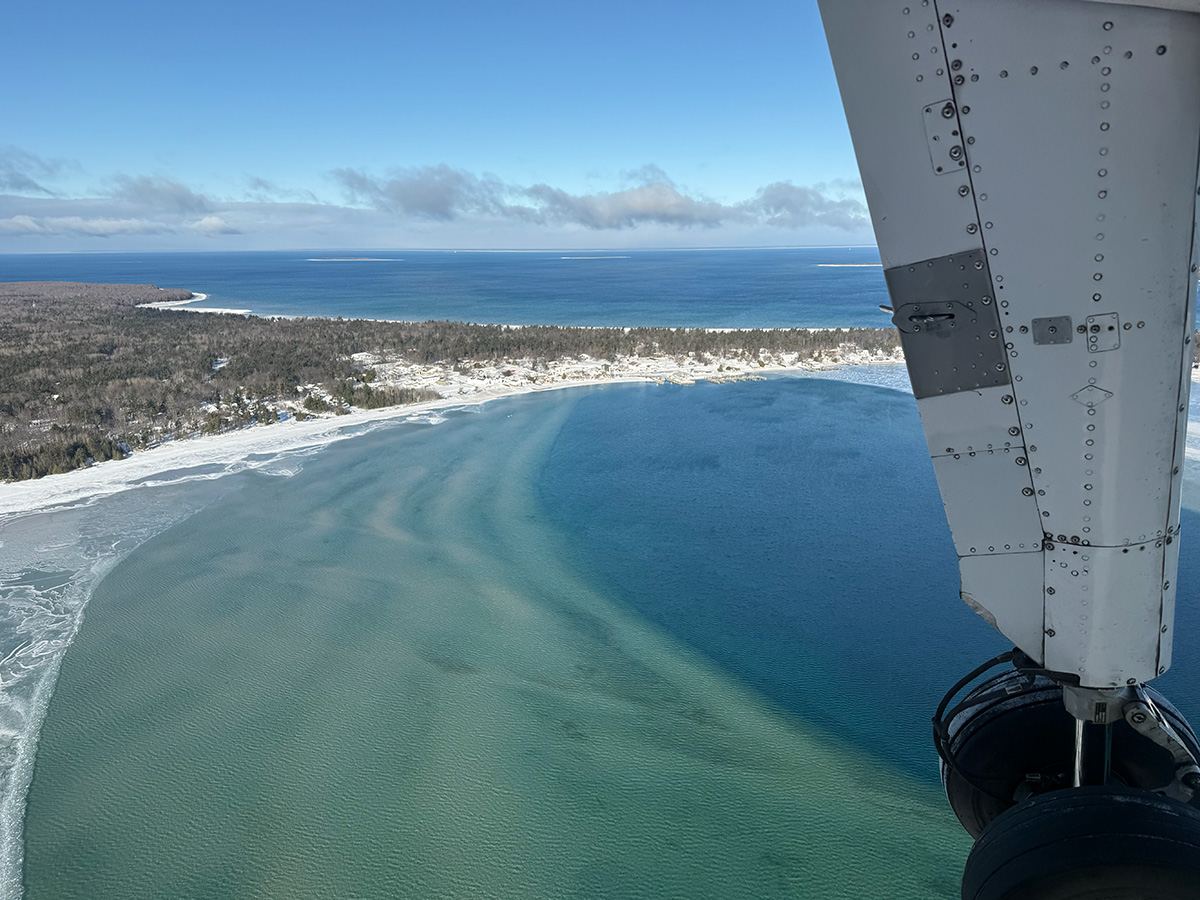
Looking down at the island’s inland lakes and semi-frozen shoreline, I suddenly had a lot of questions: Do they have a clinic? A vet? One school or two? What animals live here? Is everyone related? Does everyone know everyone else? Is my phone going to work?
And the big one: what do they do in the winter?
These are exactly the questions people ask me about living on Washington Island and the questions islanders repeat to one another with an affectionate eye roll.
Beaver Island is the biggest island in Lake Michigan, as well as being farthest from the mainland. Instead of a 30-minute ferry crossing, Beaver Islanders have to take a 2-hour ferry trip or a 15-minute charter flight. If wanting to travel in January, February or March, a flight is the only option, as the ferries stop running for 3 months.
I was with 36 other Washington Islanders, headed to the Great Lakes Islands Basketball Tournament. In our group were the Bucks boys and girls basketball teams, coaches, parents, siblings and Washington Island’s volunteer sports photographer, Jim Rose, and his wife, Ann.
Getting off an island can be complicated, but traveling from island to island is on a whole different level. Planes, buses, and automobiles … and ferries.
We left on the first boat to Northport on Thursday, and took personal vehicles to Sturgeon Bay, where we boarded a charter bus to drive six hours north “around the horn” of Upper Michigan to Charlevoix. We then spent the night in a hotel and flew to Beaver Island in the morning on five separate 15-minute flights. It took us over 24 hours to get from one island to the other.
Tournament details
The Great Lakes Islands Basketball tournament was the brainchild of Wil Cwikiel, Beaver Island Community School principal, and Steve Poe, retired principal for Put-In-Bay School on South Bass Island in Lake Erie.
In 2017, the first Great Lakes Islands Alliance summit was held on Beaver Island and that’s where the two started thinking about how they could extend the reach of GLIA to include island youth, according to Wil.
Four islands participate in the tournament: Beaver, Mackinac, South Bass and Washington Island. The first tournament was held in 2018 on Beaver Island. Every island except Washington Island has hosted the tournament at least twice.
(Washington Island does not have a suitable gym facility, though a fundraising effort to build a new gym is nearing completion.)
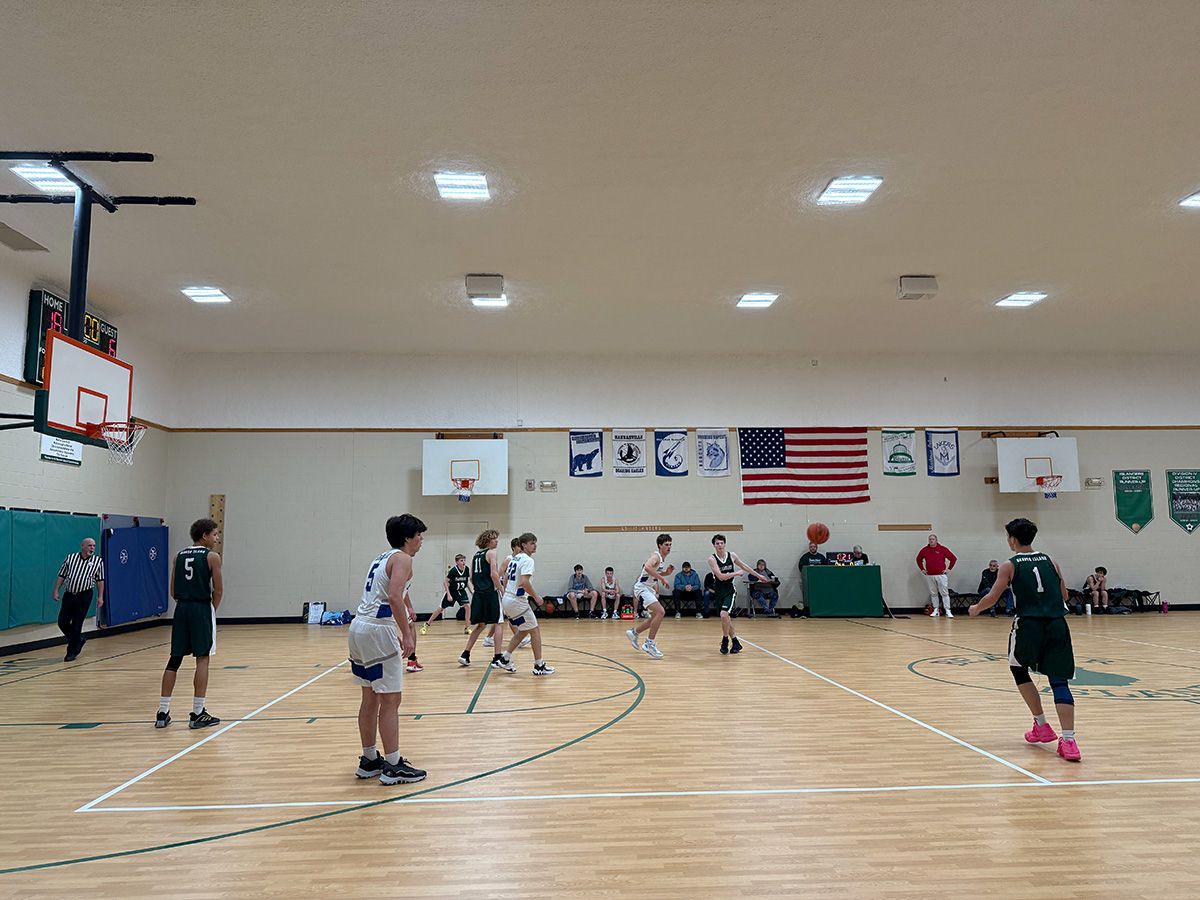
Teams play each other round-robin style over the course of two days. One of the unique things about small island athletic programs is that there will often be sixth graders playing on the same team as high school seniors, for the simple fact of needing players on the court.
Wil recalled the year they mixed up teams from different islands. A 4-foot-and-some-change Beaver Island middle schooler was on the same team as a 6-foot-4 Washington Island senior, he said.
“This huge dude from Washington Island, instead of taking the easy layup, set him up for shots,” he said. “He still remembers that.”
It is moments of camaraderie and sportsmanship like these that define the tournament, according to Wil and everyone else I talked to.
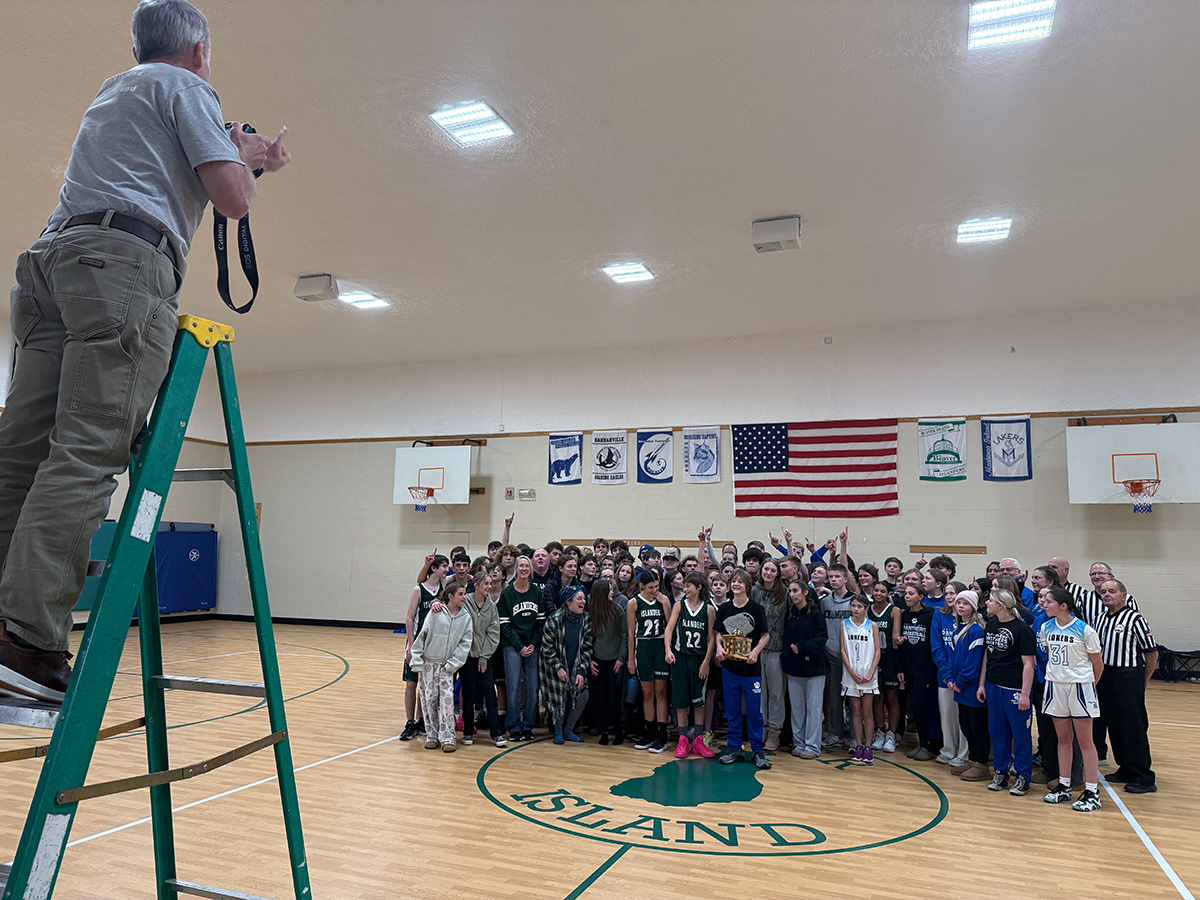
Friday
Games started shortly after we arrived on Beaver Island. The Washington Island Bucks boys lost to Put-In-Bay in a hard-fought game. They came back to win the game against Mackinac Island, and the girls’ team mirrored their results with a loss for the first game and a win for the second.
After the games, all the teams and coaches headed to the Beaver Island Community Center for lasagna and group games and activities. My own son told me it was an amazing time and one of the best nights he has ever had.
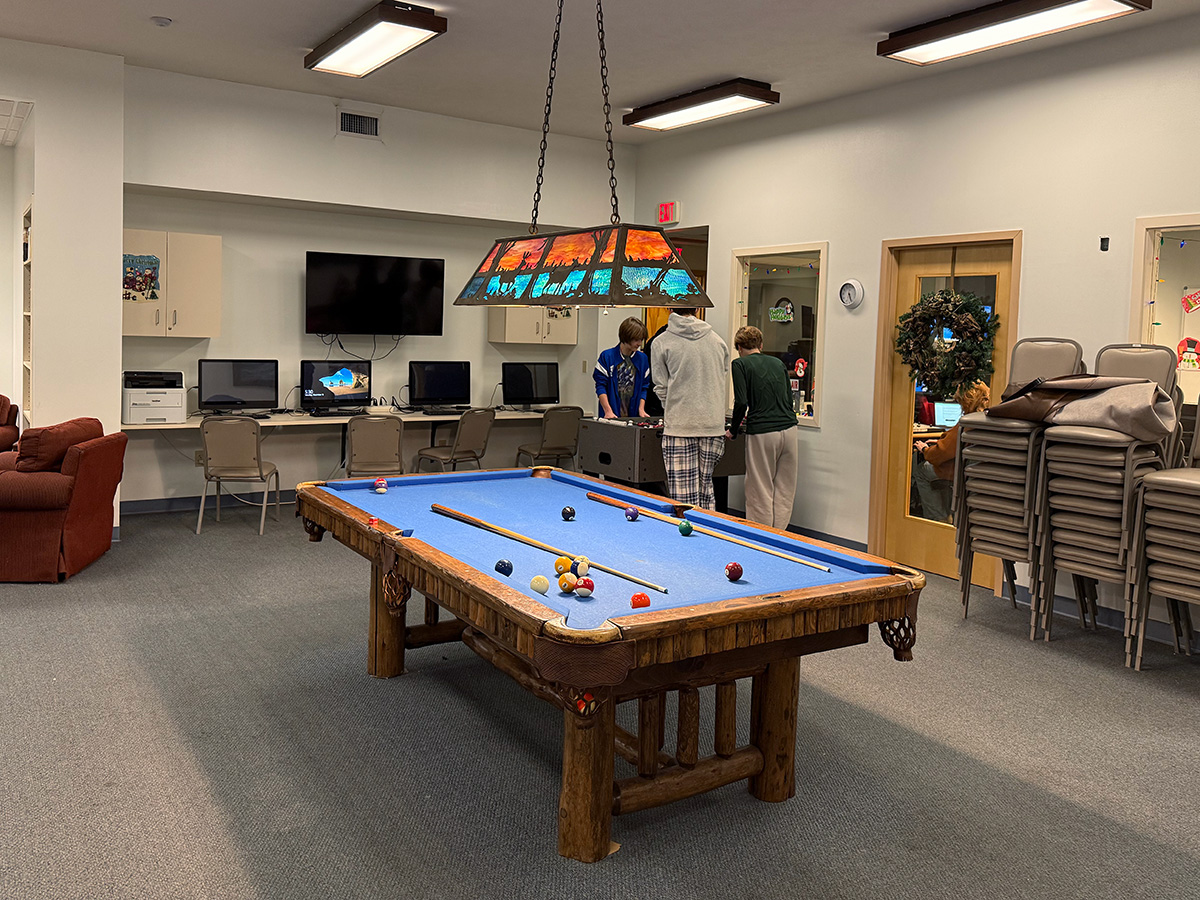
One student professed they would be practicing their backbends all year to win the limbo contest next December. It is goofy stuff like this that makes the tournament an “exclamation point,” as Wil put it, in the kids’ memories.
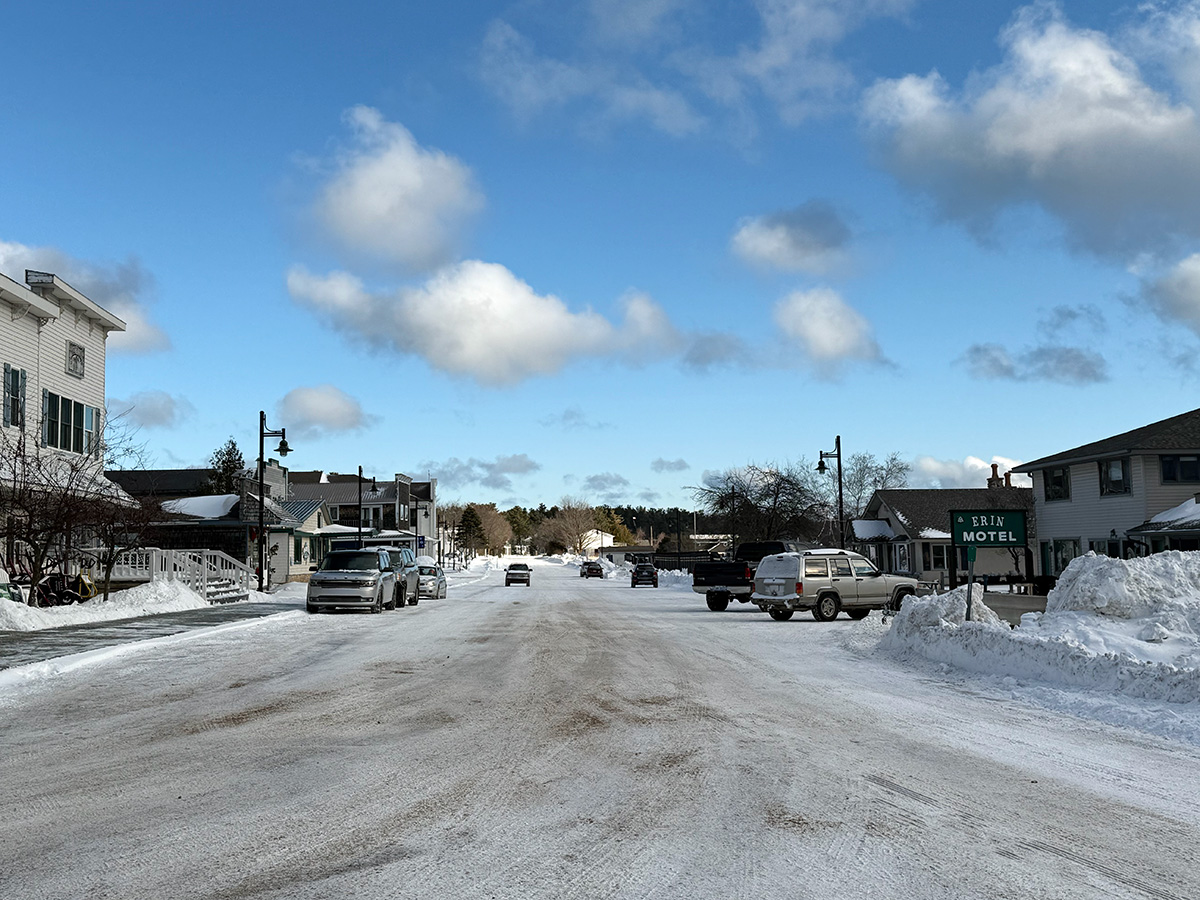
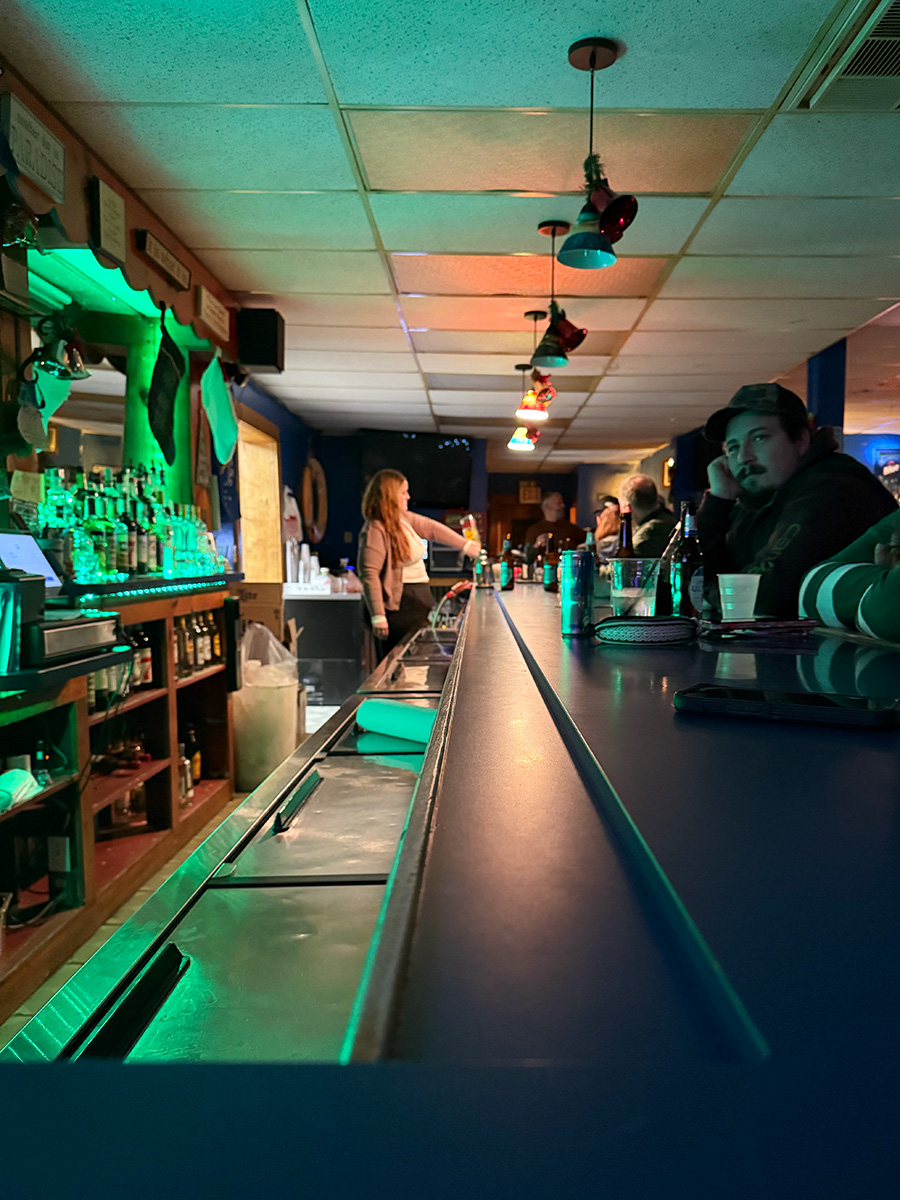
The fans had their own fun on Friday night. Washington Islanders hit the small downtown for dinner and went to the only tavern open later than 8 p.m. We met some other islanders and swapped stories.
There was a lot of laughter, there may have been some dancing, and it reminded me there is nothing quite like an island bar in winter. Right down to the disaffected bartender, a woman who fled the city for island solitude during a mid-twenties life crisis. Now this felt like home.
Islands unite
Folks involved in GLIA like to say how islands across three states and two countries–some member islands are in Canada–have more in common with each other than with mainland counterparts. Sharing experiences and information related specifically to island life are the impetus behind GLIA’s formation eight years ago, according to Matt Preisser.
Matt is the GLIA coordinator, and both a mainlander and state government official. He works for the Water Resources Division at the Michigan Department of Environment, Great Lakes, and Energy. He does the “busywork” for GLIA, he said, like facilitating meetings and communicating with members.
The organization is “a group of people that come together of their own accord to learn from each other and are passionate about where they live,” he said.
Thirteen Great Lakes islands sent representatives to the first summit on Beaver Island in 2017. In 2025, the alliance listed 20 member islands. The organization meets once a month via Zoom and a different island hosts a summit every year.
Even though the islands are all unique in culture and character, Matt said, they have a lot in common. Teacher retention, mainland governments that do not understand or appreciate their island communities, seasonal economies and populations, isolation and “less sexy” things like waste disposal are all issues island communities have in common, Matt said.
When I was covering Washington Island town issues, I would often reach out to other islands to learn what they are doing to create solutions for the same problems in their communities. Little did I know I was doing the same work GLIA tries to do. The alliance’s focus is on information and resource-sharing, Matt said.
A big shift for all islands happened during the Covid pandemic. Properties that had been for sale for years were suddenly bought up, sight unseen, from people in cities looking to escape. Real estate skyrocketed, and suddenly islands felt more pressure on housing, infrastructure and their way of life.
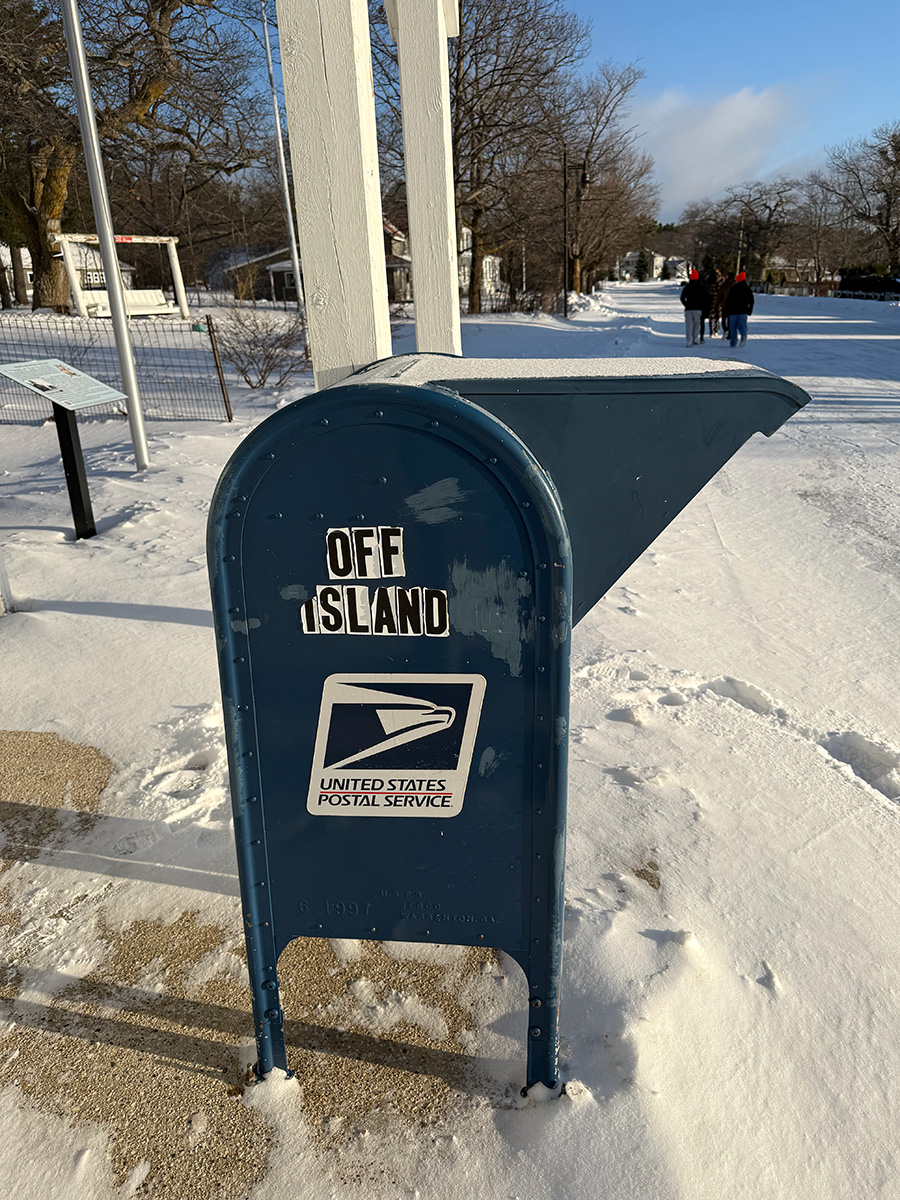
Environmental issues like invasive species and how to protect the beautiful and unspoiled natural areas of these places is another issue that is “rearing its head more often now,” Matt said. Most of the islands have tourism-based, seasonal economies and need to find ways to fund public infrastructure and services with increasing pressure from visitors, he said.
Islands are not alone in this. I see you nodding your head, mainland Door County.
Marooned
Saturday morning dawned on Beaver Island with a few clouds, bright sunshine and temperatures hovering around a balmy minus 7 degrees with the wind chill. We watched our boys and girls teams play against the Beaver Island teams (the boys won, girls lost) and everyone gathered in the school lobby with our luggage to take shuttles to the airport for home.
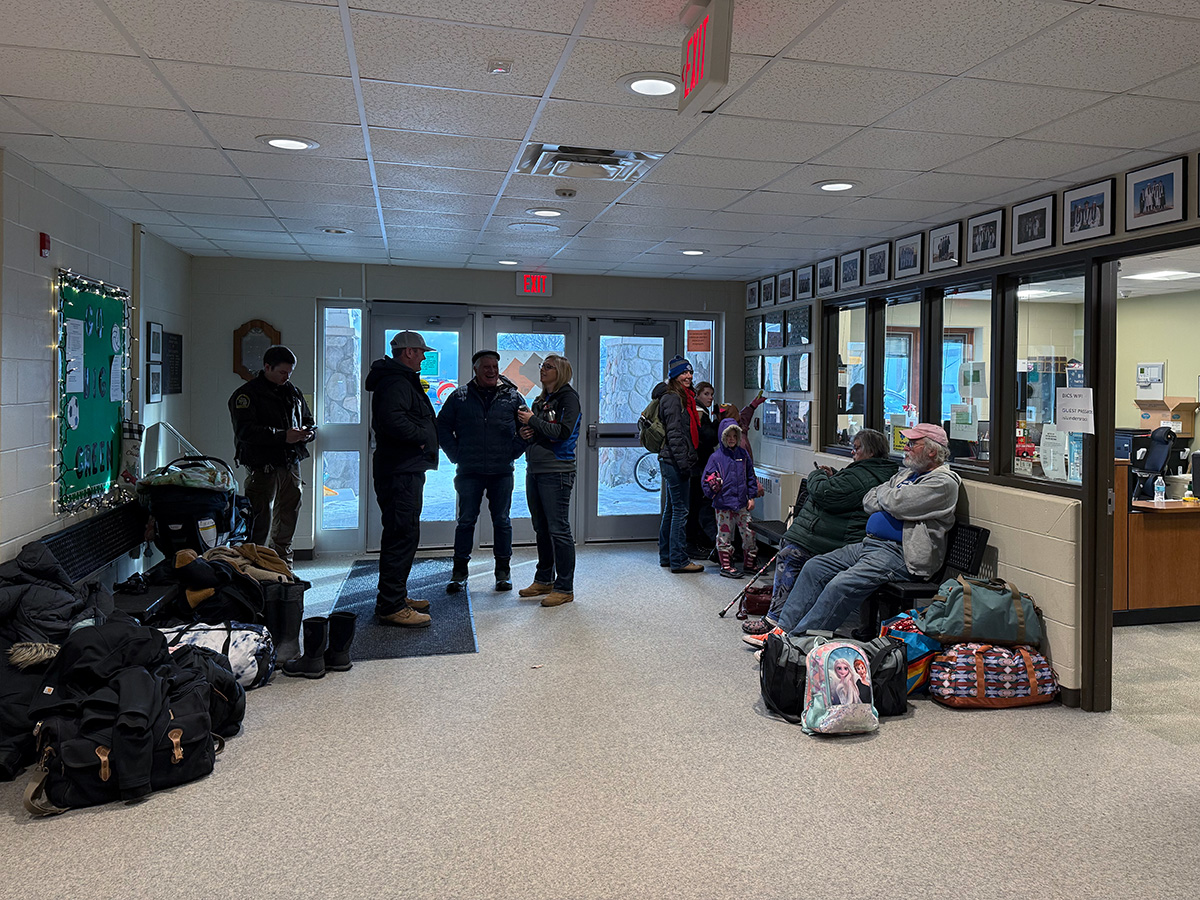
We spent all morning and most of the afternoon in that lobby, waiting for visibility to clear on the mainland side so Island Airways flights could take off. It was not to be. Even though skies were clear on Beaver Island, back in Charlevoix, due to lake effect precipitation, visibility was down to one mile. They need three to fly.
Once we all knew we would be staying another night, the Beaver Island community rallied. Someone sent us a schedule of movies at the community center, and vehicles were proffered to get to the one grocery store in town. Motel proprietors gave us back our room keys, and in some cases offered discounts on the extra night. The Wild Strawberry Cafe agreed to open on Sunday morning for those that were stuck.
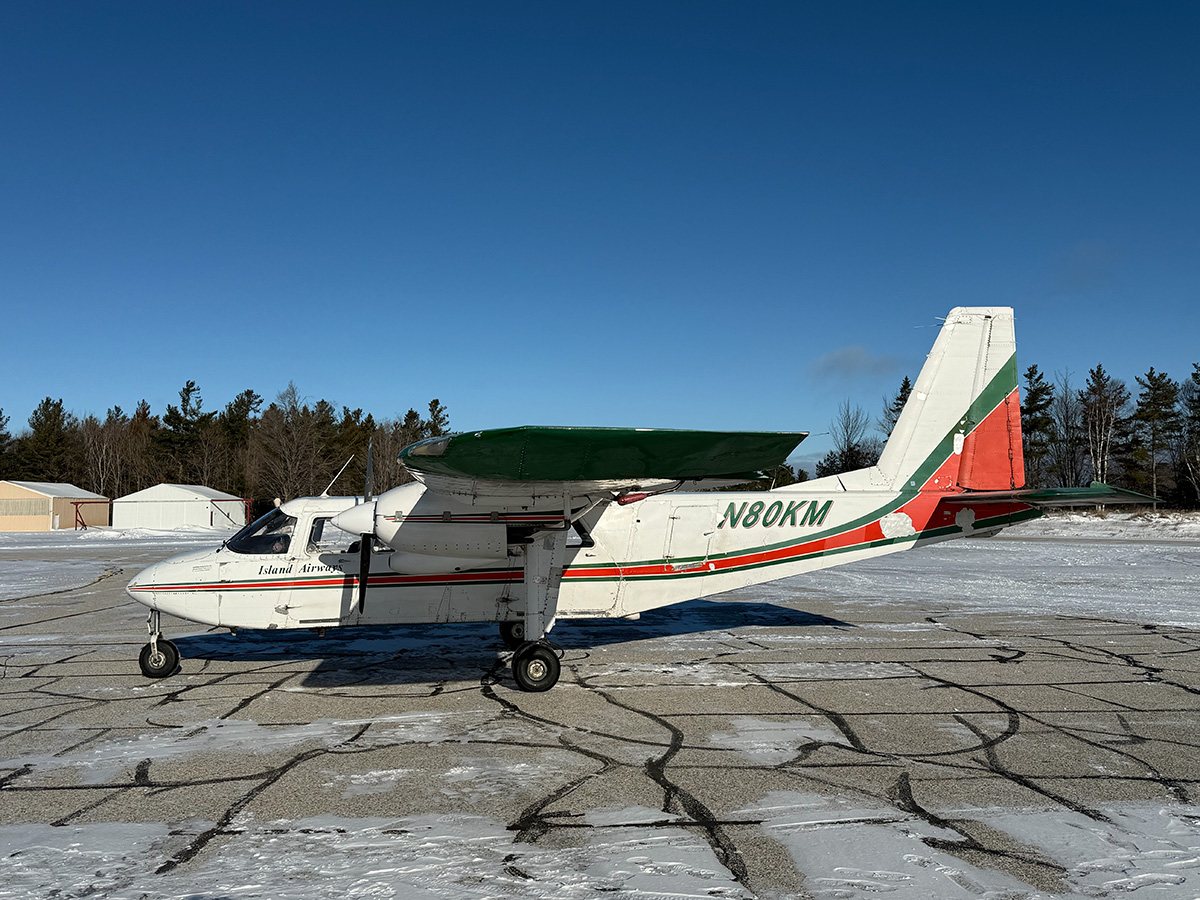
Angela Lefevre-Welke, who goes by “Angel,” is president and owner of Island Airways. She’s also the school board president and the chair of GLIA’s steering committee. One thing islanders have in common is they wear a lot of hats, she said.
Another thing they have in common is they “roll with it” when transportation issues arise, she added. Especially when it comes to weather.
“When we had to announce we weren’t flying, there wasn’t a harsh word (among the island tournament attendees),” Angel told me, a contrast to summertime, when canceled or weather-delayed flights often lead to “a lot of flack” from visitors.
Sunday morning dawned clear, with high hopes for getting home. Worst case scenario, we told each other, we would stay another night and take the ferry on Monday. As we gathered our things to check out, we got the text: “Everything is on pause!!!!”
Visibility was bad again on the Charlevoix side. A rumor spread that waves were predicted to be too high for the ferry to run the next day.
I started imagining a Beaver Island Christmas.
We gathered at the Wild Strawberry, commiserating, eating breakfast burritos, drinking coffee and taking turns holding the cafe owners’ baby. Washington Island has a “cafe baby” too, whom regulars cuddle and coo at while his parents sling beverages and baked goods.
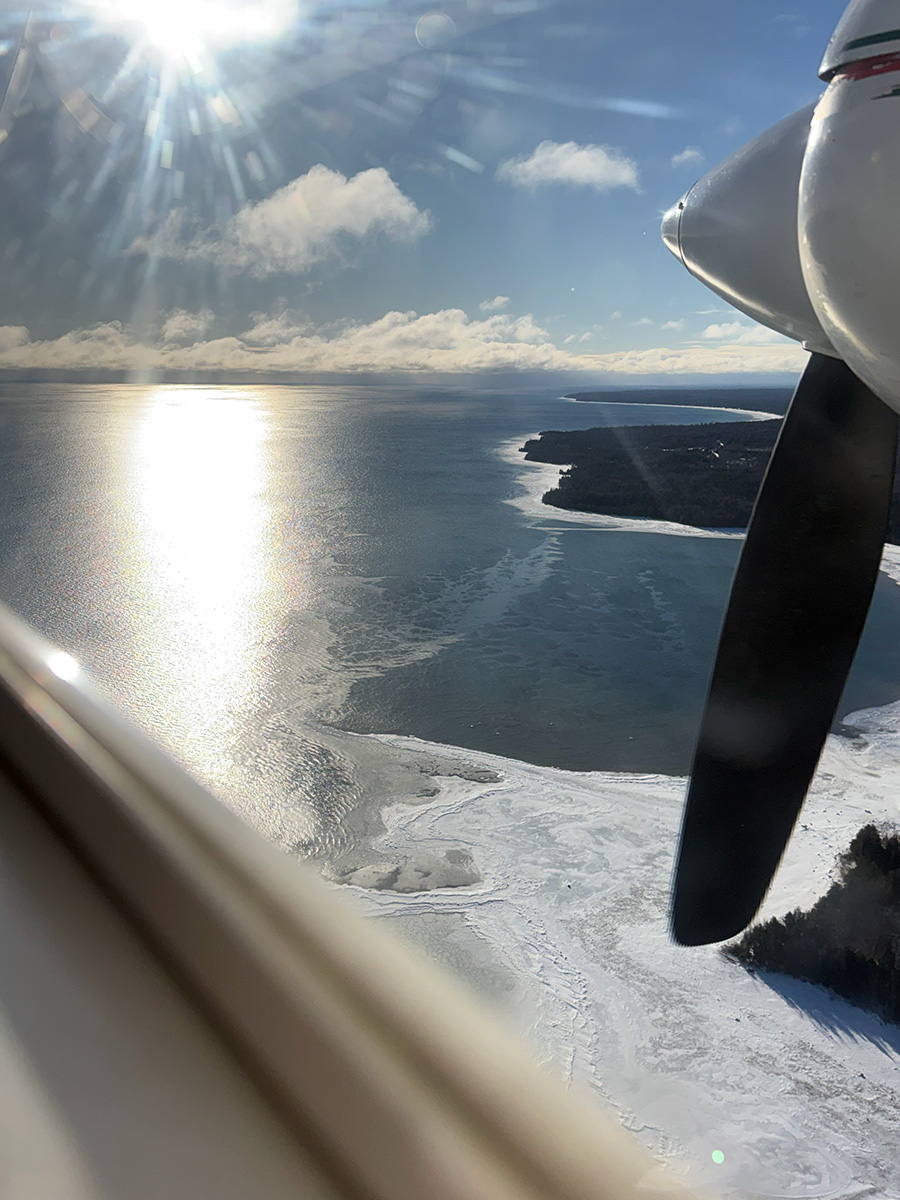
Ultimately, we were able to leave on Sunday, during a several hour break in the weather. I was a little disappointed. I missed out on going for a “boodle” with Angel. That’s what Beaver Islanders call driving around the island with friends, telling stories and checking out local sites.
Washington Islanders call it “scooping the loop,” or if you are of a certain generation, taking a “garbage can tour.”
Long ride home
Flights landed safely and the charter bus was boarded. Our little group of islanders was tired and ready for home. And, unfortunately, a few people were starting to feel ill.
We listened to the Packer game over the bus’s speakers. We scrolled on our phones. Some of the younger kids draped blankets over seats and made a fort. We kept our senses of humor and optimism intact, and it felt like we were all in it together.
The six-hour drive to Sturgeon Bay felt much longer, but it gave me a chance to reflect on the whole adventure.
Island communities are tight-knit by necessity, and traveling with this group felt a lot like traveling with family. We accommodated and helped, and sometimes only tolerated each other, much like you do with family members.
Ironically, it was the mainlander from Michigan who said it best:
“I’ve lived in multiple places on the mainland, but the passion island communities have from within is unique. Not to say they’re always in agreement, but people that live on islands love their communities more than I’ve experienced elsewhere. There’s some kind of secret sauce that keeps them going,” Matt told me when I asked him what he most enjoys about working for GLIA.
I think greater Door County has a little bit of that secret sauce too. The peninsular geography keeps the communities tight-knit, self-reliant and resourceful. When there is a crisis, people step up in a big way.
Life on Beaver Island shares a lot with life on Washington Island. They have a clinic, a vet, a school, and wildlife wandering freely—just about everything you would find in Lower Michigan, except fox, skunk, porcupine, opossum, badger, martin, and wolves. Neighbors know each other, even if they are not all related, and they hunker down in winter and rely on each other when they need help.