

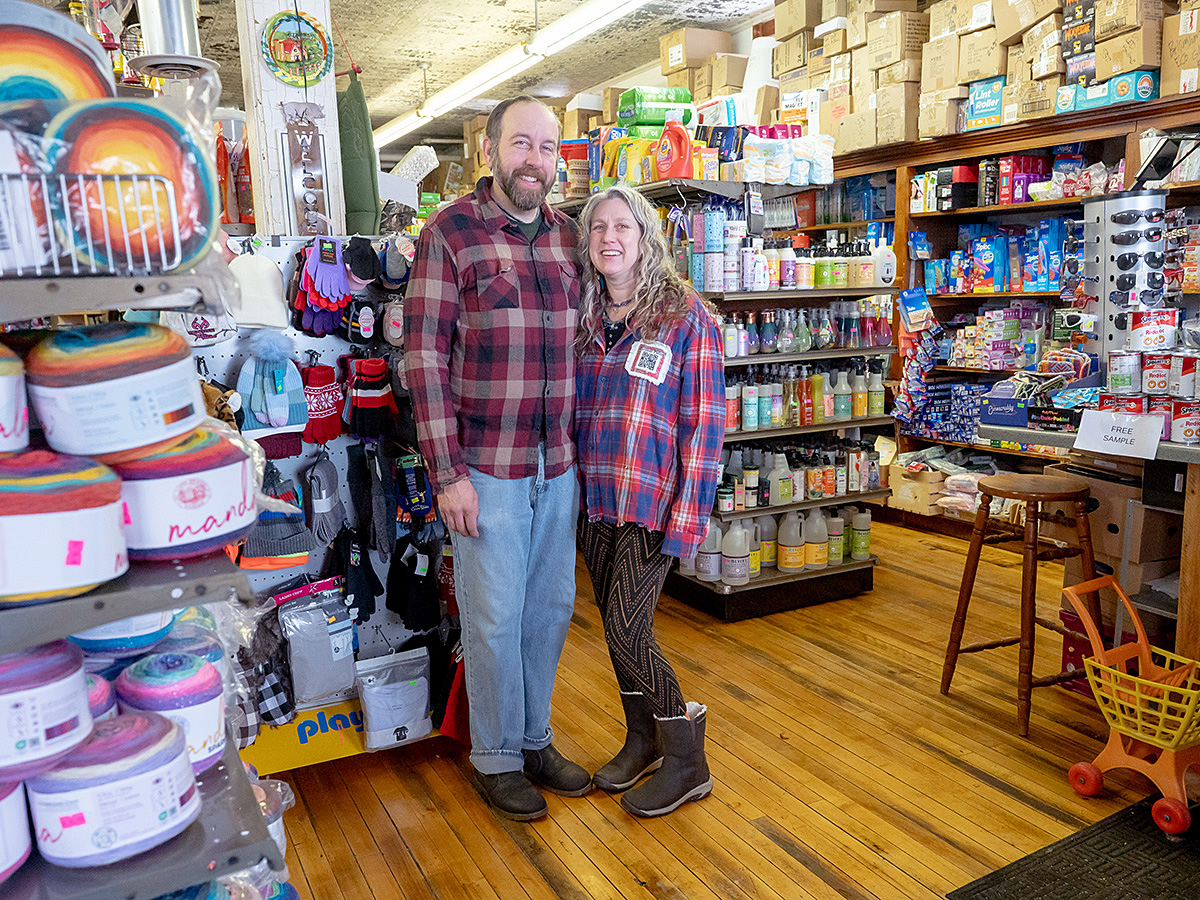
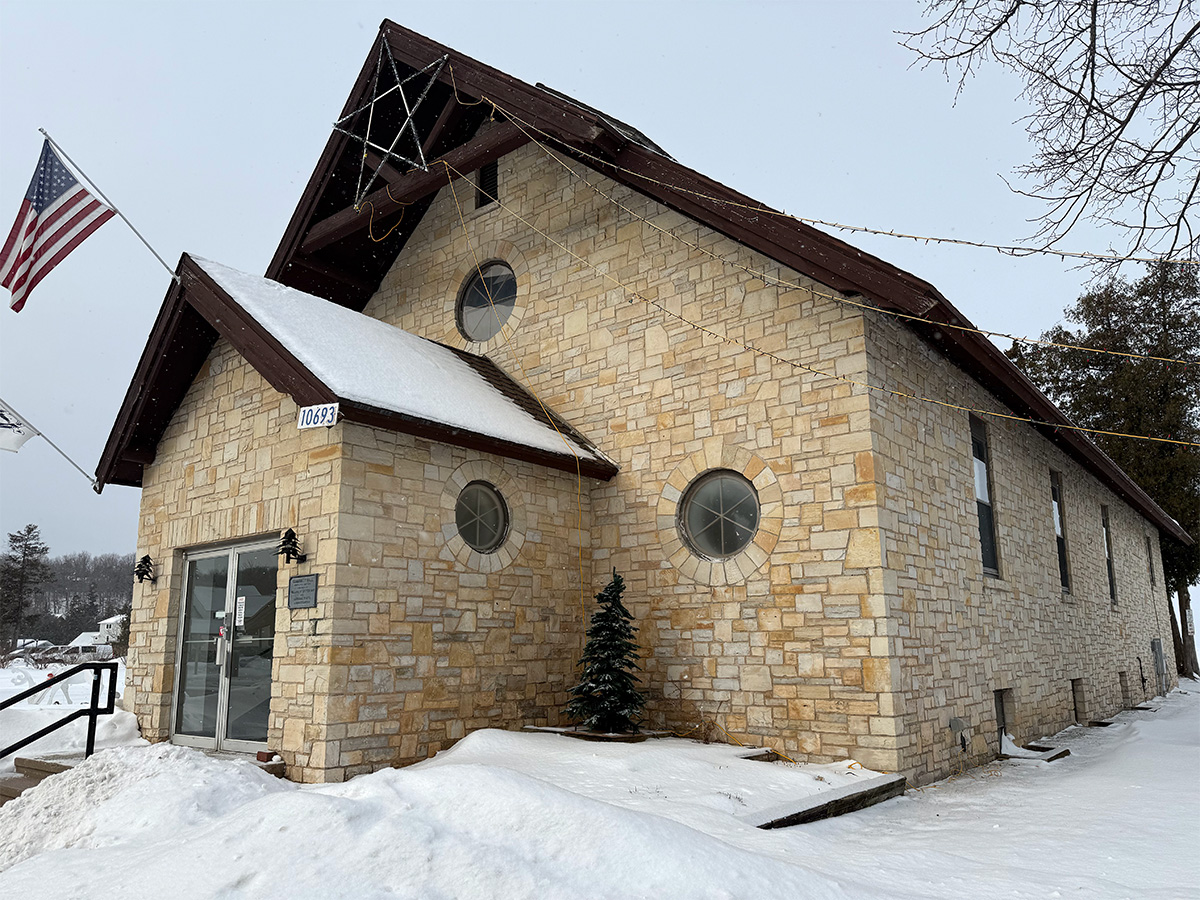
Before its new life as the Pioneer Pantry and Purl, the building in Brussels sat unused for decades. Boarded-up windows, ivy-choked walls and a collapsing cedar shake roof did not deter Heather Truett and Nick Waack from falling in love with the structure at the Five Corners intersection.
Established in 1906, the Brussels Store continued until the 1970s. When the owners died and the property changed hands, upstairs apartments were rented out for a while. Eventually it sat vacant. Truett and Waack purchased the building in 2017 and spent three years restoring it to its original purpose.
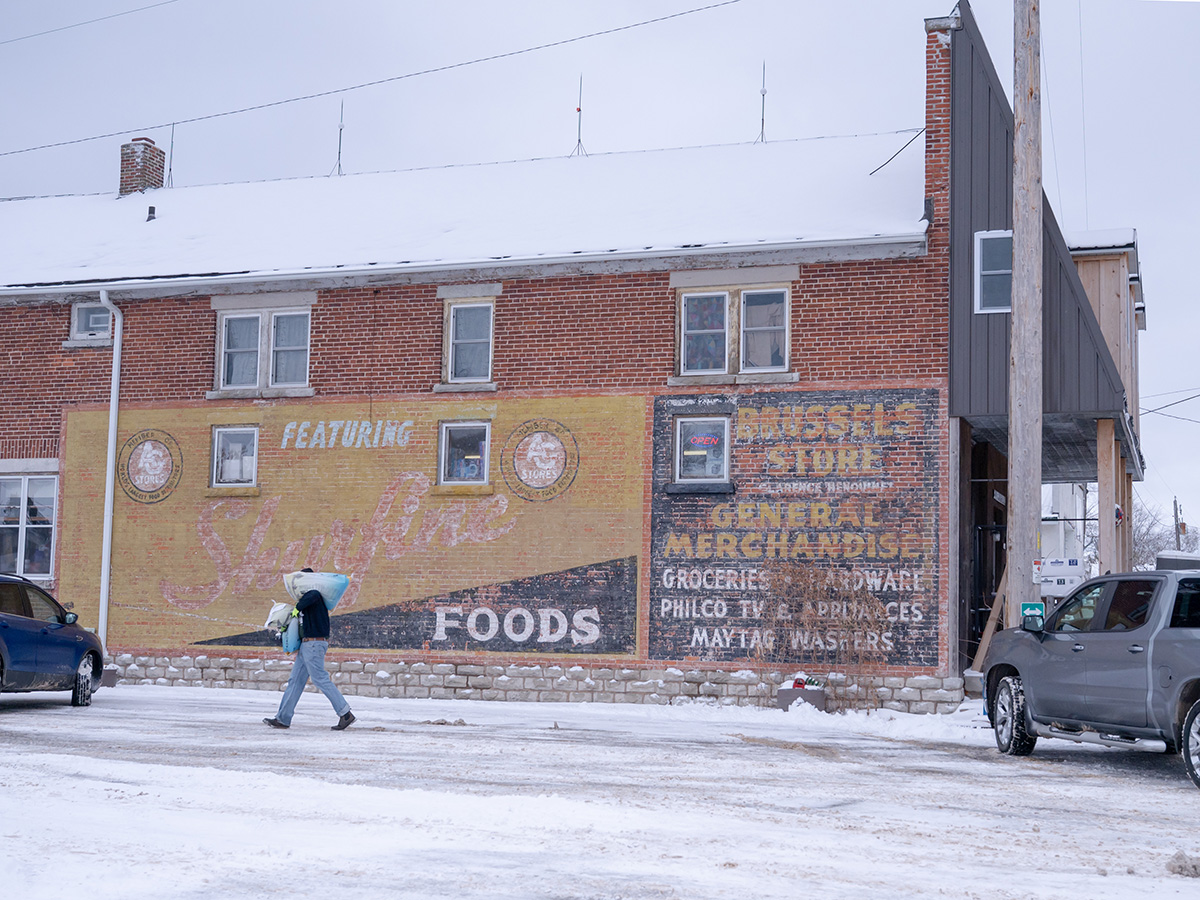
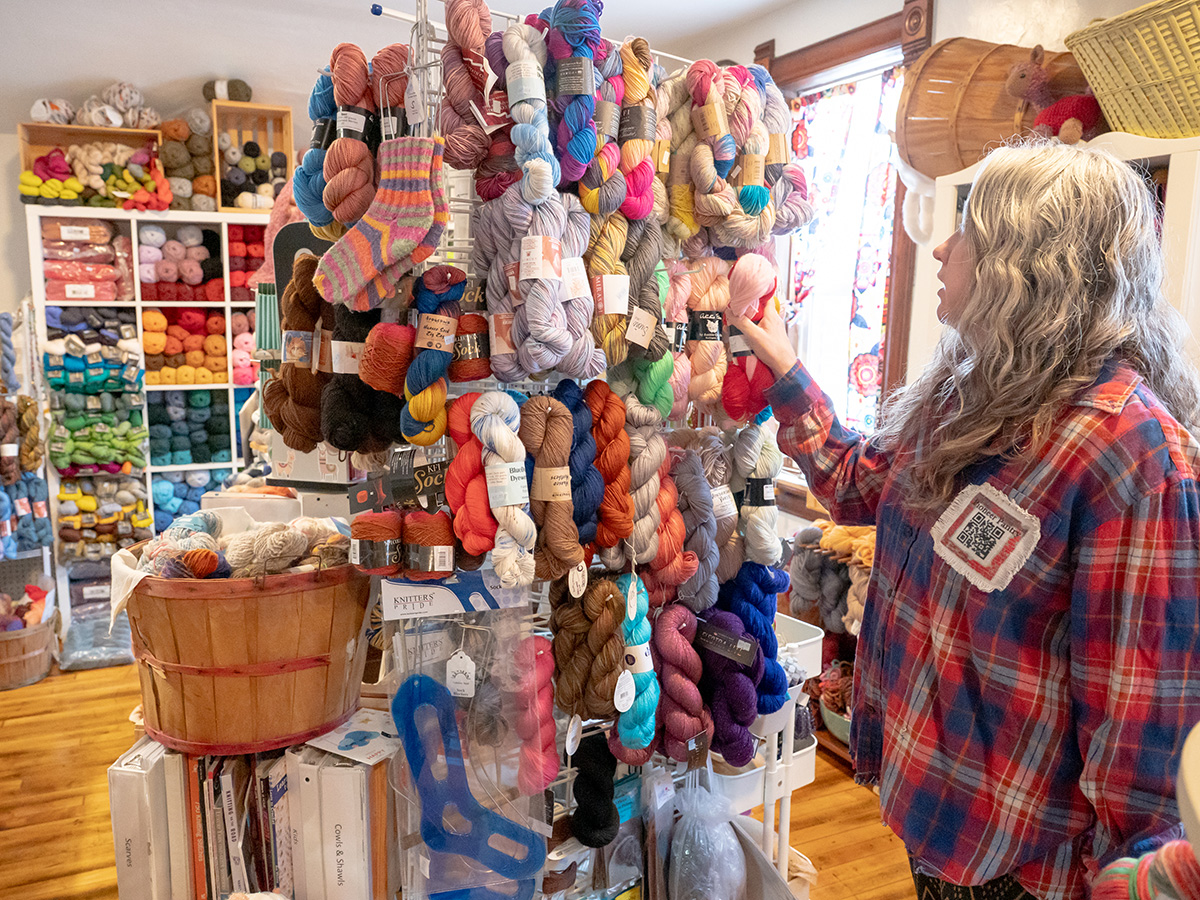
The current store stocks food and other items on the first floor, and knitting supplies upstairs in the Pioneer Purl.
Business is good, the couple said, and the majority of their clientele is made up of local residents, especially seasonal ones who drive in from Gardner and Jacksonport. The business is an example of adaptive reuse–rehabilitating or restoring a historic property for a new function.
Door County Historical Society Director Amy Frank said she is in favor of adaptive reuse of historic buildings like the Pioneer Pantry.
“Any preservation you can do (is good)–preserve a physical aspect like a swatch of wallpaper, or write down a story that has been passed down for generations,” Frank said. “It’s all about future (generations) understanding what happened in the past, making connections, seeing themselves and learning from it.”
As DCHS celebrates its 100th anniversary this year, identifying and preserving historic places in the county is part of its ongoing mission, Frank said. The Door County board issued a proclamation honoring the milestone at its January meeting.
Historical preservation is always a hot topic in Door County, with a battle currently raging over the fate of the Alpine Resort in Egg Harbor, and public scrutiny of the county’s plans for expanding the Door County Historical Museum and Archives.
The bulk of historical preservation work is made up of saving old buildings, and in history-rich Door County, there are a lot of them. Who decides what is worth saving and how in a community with increasing development pressure and an identity that is deeply tied to its history?
What “historic preservation” means
There is not one definitive answer to what historic preservation is, according to Frank.
“From my perspective, it’s about working to preserve not only the physical things from our past but the stories and traditions and way of life of those who were here before us,” she said. “Remembering that is an important part of who we are, how we got here. And it shouldn’t be forgotten.”
The National Park Services is the federal arm for historic preservation and gives standards and guidelines for the treatment of historic properties. There are four types of treatment, according to NPS:
- Preservation: maintaining a historic building or site as it exists, with minimal changes beyond basic repairs and necessary upgrades.
- Rehabilitation: adapting a historic building for modern use while keeping defining historic features.
- Restoration: returning a building to the appearance of a specific historical period.
- Reconstruction: rebuilding a lost historic structure to replicate how it once looked.
A property must be at least fifty years old and meet other criteria for historic designation, according to NPS.
In order to designate and preserve a public or private building, it must be assessed for historical significance and funding needs, Frank said. The Historical Society has resources to help with all those things, she added.
Time, expertise and capacity are often limiting factors for private individuals, she said.
There are some funding tools available, including state and federal grants, historic tax credits, foundations and local fundraising. However, once a building is saved, you “still end up with an old building,” according to Ephraim Historical Foundation Director Cody Schreck. Ongoing maintenance costs must be factored into projects.
Contentious situations arise when costs are not confronted early, or if historical preservation is not built into a municipalities’ policy infrastructure, he said.
Physical structures are not the only thing included in the field of historic preservation, Schreck added. Examples are archaeological sites of Native American significance on Rock Island, and underwater historical sites like shipwrecks, he said.
“Not every historic building needs to become a museum,” Schreck said, and adaptive reuse is often a good way to make a historically significant building an anchor in the community.
A living history museum like the Historic Village at Crossroads at Big Creek in Sturgeon Bay has deep educational value, according to Frank, but preservation is not always about freezing time.
“(It’s) remembering and understanding how generations prior to us survived and thrived. That can’t be shoved aside, it can’t be forgotten,” Frank said. “It gives us an identity and a purpose–otherwise we’re just floating around.”
Myths confuse public debates
Common misconceptions about historical preservation mechanics fuel public debate about this topic. One of those is that a historic designation or placement on a historic registry will save a building. Not so, according to Schreck at the Ephraim Historical Foundation.
The National Register of Historic Places provides an honorary title, but does not protect a building from alteration or even demolition. A National Registry designation does help with applying for federal Historic Tax Credits and possibly getting additional grant funding to rehabilitate or maintain a historic property, Schreck said.
Historic easements are a preservation mechanism with teeth, he said.
A historic preservation easement is a voluntary legal agreement that permanently protects a property’s historic character by limiting future modifications, even after ownership changes. The restrictions are held and enforced by a qualified preservation organization, are maintained in perpetuity, and may offer tax benefits to the owner who donates the easement.
The Wisconsin State Historical Society, land trusts and nonprofit preservation organizations typically hold the easements in Wisconsin.
“Preserving a building shouldn’t rely on the owner who is there right now,” Schreck said. “The building will outlive the owner.”
Another myth is that preservation means “no change.” A community can set up historic districts and provide design review so additions or changes to a structure remain in line with historical significance, while still making the building viable for modern use, according to Schreck.
During the December county board meeting, some discussion around the Door County Historical Museum and Archives expansion project indicated public funds should be spent on other priorities than preservation, but for many, historic preservation goes beyond simple nostalgia.
“We cannot ignore history and the humanity that makes a society, how that has changed and grown and what it means for the future,” DCHS’s Frank said.
Preservation also provides an important tether for a community. “People want to know we mattered,” Frank said. “That we had significance and we aren’t leaving this world without having an impact. Sharing those things for future generations gives us a sense of worth and purpose.”
Schreck said that many people underestimate the economic impact of historical preservation in a community. While there is no specific data showing how heritage and historical tourism financially affect Door County, the American Alliance of Museums published a study in 2017 showing that museums alone generated $600 million in Wisconsin’s economy for that year.
The economic impact of history has played out well for Ephraim, according to Schreck. He gives the example of Anderson Dock, derelict in 1950 and saved by local residents. Now? It’s one of the most-photographed sites in Door County and serves as both a moneymaker for the community and an intrinsic part of its identity, he said.
Preservation starts locally
Having municipal policies and systems in place can prevent historic preservation battles, according to Ephraim Historical Foundation’s Schreck, and local control is the strongest tool for preservation.
A municipal government can form a historic preservation commission, or HPC, which then creates a historic district or a local registry of historic sites nominated by the community. The HPC functions as a planning committee to uphold standards for designs and proposals regarding historic places, and also review historic designations.
A “Certified Local Government” is another legal status a municipality can receive once they have created an HPC and enacted preservation protections by ordinance. A CLG designation makes a community eligible for certain state and federal preservation funding.
The Village of Ephraim and the City of Sturgeon Bay both have HPCs in place, and the Village of Sister Bay has established a historic district, called the historic triangle. The Village of Sister Bay is also in the process of strengthening their local mechanisms for historic preservation on the heels of a fight to preserve the Village Hall.
Case Study #1: Sister Bay Village Hall
The Sister Bay Village Hall, located on the village waterfront, opened in 1941, and was touted at the time as “one of the finest in the state of any village of this size,” by the Door County Advocate. It housed an auditorium, kitchen and library, as well as meeting spaces. The building was a result of Roosevelt’s New Deal after World War II, with the National Youth Administration providing most of the labor to build it.
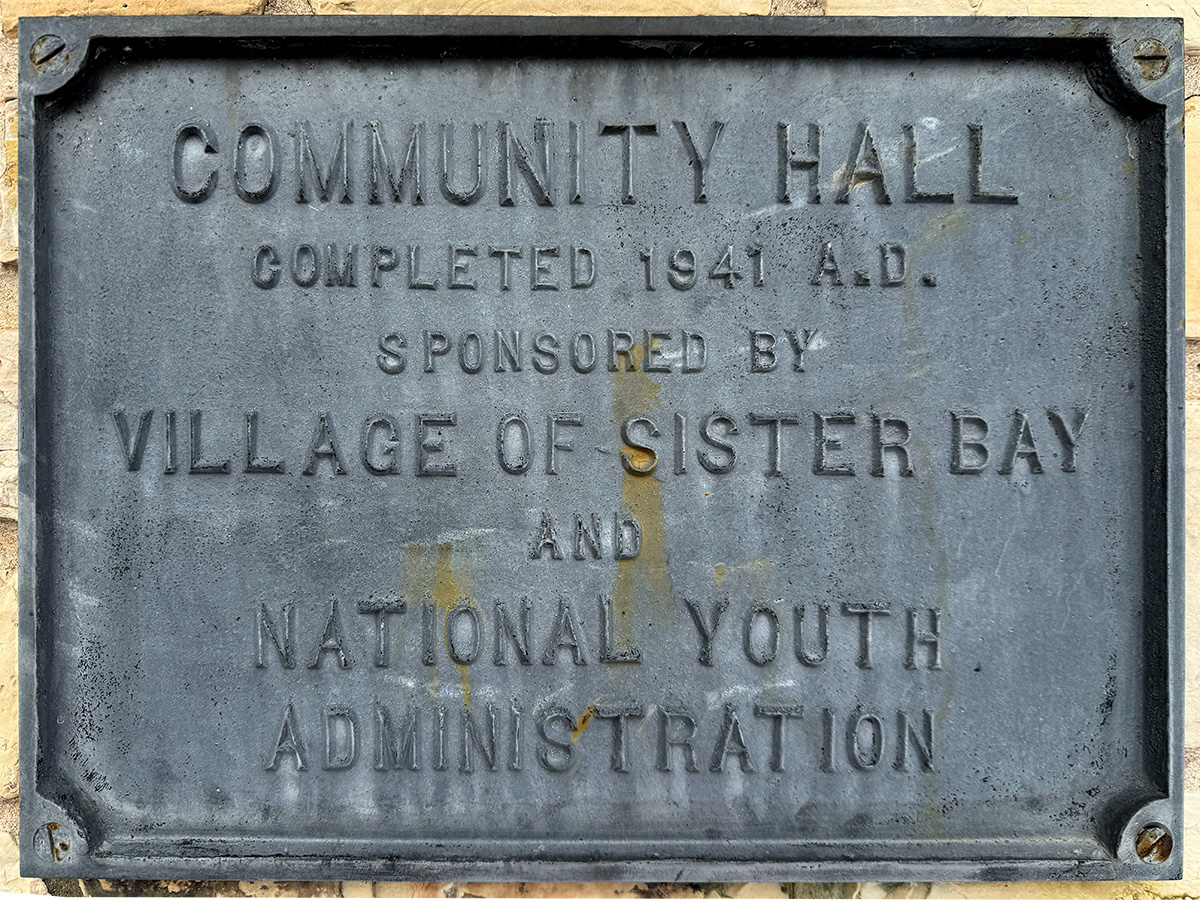
In 2022, the village’s planning commission decided to tear the building down, citing low use, a poorly functioning elevator and a leaky basement. The commission determined the municipality did not want to spend the funds needed to rehabilitate the building and could find a better use for the waterfront property on which the building sat.
Village residents, including Patrice Champeau, vehemently disagreed with the decision to raze the hall. On September 6, 2022, the village held a public input session about the building and “it was standing room only,” Champeau said.
Champeau has lived her entire life in the village and has deep family ties to the area. She got involved in public service as a result of that issue and is now a village trustee and serves as the chair of the Village Hall Planning Task Force that was established in response to public outcry.
The task force was given some money that first year, Champeau said, and the first thing they did was get the basement assessed for damages, and then cleaned and repaired.
“It’s completely sound and very well-built,” she said.
The task force also used money to hire an architect and consultant to provide designs for expanding the building and getting it to a more modern and usable state, while still preserving its character, she said.
The project has gone no further, as the village board has not designated any more budget money for the project, she said. The last meeting of the task force was in April 2025. The board has pledged money to the hall in 2027, however, Champeau said.
The task force looked into a historic designation for the hall in order to access potential grant funding, but there were complicating factors. The building had a fire in the 1970s and during the remodel and repair, the roofline was altered, Champeau said, which meant the historical integrity of the building is not up to standards needed for a registry.
The volunteer task force members also do not yet have enough time or expertise to apply for private grant funding and do other fundraising, she said.
The village also does not have an HPC, but Champeau said she worked with former Village Administrator Julie Schmelzer to create a “Historic Triangle” district encompassing parts of Maple Bluff and Mill Roads.
“I fought really hard to get it (Historic District) passed,” Champeau said. “There was resistance from property owners who don’t want restrictions, who want to build three or four stories high.”
In the case of the Sister Bay Village Hall, the will of community members alone has not been enough to get the hall back to its historical grandeur and use as a community center, Champeau said but she isn’t giving up. Her family and part of her identity is tied to the history of the village.
“My mom was a historian, and, you know, just growing up with that, I have lots and lots of information about Sister Bay history,” she said.
Case Study #2: Pioneer Pantry
When Heather Truett and Nick Waack finally had a verbal agreement with the owner to purchase the old general store building in Brussels, they had no idea what to expect once they turned the key.
Vacant for over thirty years, vine-covered, roof collapsing, Truett remembers thinking, ”What is it going to be like inside?”
The inside of the building was old and full of former residents’ belongings, but in good shape, she said.
“We’re like shushing each other because it was way nicer than we were expecting,” Truett remembered. “We were like, holy crap. No one knows how lucky this building is right now. In only two more years, it would have been trash … the roof was caving, pouring rain into the one side. We snagged it right in time.”
Nicer than expected did not mean no work or expense needed, however. The couple spent three years “nickel and diming” their way to getting the basics covered.
First came the dumpsters, Truett said, filled with old appliances and furniture left behind. Then they fixed the roof–replacing the cedar shake with steel roofing salvaged from a local demolition. A septic system, well-pump, furnace and water heater all needed to be installed or replaced. The electricity was updated.
After three years of basic cleaning and repair, they tackled new windows, hardwood floors and other details.
The couple decided not to pursue formal preservation funding or a historic designation for their project. “At the end of the day, they make things so complicated, and they want you to do things a certain way that is unreasonably expensive,” Waack said.
An example was the tuck-pointing–replacing mortar between bricks on the exterior. In order to qualify for some of the historical preservation grants, they would have needed to hire someone to do it, using a specific formulation of mortar and color-matching, which was much more expensive than doing it themselves, he said.
“I can understand where they’re coming from, that they want it as it was back in the day. But for us, when we weighed the benefit versus the costs, it was a lot better to go out and get a $200 window from Menards and put it in ourselves,” Waack said.
Truett and Waack were intentional about historic features to preserve, like the original shelving around the edge of the main store. “There’s weird things about them (the shelves), but we saved expense and maintained character,” Waack explained.
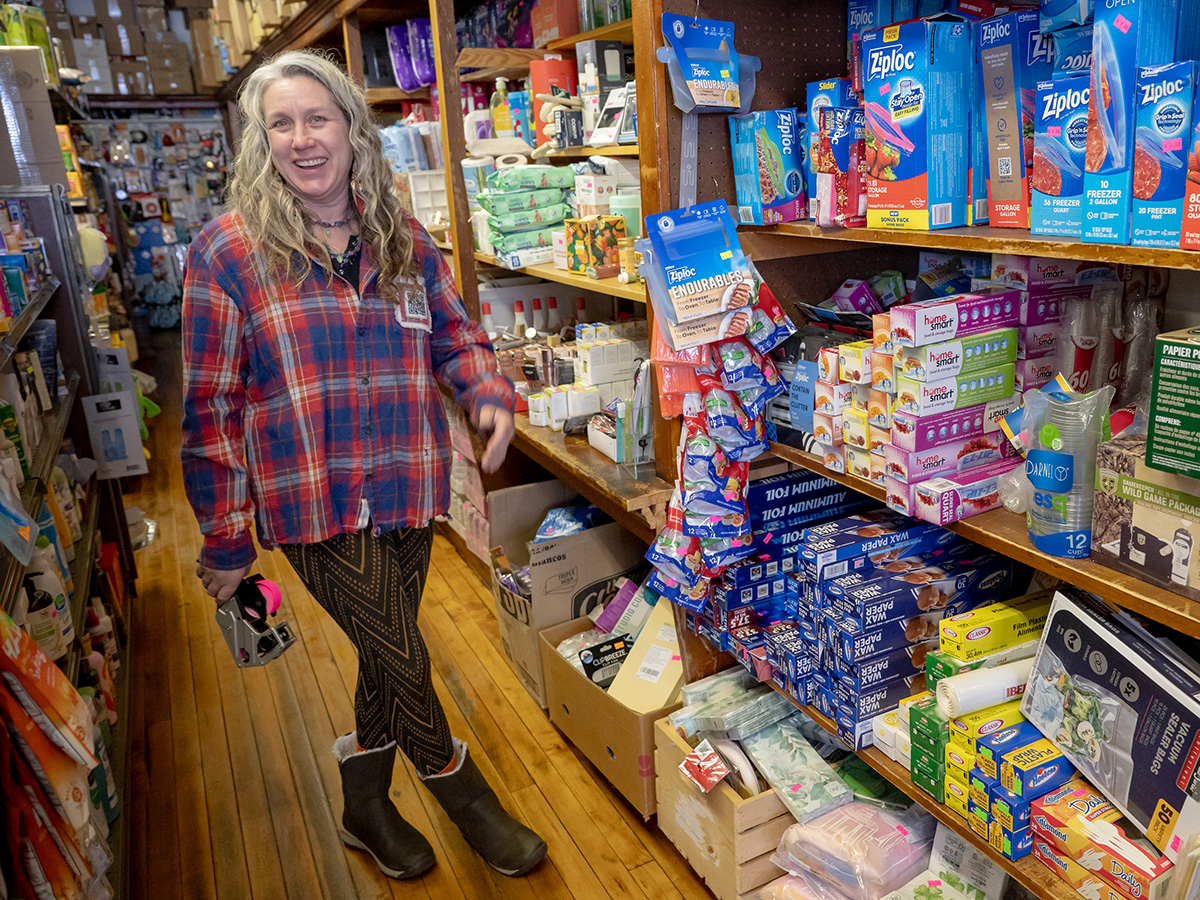
The couple said they feel maintaining old and still-useful things is undervalued. They acknowledged that preserving an old building for its history and use can be very expensive, but were adamant that it can be done in an economical way.
Truett and Waack paid cash for the building–no bank would give them a loan for such a dilapidated property–and “got in at a low entry point,” according to Waack. Chipping away at repairs over time, and maintaining their other full time careers while doing so is what enabled them to finish the project and, eventually, make the Pioneer Store their only job.
The Brussels community response has been positive, according to the couple. People are mostly thankful the building is being used after being vacant for so long, Truett said. They are also quick to share their memories or stories of what the general store used to be like, from the old pot-bellied stove to ice cream served at the counter.
The only thing people do not share is photos of the interior, she added. The couple has seen plenty of exterior images of the store in history, but none of the inside.
The Pioneer Store is one example of adaptive reuse and how historical preservation can happen quietly, by private citizens. Keeping entry costs and expectations low, putting in sweat equity and valuing old and useful things is the key, according to Truett and Waack.
This mindset is intrinsic to the couple’s life. They live in a log cabin built in the 1870s, that they also rehabilitated.
Truett said she does not understand some people’s need for everything to be new. “It makes me kind of angry. If you go to Europe, those buildings are like a bazillion years old, why can’t we do that?” she said.
And sometimes? Nostalgia is the point
“It’s just kind of a cool building,” Waacke said. “There’s a Dollar General in town. You can walk into that Dollar General and it’s going to look exactly like five thousand Dollar Generals in the United States. The Pioneer, there’s a uniqueness to it.”
Correction: A previous version of this story misspelled the name of Cody Schreck. The story has been corrected.