

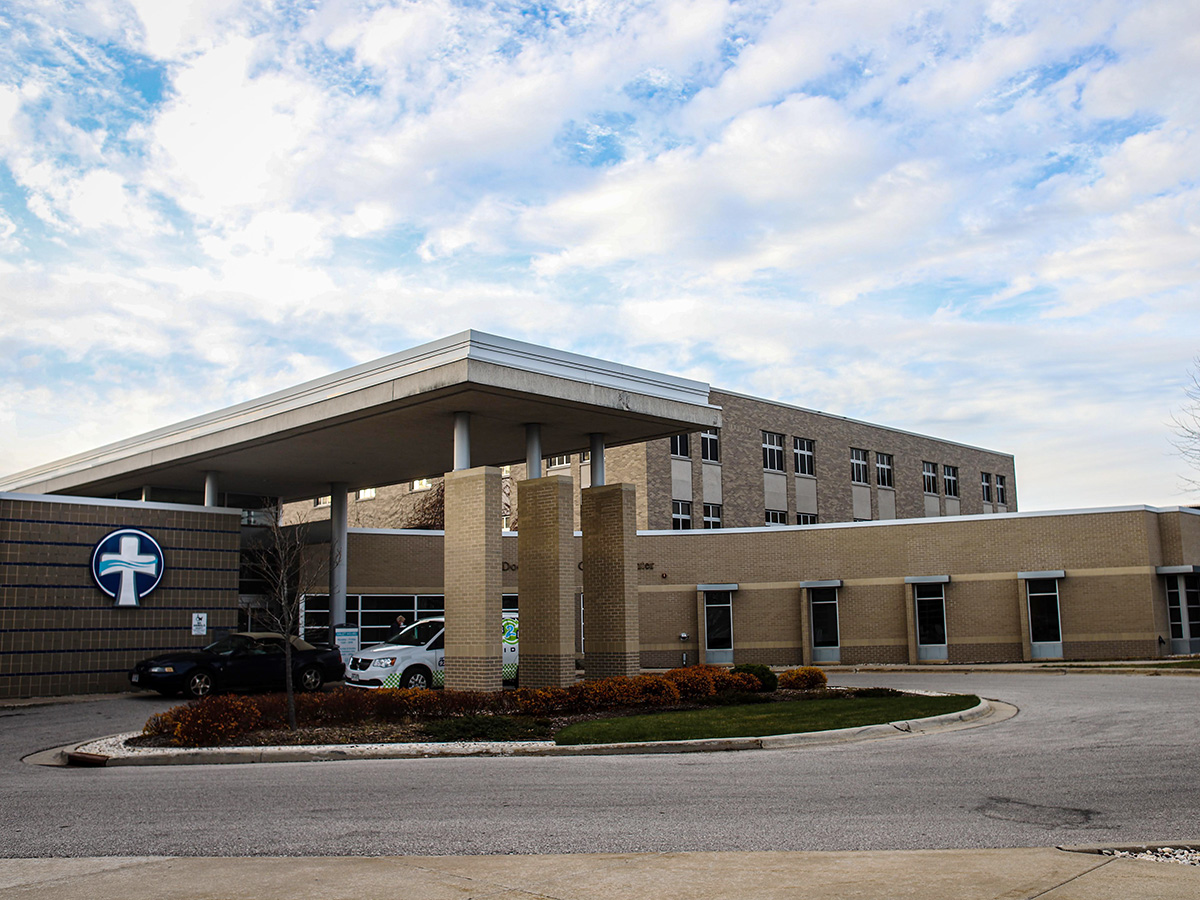
On Feb. 7, Door County Medical Center went live with Epic Software, effectively making the switch to the new system the hospital will use for electronic health records, or EHR.
About 325 million U.S. patient records go through Epic, and the switch is the largest IT investment DCMC has ever made, according to the hospital’s CEO, Brian Stephens. (Disclosure: Knock copy editor Alys Brooks previously worked at Epic as a technical writer.)
Why DCMC made the switch
Fragmented patient records and access across healthcare systems has been a problem in the past, Stephens said. Many DCMC patients see specialists in Green Bay or elsewhere and need their information transferred between physicians and care teams.
Door County has a large seasonal population—service industry workers and “snowbirds” who receive care in other states like Florida and Arizona—and as a result, DCMC needs to share patient information with other healthcare systems frequently, Stephens said.
The hospital’s previous system, Meditech, which it has used since 1999, made record-sharing unwieldy, with records staff needing to print, fax and mail hard copy documents to providers in other networks, he added.
Providers like Mapletree Medical Clinic in Sturgeon Bay. The clinic, run by Dr. Christopher Mildenberg, is part of the Independent Physicians of Wisconsin network. The clinic is one of the only independent medical providers in Door County.
So far, Mildenberg said, the Epic switch has made things a bit easier for his office. Transfer of information is instant, rather than having to wait days for record transfers, according to clinic staff.
While Mapletree does not use Epic for its EHR, its system interfaces easily with Epic. The hospital’s former system was “terrible, very isolated,” Mildenberg said. Epic is better for patient continuity of care, he added.
Part of that is because Epic holds more than 75 percent of the EHR market and is becoming the industry standard, Stephens said. The company has faced accusations and lawsuits that it is creating a health records monopoly. But Stephens said there are some areas where things are better for everyone if they are standardized, and EHR is one of those areas.
The hospital looked into switching to Epic in 2019 but deemed it too expensive at the time, Stephens said, but DCMC revisited the decision in July 2023 after internal discussions spearheaded by its chief medical officer, Dr. Jim Heise. The benefits became “too big to ignore,” Stephens said.
After the decision was made, facing the costs and complexity of a system switch was next.
Implementation costs and complexity; everybody needs a BFF
While Stephens declined to give the exact cost of the Epic implementation, he described it as the largest IT investment in hospital history, and comparable to building a new clinic.
DCMC partnered with Hospital Sisters Health Systems out of Green Bay for the switch. Since 2016, HSHS has been a 40 percent owner of DCMC. The hospital is 60 percent locally owned and controlled by an independent board of directors.
After exploring options, hospital leaders concluded that partnering with HSHS to use its existing Epic electronic records system was the most affordable and efficient approach.
In every hospital department, there is different software and an interface that works with the EHR system, Stephens explained. For example, when a patient gets a blood draw, their lab results should flow directly into the Epic system through the lab department’s own software system.
With more than 100 third-party software interfaces, Stephens said it made sense to go through each of them and determine if HSHS uses those vendors also and then consolidate contracts or change vendors depending on what was most affordable.
When the changes went into effect, about 700 DCMC employees were affected, Stephens said, and roughly 70 outside support staff were brought in from across the country. Hospital staff is relearning workflows that were built over decades with Meditech, he said.
Stephens made the analogy that the Epic switch was like a teacher switching grade levels or subject matter. If a teacher is teaching one class for years and years, and then has to switch to a new grade or subject, that is very similar to what the DCMC staff is going through, he said.
“It’s all new lesson plans,” Stephens said, and the early weeks of the transition require patience from staff and patients.
The biggest challenge so far has been learning new workflows that fit the Epic system, he said, and no amount of preparation can erase every hiccup.
“We’ve been on Meditech since 1999,” Stephens said. “All our processes are built on that.”
For example, if urgent care needs to order a lab, how does the lab staff know they need to come in and do a blood draw, he posited. “That process was hardwired with Meditech.”
A lot of things must be figured out now that the system is live, Stephens said, and staff will be learning on the fly in the first few weeks of the transition.
According to Epic CEO Judith Faulkner’s personal blog, which she posts on the company website, every Epic installation gets a “BFF”, someone who is on-site and dedicated to the installation from start to finish.
DCMC was lucky enough to have two BFFs, according to Stephens: an internal one, Chief Information Officer Eric Schrier, and HSHS Project Manager Kathy Caelwaerts.
They both helped keep the transition on track and under budget, he added.
Now that Epic is live, implementation and troubleshooting is ongoing and the hospital is paying attention to how the new system is impacting staff, patients and local control.
Early impacts
Initially, DCMC staff is seeing a short-term increase in their workloads, Stephens said, which is to be expected in learning a new system.
“Once we’re comfortable with it and know all the tools, there will be less clicks, less screen time, less pajama time,” he said. “Pajama time” is an industry term for time clinicians spend after hours in patient records.
The current metric shows that 30 percent of the time doctors spend in records was before or after work hours—pajama time. The expectation is that the new system will reduce that number, Stephens said, with Epic tools and AI-assisted notation and documentation.
Though it is still early days, Stephens said he has heard directly from three physicians so far who have made slight changes to patient treatment based on being able to see records from outside organizations more easily.
For Mildenberg at Mapletree Medical Clinic, his patients are also experiencing improvements from the Epic switch, and faster record access has been especially helpful with labs and imaging coordination. The transition will ease frustration for independent physicians and specialists outside the DCMC network, he said.
“It was long overdue, in my opinion,” Mildenberg said. “It’s a good move for the Door County community.”
Mildenberg is also encouraging his patients to set up a MyChart account—Epic’s patient portal—even if they are not currently being seen by a DCMC clinician.
MyChart provides a single unified record across systems, according to Stephens. It gives patients one place for all their health information, and Epic’s search functions are better at flagging health patterns, and will reduce missed information.
Epic is often associated with large health systems, and with DCMC partnering with HSHS on the change, there is a fear that the hospital might lose some local control, Stephens said. The switch to Epic does not change DCMC’s governance model, he said. It is still 60 percent locally owned, there is a local board of directors, and physicians still have autonomy.
Doctors have greater access and can refer to any specialist, Stephens said. “No one is looking over their shoulder telling them to refer to doctors within the system.”
Most EHR systems have security features, and Epic is no exception. Stephens described how if he wants access to a record, or anyone does who is not directly involved in the specific patient’s care, they have to “break the glass,” and put in a password and the reason for accessing the record. DCMC has always done internal security audits and Epic’s security and auditing functions strengthen that process, he said.
Looking ahead—was it worth it?
DCMC will be watching its metrics closely in the next year, Stephens said, including efficiency in moving patients between departments, physician “pajama time” in records, and patient use of MyChart.
There are some signals of care quality that may be more subtle, he added, and Epic’s search and pattern-recognition tools can spot red flags that will ultimately improve patient care in ways that will be hard to measure.
Whether Epic delivers on its promises remains to be seen for Door County, but hospital leadership and independent providers are optimistic.