

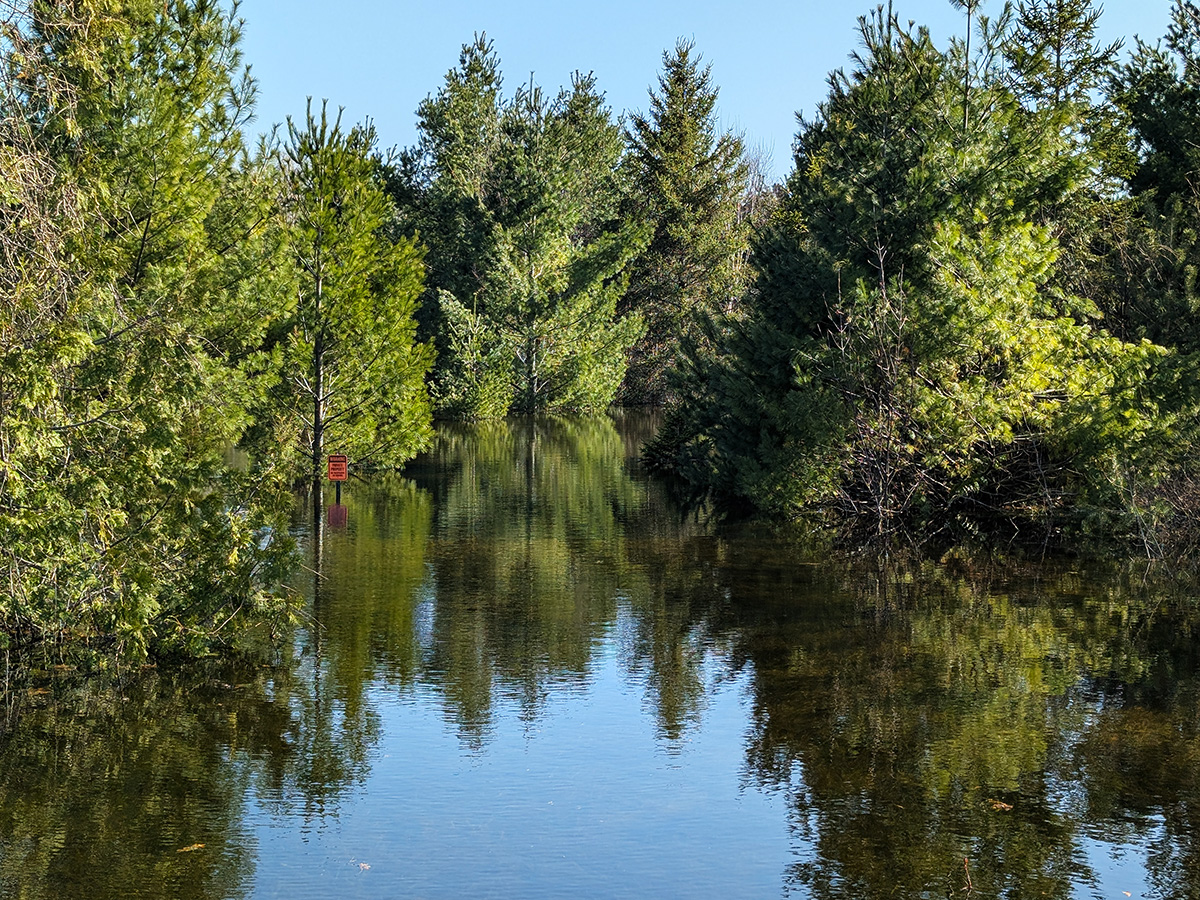
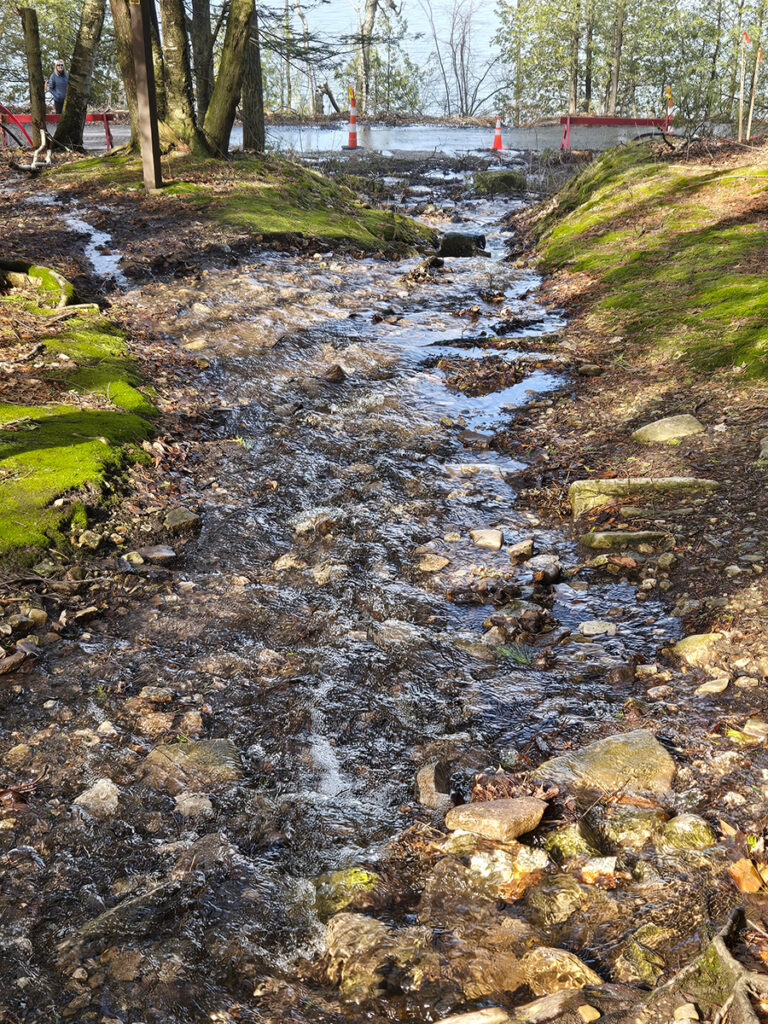
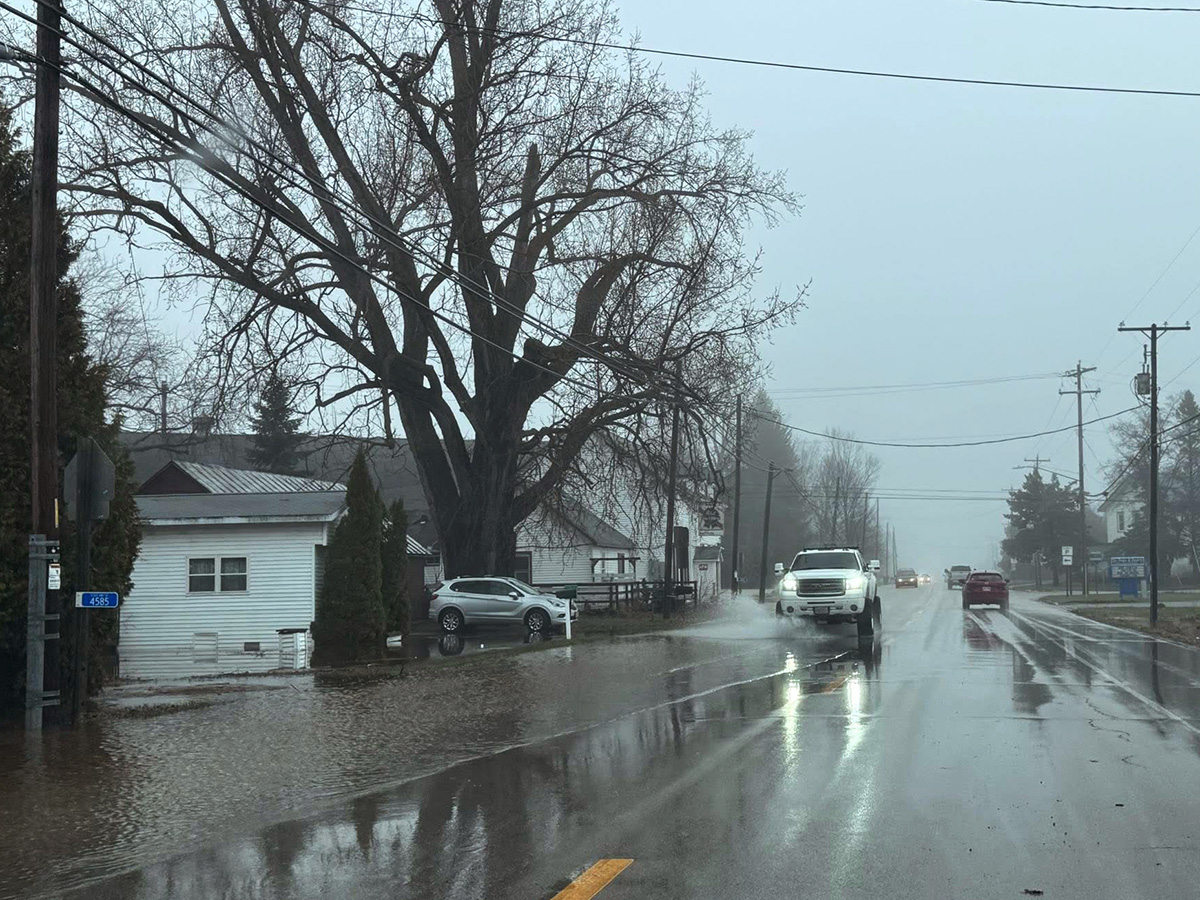
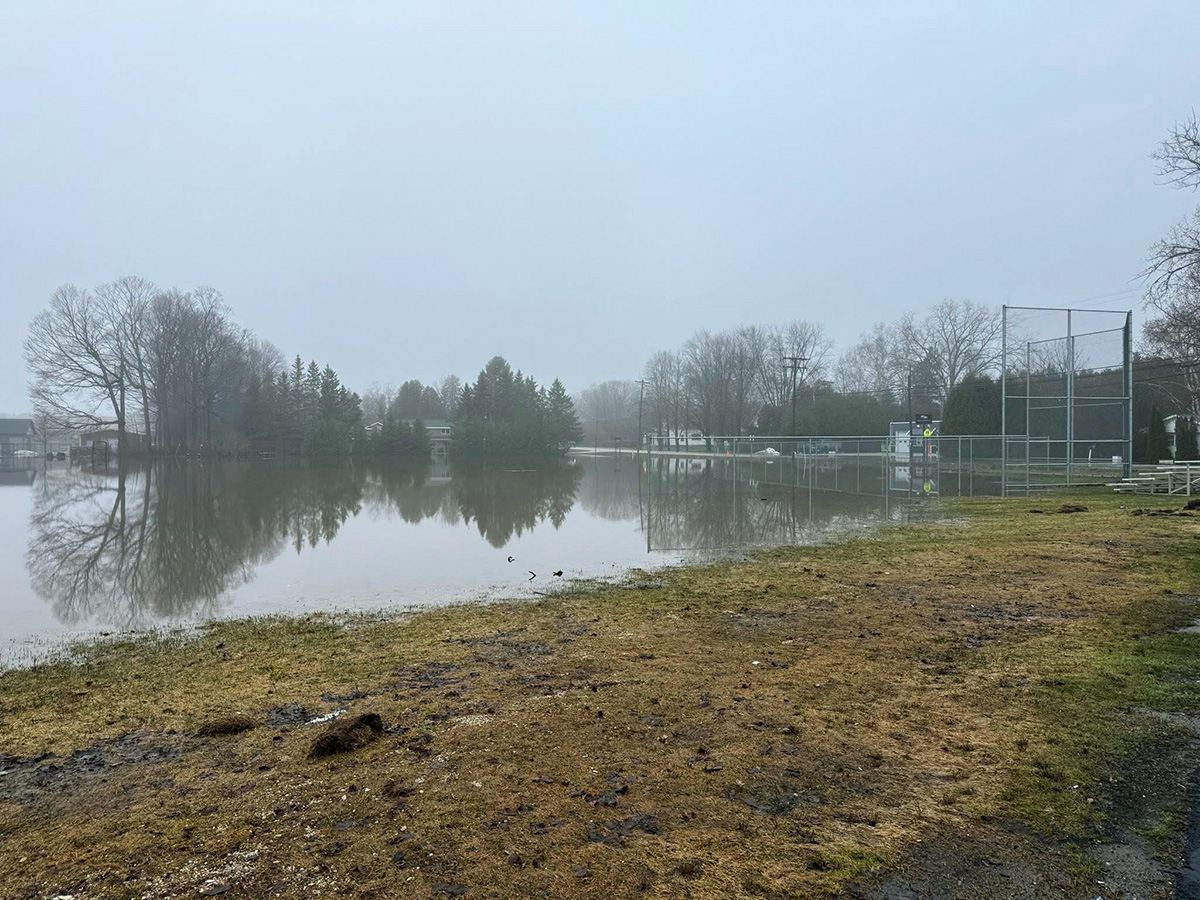
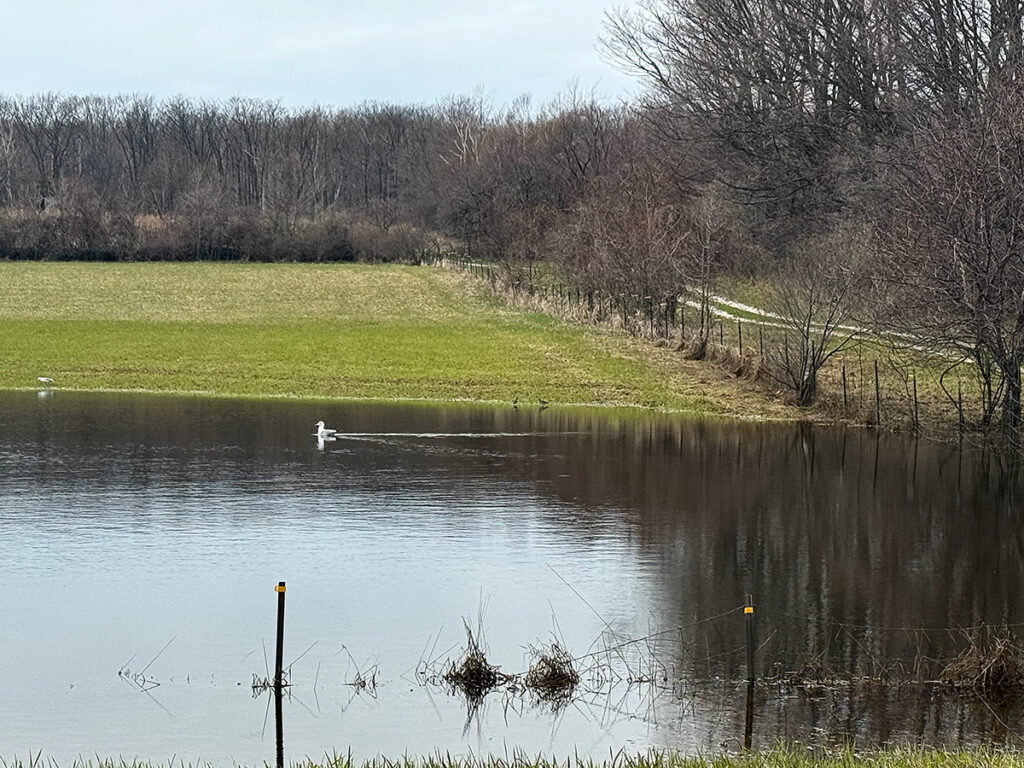
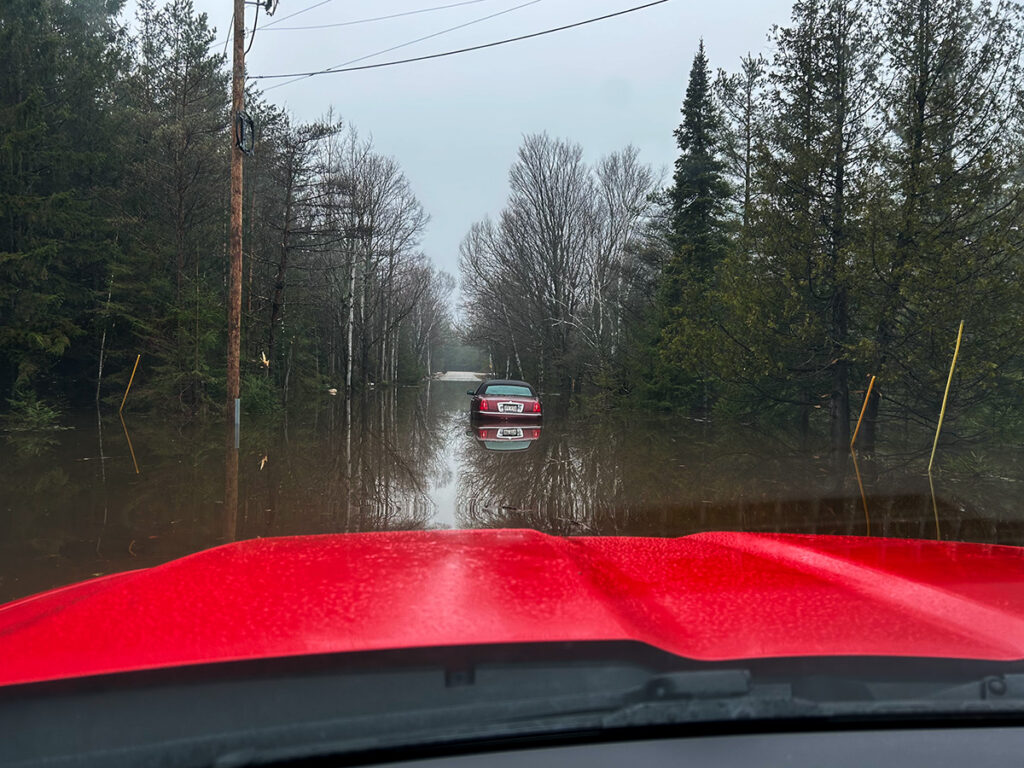
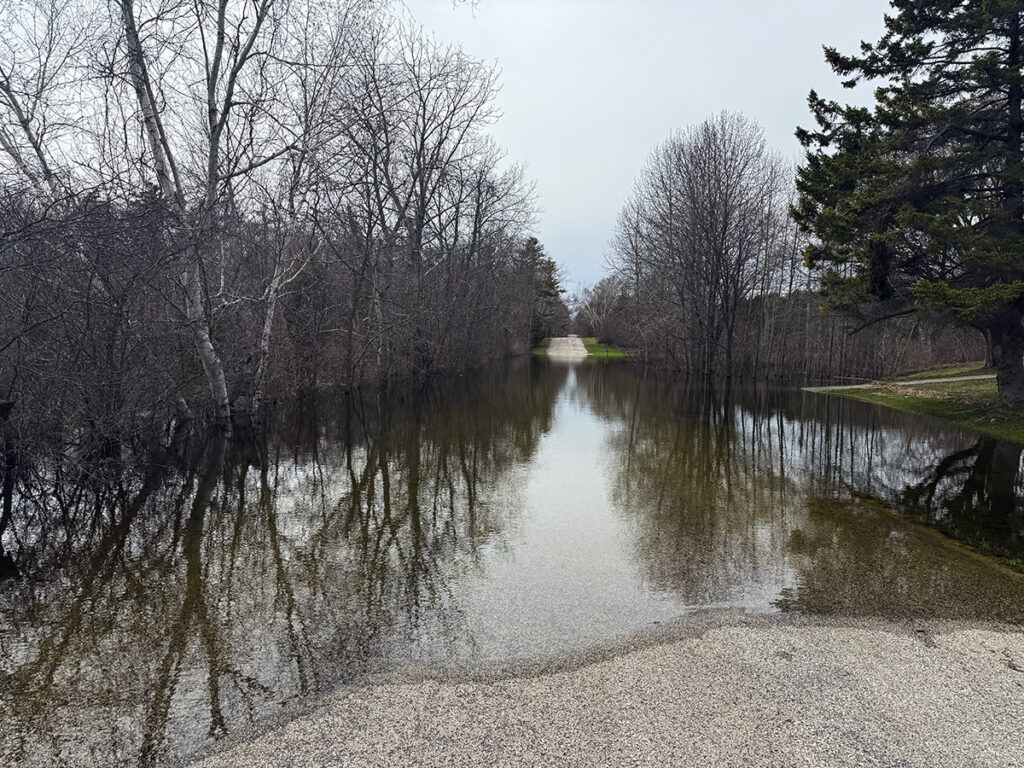
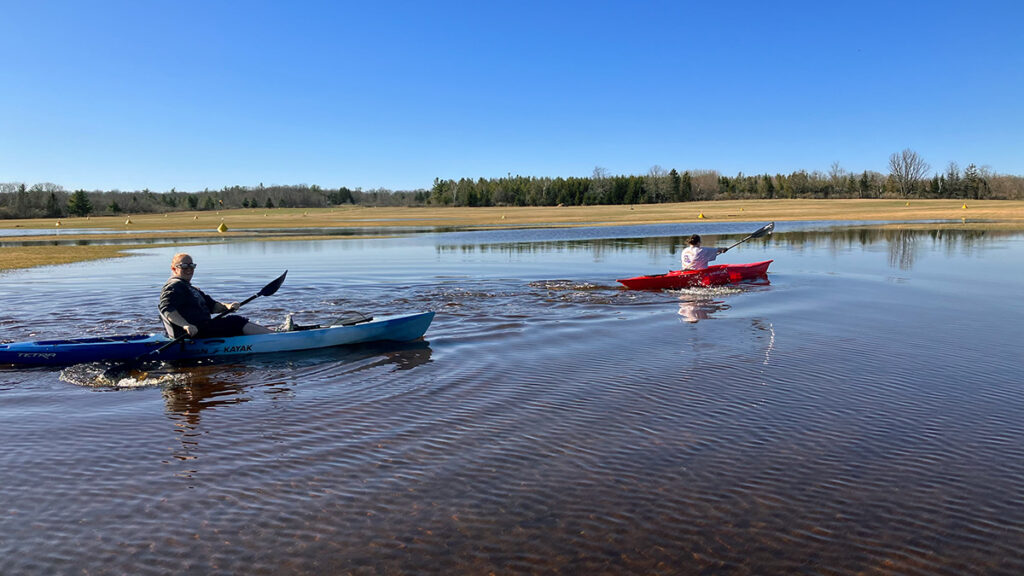
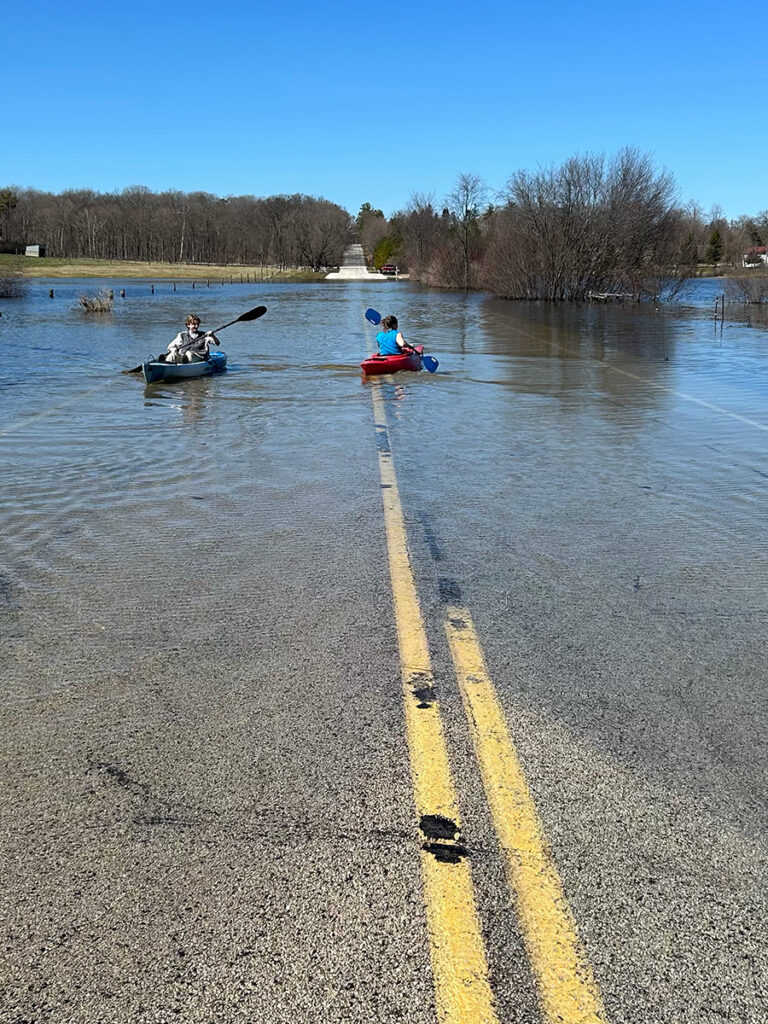
Several rounds of thunderstorms dumped record amounts of rain on Door County and throughout the state in April, just three weeks after Blizzard Elsa covered the county in a historic snowfall. Sump pump alarms were going off throughout Door County, ditches overflowed and folks were kayaking in fields.
Water is everywhere this spring, and with it comes a question on many peoples’ minds–what contaminants might be in that water?
The answer is, whatever is on the surface, according to Door County Conservationist Greg Coulthurst, who leads the county’s Soil and Water Department.
“If you have any kind of surface contaminants, those are being drawn down through the aquifer,” he said. In places with public infrastructure, like Sturgeon Bay, backed-up sewers and clogged drains can add to the problem.
Surface contaminants can include manure, soil, chemicals and nutrients, according to the Clean Water Action Council of Northeast Wisconsin, which has raised concerns about both drinking water quality and runoff reaching the bay of Green Bay and Lake Michigan and contributing to algal blooms.
Local farmers said they are doing everything they can to protect water health in a season of unprecedented precipitation conditions, according to Door County farmer Jacob Brey of Brey Cycle Farm.
Climate change is causing increasingly turbulent weather and heavier precipitation events in Door County, Coulthurst said, and it could have negative impacts on ground and surface water quality in the years to come. Current agriculture practices, regulation and infrastructure design may not be adequate in the face of more frequent and heavier snow and rain, according to several experts.
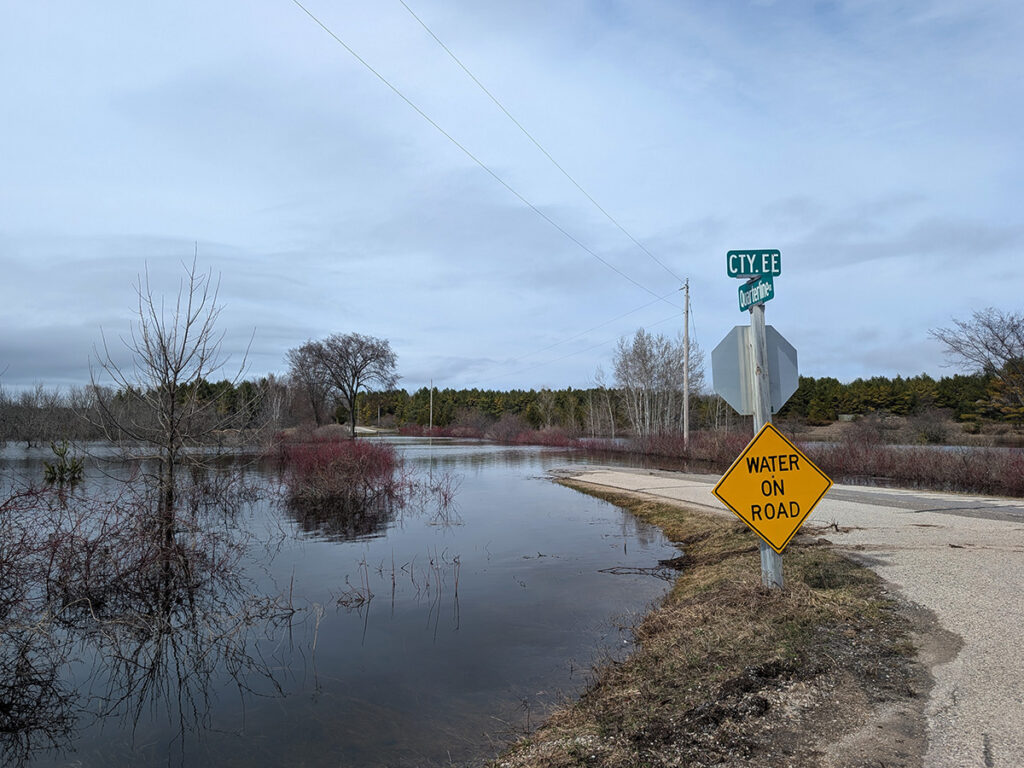
Water covers Quarterline Road near the intersection of County Road EE and Quarterline in Fish Creek on April 21, 2026. Photo courtesy of Kathy Schultz. 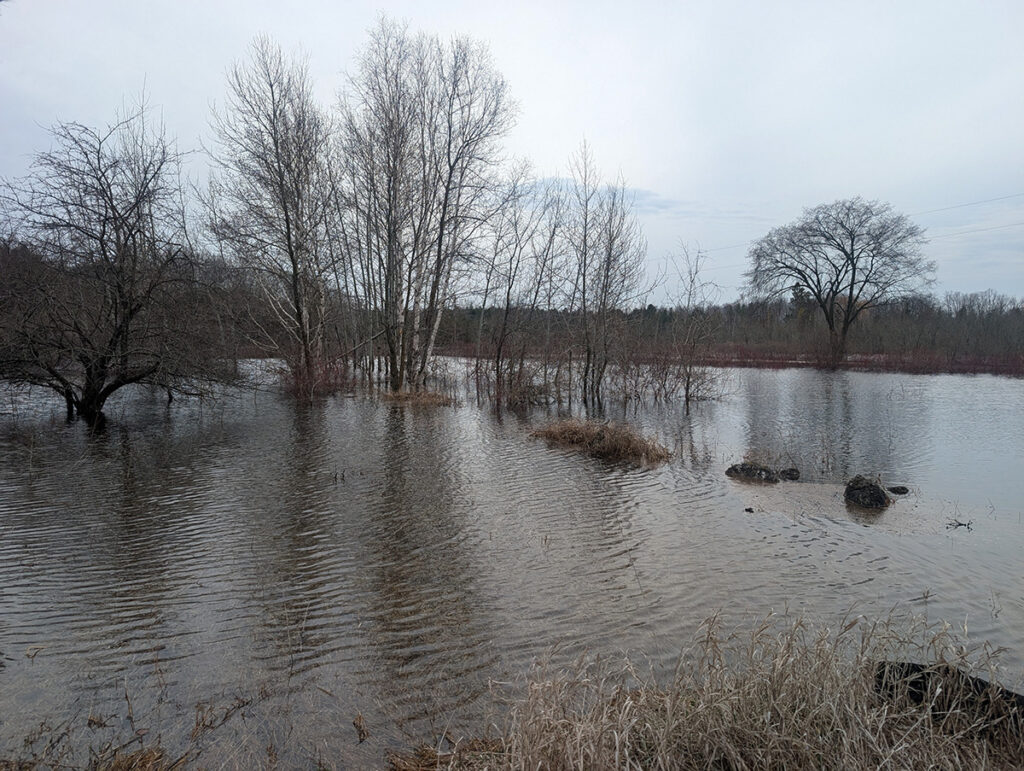
Fish Creek. April 21, 2026. Photo courtesy of Kathy Schultz. 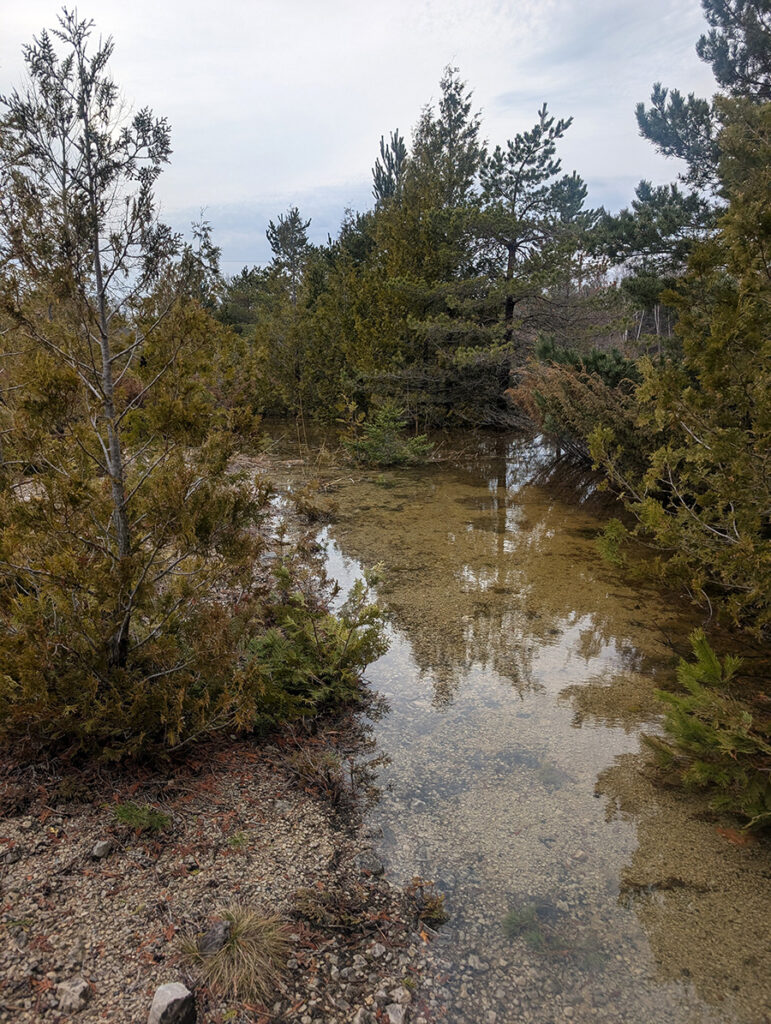
Fish Creek. April 21, 2026. Photo courtesy of Kathy Schultz. 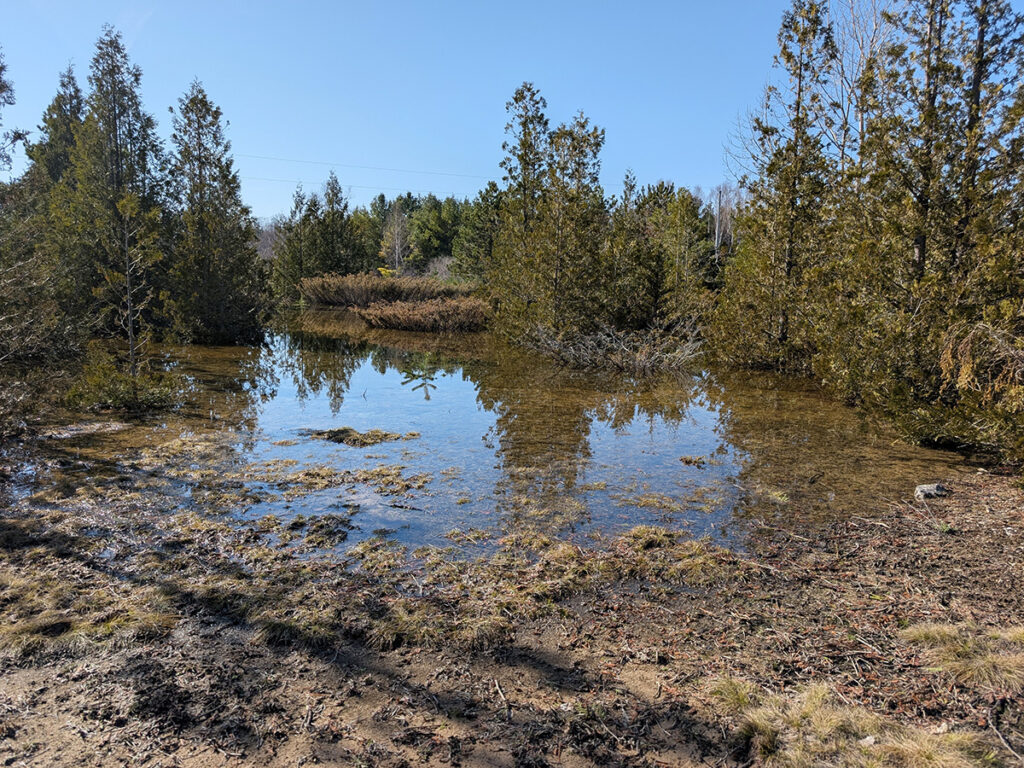
Fish Creek. April 21, 2026. Photo courtesy of Kathy Schultz.
Ground water risks
Blizzard Elsa’s heavy snowfall and subsequent melting meant soils were already saturated going into the spring rainy season, Coulthurst said, and when water is trying to get into the ground, it will go into any available crevice. All that additional water creates immense pressure, sometimes causing water to come up over well caps, he explained. This is called “artesianing.”
Door County’s shallow soil and fractured bedrock already increase risks of groundwater contamination from both septic density and agricultural activity, even under average weather conditions, Coulthurst said. Water moves from surface to groundwater faster in karst geology, which experts call rapid recharge, he added, and everything on the surface is moving with it.
If someone sees water coming up over their well cap, how concerned they should be depends on a few things, he advised. The first thing to determine is whether there is a different smell, look or taste to drinking water, he said, and homeowners should contact the county public health department for a testing kit if there is.
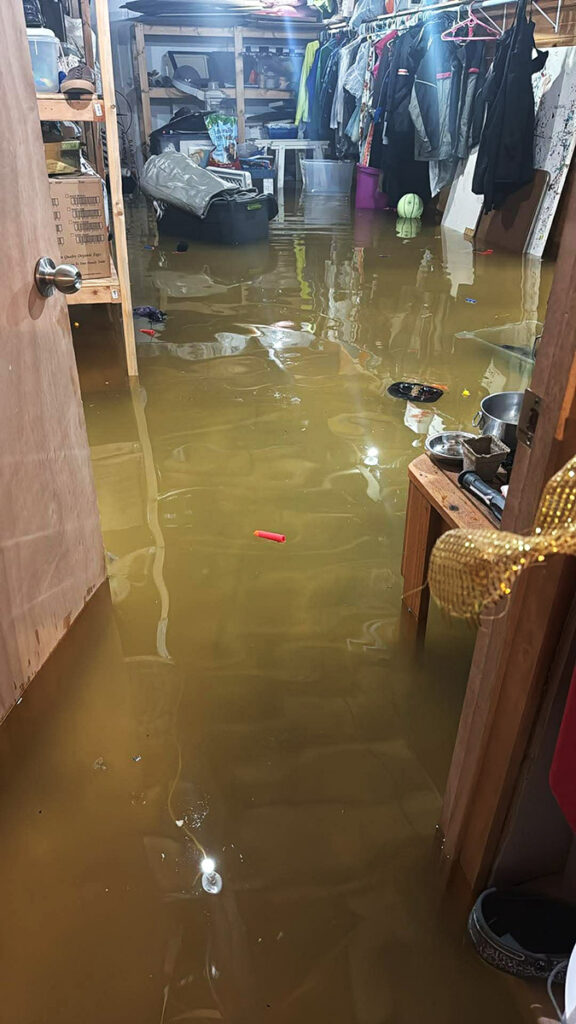
For Door County residents seeing their yards, basements and ditches fill up with brown-colored water, he has some reassurance–the color of the water is most likely due to sediment, not fecal contamination, he said. Depending on an area’s soil profile, smaller sediment particles like clay will remain suspended in the water, giving it a brown, murky color, he said.
The University of Wisconsin-Oshkosh has been testing private wells throughout Door County for years, developing a big picture of local water quality data. The spring testing was slated for April 17 and 18 this year, just days after heavy rainfall and flooding began.
Coulthurst said he’s interested to see what the samples from that testing will look like. Big rainfall events can result in contamination or dilution, he explained, and the UW program will provide a snapshot of what communities can expect as heavy precipitation and more tempestuous weather becomes the norm.
The Door County Public Health Department also issued a public service announcement on April 17 encouraging people to get their wells tested due to recent flooding.
Surface water risks
Dean Hoegger, CWAC board president and former executive director, was on the DNR’s NR151 Technical Advisory Committee. While drinking water quality is a concern after big precipitation events, surface water quality is also one.
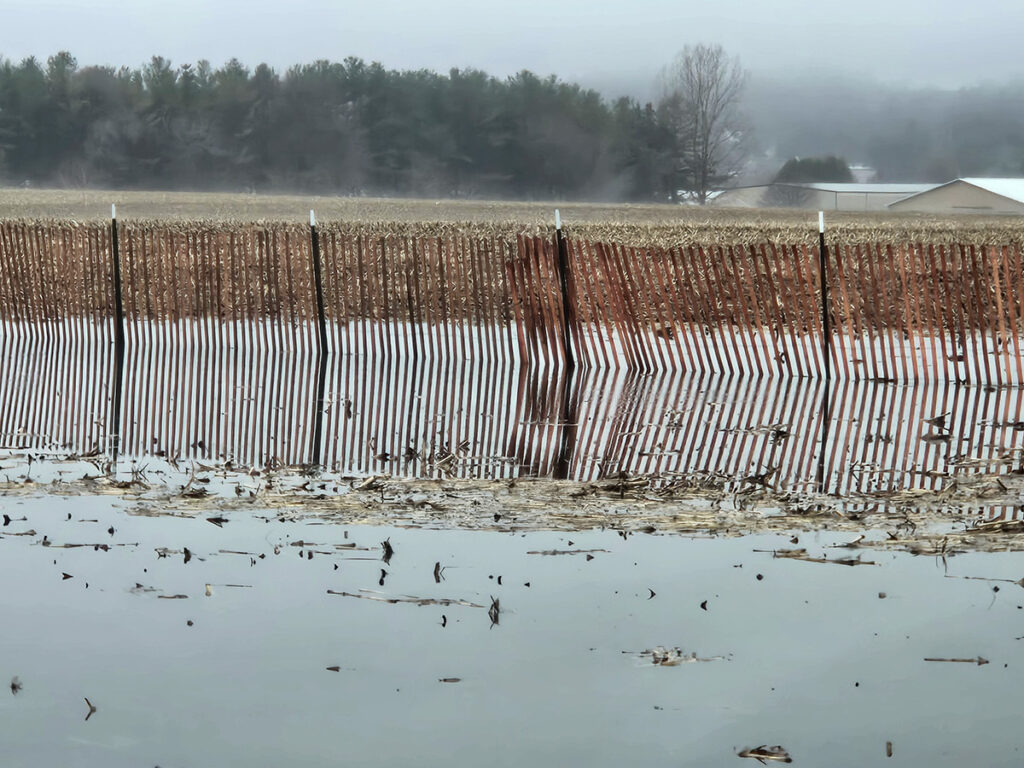
When sediment and soil run off fields, phosphorus remains attached to those soil particles, Hoegger said. Phosphorus is a chemical found in fertilizer and cow manure. When phosphorus makes its way into bodies of water, it stimulates algae and aquatic plant growth, he explained, and that growth–called algal blooms–uses up all the oxygen in that area, creating a “dead zone,” where other aquatic life cannot survive.
Nitrogen is also a concern, he said, and while it often “takes a backseat” to phosphorus, it contributes significantly to eutrophic conditions–the excessive enrichment of water with nutrients.
Under pressure
“It’s been a stressful month,” local farmer Jacob Brey said.
As a permitted CAFO, Brey’s dairy and beef farm is overseen by the Wisconsin Department of Natural Resources and there are specific state laws that govern manure-spreading under Chapter NR 151. One of them is that farms have enough manure storage for at least 180 days.
Smaller farms that do not have enough animals to fall under a CAFO designation are regulated by the county Soil and Water Department, and they also follow guidelines for manure-spreading depending on the time of year and field conditions.
About 97 percent of Door County’s cropland is in compliance with a nutrient management plan, according to Coulthurst, which specifies exactly how, when and where a farmer can spread manure. Department staff went through every single plan last year and performed dozens of manure audits, he said.
“We have an ordinance, we enforce it, and we follow up on plans. We follow up on spreading. We’re pretty persistent on everything,” Coulthurst said.
The April rains hamstrung even the best-laid plans however.
When farms reach manure storage capacity and still are not allowed to land-spread–like when there is lots of precipitation in the forecast–owners must figure out what to do with their manure until the ground is ready, Brey explained.
If people are seeing manure hauling trucks driving around when it’s really wet, it doesn’t necessarily mean that manure is going on fields, he added.
Right now, the county is seeing a lot of emergency manure transfers from pits that are getting close to overflowing going to pits that are no longer in use, Coulthurst said. Both CAFOs and smaller farms need to have permission from the overseeing body–either the DNR or the county–to transfer manure from one storage pit to another, according to both Coulthurst and Brey.
“We make sure that the structure is still functioning and viable and not going to leak or fall apart. There’s inspections that are done on these pits prior to them hauling to them,” Coulthurst said.
Beyond potential groundwater contamination, it is in farmers’ best interest not to be spreading manure on fields in recent weather conditions, Brey explained. Manure is a valuable asset in terms of fertilizer and putting it on fields just to run off would be a waste, he said.
Additionally, running heavy equipment over saturated soils causes soil compaction, Brey said. Compaction affects soil health, and there are risks of equipment getting stuck and burning expensive diesel fuel.
“No one wants to be in the fields right now,” he added. “We’ve incurred a lot of costs moving (manure) to other locations, but it’s the right thing to do.”
Clean water advocates say it’s not enough
Wisconsin’s NR 151 made modest changes to manure spreading rules, according to Hoegger, and while contaminated drinking water is less of a concern than it was before the restrictions, CWAC would like to see longer manure storage time requirements and more frequent inspections as a start to appropriate regulation.
Unless there are changes made at a legislative level, “the DNR’s hands are tied,” he said. “They can’t make these sensible judgments like, ‘we’re seeing a lot of heavy rainfall now with climate change, we have to have a greater amount of manure storage.’ ”
Hoegger said some farmers were spreading manure just before the recent rains, based on observations and reports from CWAC members in Brown, Door and Kewaunee counties, which could lead to manure-contaminated water runoff. Situations like that indicate a need for more regulation and enforcement, rather than response after the fact, he said.
Coulthurst said his department knew of one farmer who put a light application of manure on some of the fields with deeper soil, in between rainfall events, and staff investigated the situation.
“It’s not something that we would have recommended, and we did have to investigate it to see if there was any runoff, and we didn’t find any, so that was good,” he said. “They’re itching to get out and we’re itching to prevent any kind of contamination.”
Different weather, a different look at infrastructure
“I’ve been here since 1993 and this is probably the worst I’ve seen,” Coulthurst said, indicating snowfall compounded by rainfall this year. However, with the area getting “event storms” twice a year, he said he’s interested in asking the question of how the county is prepared.
Septic density plays into groundwater quality also, Coulthurst said. Septic density refers to the concentration of septic systems in an area relative to the land’s capacity to absorb and treat wastewater. An example is one of the UW-Oshkosh well-testing program’s zones encompassing Bayshore Dr. in Sturgeon Bay, he said Wells in the zone show high levels of nitrates.
Coulthurst asserted that those nitrate levels are not from an agricultural source, but a human one.
The area has shallow soils and the groundwater is very deep, he said. Even though wells are deep, they are susceptible to contamination because of the shallow soil and fractured bedrock.
“And there is a density issue,” he added. “Short term rentals?…you get a big party of bachelors or bachelorettes in there? That is overloading the system of that rental now.”
As heavier rains and faster groundwater recharge become more common, added strain to these systems may increase the likelihood that contaminants move into ground water, raising questions about whether current septic standards are built for these conditions.
Current septic systems are designed to treat E. coli primarily, and they do a good job of it, according to Coulthurst.
“But everything else that is dissolved in water and your septic system is going back in the aquifer,” he said. Medications, caffeine, artificial sweeteners and other potential contaminants make their way into people’s wells and drinking water, he said.
Additionally, while recent flooding caused business and road closures, infrastructure like bridges and culverts is also threatened by heavier and more frequent precipitation, he said.
The Wisconsin Department of Transportation’s “6-20 Program” gives financial support to counties and municipalities for inventory and condition assessment of bridges and culverts that are between six and twenty feet long. Door County participated in that inventory, Coulthurst said, and there will be funding for engineering redesigns of some of the local culverts and bridges to handle more water in the future.
Different weather, a different look at farming practices
Whether big or small, there are changes farmers can make to mitigate runoff and water contamination, according to CWAC members, and manure storage is one of them.
Requiring farms to have more than 180 days of manure storage may be helpful as wetter weather persists, Coulthurst said.
Farmers are also making changes to their practices and adopting technology to respond to increased precipitation and more volatile weather, according to Brey.
He described an online tool developed and managed by the Wisconsin DNR and Department of Agriculture, Trade and Consumer Protection. The Runoff Risk Advisory Forecast shows maps and short-term runoff risk for manure spreading. The maps track soil saturation levels, temperature and precipitation levels and the National Weather Service updates the forecasts four times a day.
“That’s been a new tool that I use, and we look at it pretty closely,” Brey said.
Brey’s farm also uses cover crops–plants used to protect the soil in between main crop plantings–on most of his fields. He said the method may not work for every farm and every soil, but in his work with Peninsula Pride Farms, he educates other farmers on the method.
Cover crops are great for preventing erosion and runoff, Hoegger concurred. They don’t have to be actively growing to help prevent early spring rain runoff. Root systems established in fall and leftover plant material from the year before hold soil in place and impede water movement before there’s even any green in the field.
The CWAC would like to see more cover cropping and for more farmers to adopt managed grazing practices–rotating livestock on pastures to protect soil and promote plant regrowth.
It is better for the soil, Hoegger said, and also better for manure disposal. Rather than using fresh water to wash manure out of barns into pits, solid manure can be collected and composted for fertilizer, he said.
Door County has a lot of clay in its soil, making it more difficult for water to drain. To mitigate this issue and improve growing conditions, many farmers install drain tiles, underground pipe systems beneath a field that carries excess water away from the soil.
But CWAC Vice President Charlie Frisk said drain tiles grab the water and put it right into streams and other waterways, circumventing buffers meant to filter that water before it runs off the field. When tiles are installed, a buffer should be right against the tile line to ensure filtration, he said. This could help mitigate contamination from runoff.
No matter what, according to all stakeholders, this wetter and more unpredictable weather is not going away, and property owners, farmers, policymakers and regulatory agencies need to adapt to meet the conditions in order to preserve both public and environmental health.
“Follow the science,” Frisk said.
Correction: In a previous version of this story, captions accompanying two photos of kayakers on Washington Island incorrectly attributed those photos to Emily Small. The photos in fact are courtesy of Sarah Gibson. The captions have been corrected.