

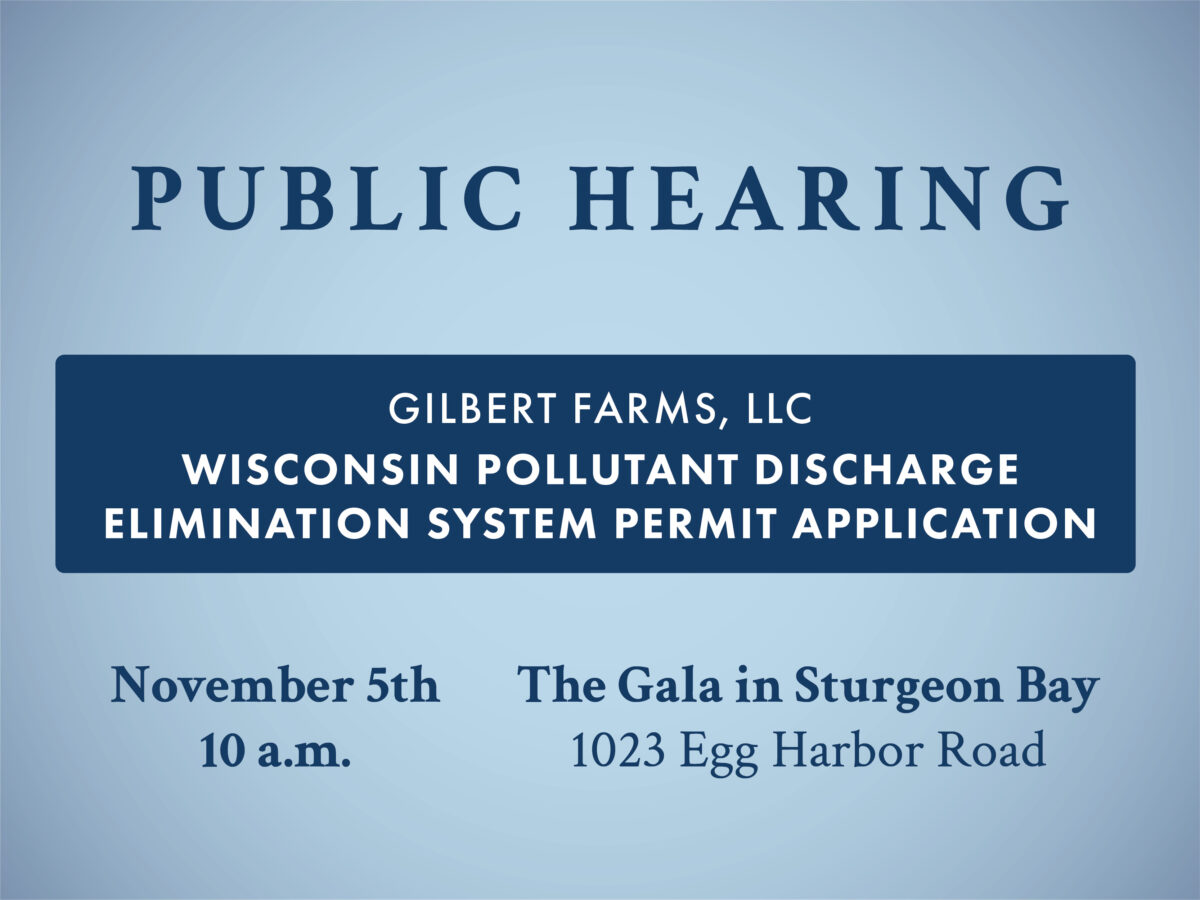
Prompted by more than 300 public inquiries, on Nov. 5, the Wisconsin Department of Natural Resources will host an in-person public hearing for a Wisconsin Pollutant Discharge Elimination System, or WPDES, permit for Gilbert Farms, LLC.
It is the first time in five years the department has had an in-person option for a WPDES hearing.
A hearing notice will be formally announced as soon as all details are confirmed and relevant documents are in order, according to an email sent to community stakeholders by Brittiny Mueller, the DNR wastewater specialist overseeing the permit application process.
CAFO refers to a “concentrated animal feeding operation.” Earlier this year, Gilbert Farms, a dairy farm in Sevastopol, applied for a WPDES permit from the DNR to become a CAFO.
The permit requires the farm to prevent manure and wastewater from getting into waterways, develop a manure management plan, control runoff, and provide adequate manure storage. The DNR also dictates how many animals a farm can have.
If the DNR receives enough requests from the public, it will hold a public hearing in advance of permit issuance. Not only did the DNR receive hundreds of emails and phone calls requesting a public hearing, Mueller said, but most of them requested both virtual and in-person access.
Mueller took the feedback back to her department for consideration, she said, and advocated for the agency to honor the public’s request. The logistics of scheduling an in-person hearing are more complicated than a virtual-only event, she added, particularly finding a venue that will accommodate a large number of people.
At the hearing the DNR will hear comments and questions from the public about Gilbert Farms’ bid to become a CAFO. Mueller will take all of those comments back to the agency and will respond to them in the final permit documentation.
Several Door County residents have formed an informal opposition group to the Gilberts’ expansion, according to Mike Bahrke, director of the Door County Environmental Council. The group has met via Zoom a handful of times since the permit application was made public in June, he added.
While their overarching concern is potential groundwater contamination by the amount of manure and wastewater produced by a CAFO, members of the group have identified a few specific concerns with the Gilberts’ permit application.
Members of the group have initiated a social media campaign, submitted letters to the editor and appeared at county and municipal meetings over the last two months to raise awareness about the permit and its potential impact on the surrounding community. The group is largely responsible for advocating for the in-person hearing as well, according to Bahrke.
Notes on a CAFO tour
Knock reporter Emily Small and photographer Heidi Hodges toured Heims Hillcrest Dairy, Heims Brothers Custom and Heims Excavating in September. Click here to read a story offering a glimpse into the Heims’ CAFO.
Gilbert Farms’ story
Marge and Tim Gilbert are the sixth generation running the dairy farm, according to Marge Gilbert in a phone interview on Sept. 26. The family settled in Sturgeon Bay in 1878 and began farming soon after, she said.
“We’ve grown in little increments,” she said. “And you know, because we’re here, and we’re living it, it doesn’t seem to sink in to us that we have this large dairy farm. We’re like, no, we’re just a family dairy … so it’s hard to envision us being labeled as this mega farm.”
Gilberts Farm has ten full-time and five part-time employees, including family members, and owns six houses for employees and their families, according to Gilbert.
Part of the reason the farm is expanding is to be more financially viable and sustainable, she said. The technology and systems they use for animal care and maintaining their facilities is expensive, and they are dependent on market fluctuations when it comes to selling their milk, she explained.
“You know farmers don’t set their (milk) prices, right? We’re here taking what they give us,” Gilbert said. “It is up to the government and the USDA to set their prices.”
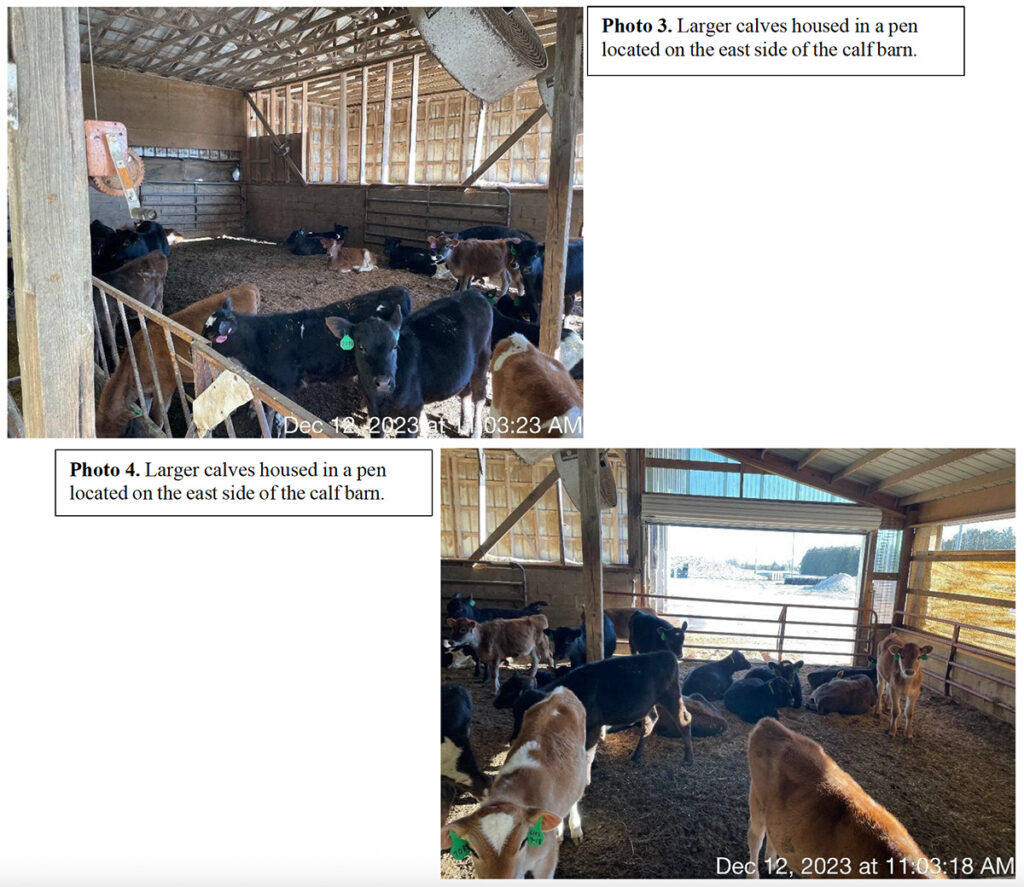
Gilberts use sensors, apps and other technology to alert them when cows are sick, monitor airflow in the barn – 7 miles per hour and above keeps flies away – and track information for manure-spreading.
They are also working with a company to become involved with a carbon credit program, Gilbert said. This would allow the farm to earn income by doing things to lower greenhouse gas emissions.
Regarding the concerns raised by other community members about the expansion, Gilbert said she was willing to address each of them.
“Right now, we’re focused on meeting the requirements that apply to our farm, especially given the environmental sensitivity of our site,” Gilbert said. “That’s not taken very lightly … we’re not interested in doing the bare minimum. We want to grow in a way that’s completely responsible, transparent and sustainable.”
Concerns
Too many animals
Gilbert Farms currently has 1,443 animal units, according to the permit fact sheet. A CAFO is defined as a farm with 1,000 or more animal units. Animal units refer to weight, and one animal unit is equal to 1,000 pounds of animal flesh.
This is not the first time the farm has had more animals than allowed. In February 2023, the DNR issued a Notice of Noncompliance to the farm for having 1,058 animal units, 58 over the threshold.
Having more animal units than allowed is a violation of state and federal laws, according to Mueller, and the consequence is that the farm must either depopulate or apply for a permit to expand. Gilberts chose to depopulate in 2023.
When the Gilberts applied for a WPDES permit in 2025, they provided current information about their farm on the permit fact sheet. Based on that information, the farm already had a CAFO amount of animals before applying for a CAFO permit, according to Bahrke.
“That bothers a lot of people,” he said. “If they’re going to increase that much without applying for a permit, there’s something wrong with that.”
How many gallons?
During the August county board meeting, Rod Miller, a neighboring resident to the farm, referred to a discrepancy he perceived in Gilbert Farm’s permit application. The “permit fact sheet” portion of the application, with information provided by Gilbert Farms, states that the farm will generate 5,737,664 gallons of liquid manure and processed wastewater and 838 tons of solid manure annually after expansion.
However, according to the conditional approval of the Gilberts’ permit, in a letter from the DNR dated Dec. 4, 2024, the department stated that those numbers are to be anticipated only in the first year of permitting.
“After the planned expansion and additional leachate collection, your herd will annually generate approximately 21,452,275 gallons of manure and process wastewater and 1,570 tons of solid manure,” the document reads.
These are “troubling inconsistencies,” Miller said. “There are discrepancies that are not technical quibbles. They are matters of public health and community impact.”
Sinkhole
Former head of the Door County Soil and Water department, Bill Schuster, informed opposition group members there is a sinkhole located on Gilbert Farms’ property, according to Annette Vincent, and it is “dangerously close to production facilities.”
Vincent is a Sevastopol resident who lives a few miles from the farm. She raised the issue of the sinkhole at a Sept. 15 Sevastopol town board meeting.
“A containment breach in the liquid manure storage facilities would be catastrophic as gravity would channel the liquid into this sinkhole and into the aquifer of the surrounding area,” she said.
Vincent cited a manure-spreading accident in 2014 over a sinkhole near Jacksonport that sickened at least 16 people and contaminated wells for weeks.
Enough oversight?
DNR oversight includes only the impact of livestock waste on water. Noise, odor, animal welfare and traffic are often issues raised by people who live near a CAFO, the DNR’s Mueller said.
Accordingly, some of these are issues the opposition group is also concerned about.
“Our air quality is impacted,” Annette Vincent said in a statement to the Door County board in August. “As anyone who has ventured near a CAFO can attest, they often smell particularly when the manure slurry is spread on nearby fields.”
Vincent and her husband, John, asked both the county board and the Sevastopol town board to consider putting local rules in place to further regulate the proposed CAFO.
“The DNR permit as currently written indicates it is subject to local rules and regulations,” John Vincent said. “Some communities in western Wisconsin are using local regulations to protect their citizens. Some areas that could be addressed are fire response plans, carcass and infectious disease plans, a financial bond in the event of a catastrophe or bankruptcy.”
“Many of us are not willing to trust only the DNR to regulate and monitor this situation,” he added.
County Corporation Counsel Sean Donohue indicated “there is little that we at the county can do other than voice our opinion to the DNR.”
Responses
Too many animals
The farm “took immediate steps to address it, including depopulating” to bring itself back into compliance in 2023, when they exceeded the number of animal units they were allowed, Gilbert said.
Filing for the WPDES permit was part of the farm’s effort to move forward transparently within the regulatory framework, she added, and the 1,443 animal unit count listed in the permit is a point-in-time “snapshot” of their herd. The family never intended to go over the allowable limits, or keep it a secret, Gilbert said, and she acknowledged the non-compliance was an oversight on their end.
“Years ago, animal numbers were counted differently,” she said. “We weren’t overcrowded. So there was really never a red flag (for us).”
Since Gilbert Farms submitted the permit application, effectively self-reporting their most recent violation, Mueller said, the DNR is not taking any additional disciplinary action against the farm.
“Quite often a farm goes over AUs without a permit,” she said. “We’re working on that, checking milking records. But we don’t have staff to count the cows.”
There are seven DNR employees responsible for farms in northeastern Wisconsin, she said. Five oversee permitted farms, or CAFOs, and two oversee non-permitted farms.
Mueller herself is responsible for 24 CAFOs, and many of those permits have more than one site. CAFOs get two regular inspections every five years, and additional inspections if there is a complaint.
“When I go to bed at night I can tell myself all (my) farms are following the rules and I’m doing the best I can,” she said. “We all want the same thing, clean water and land for generations to come.”
How many gallons?
The discrepancy in gallons of wastewater is likely due to confusion surrounding the difference between “leachate” and liquid manure, according to Conservationist Dahl. Leachate, or process wastewater, is water runoff from animal feed and anything else besides manure.
“Right now the annual manure production (at Gilbert Farms) is around 5 million gallons,” he said. “If they expand, it will be twice that.”
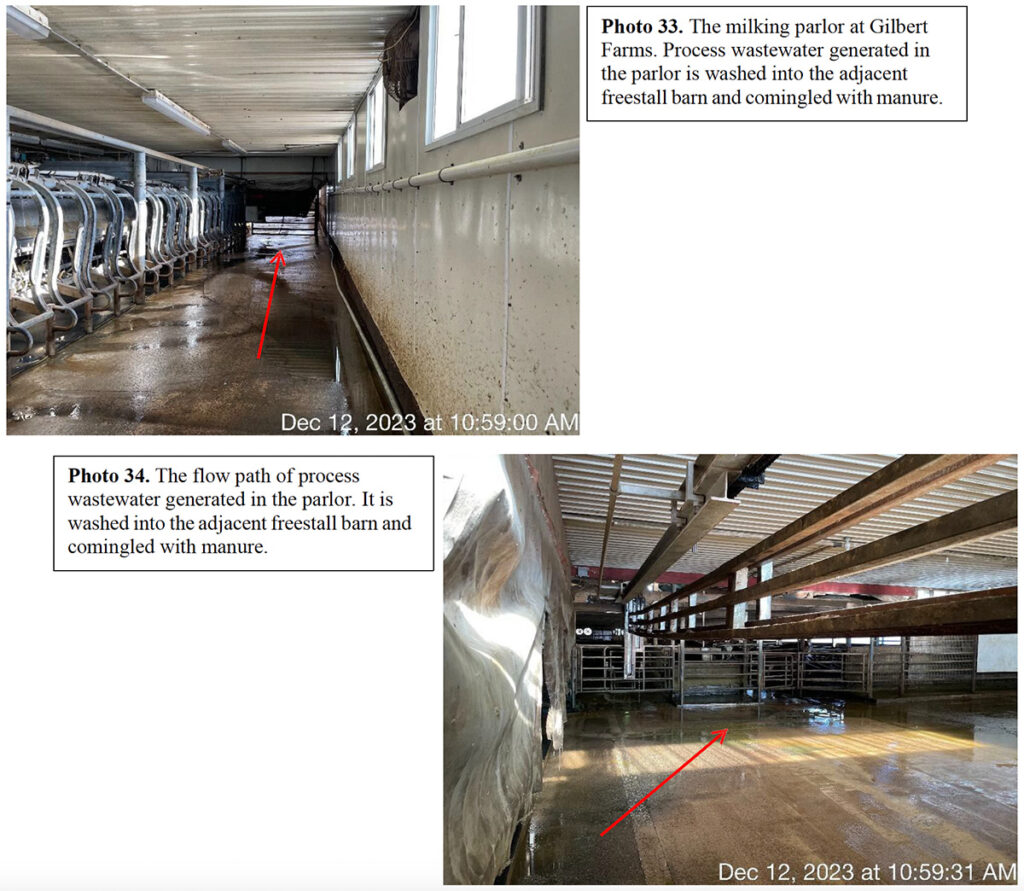
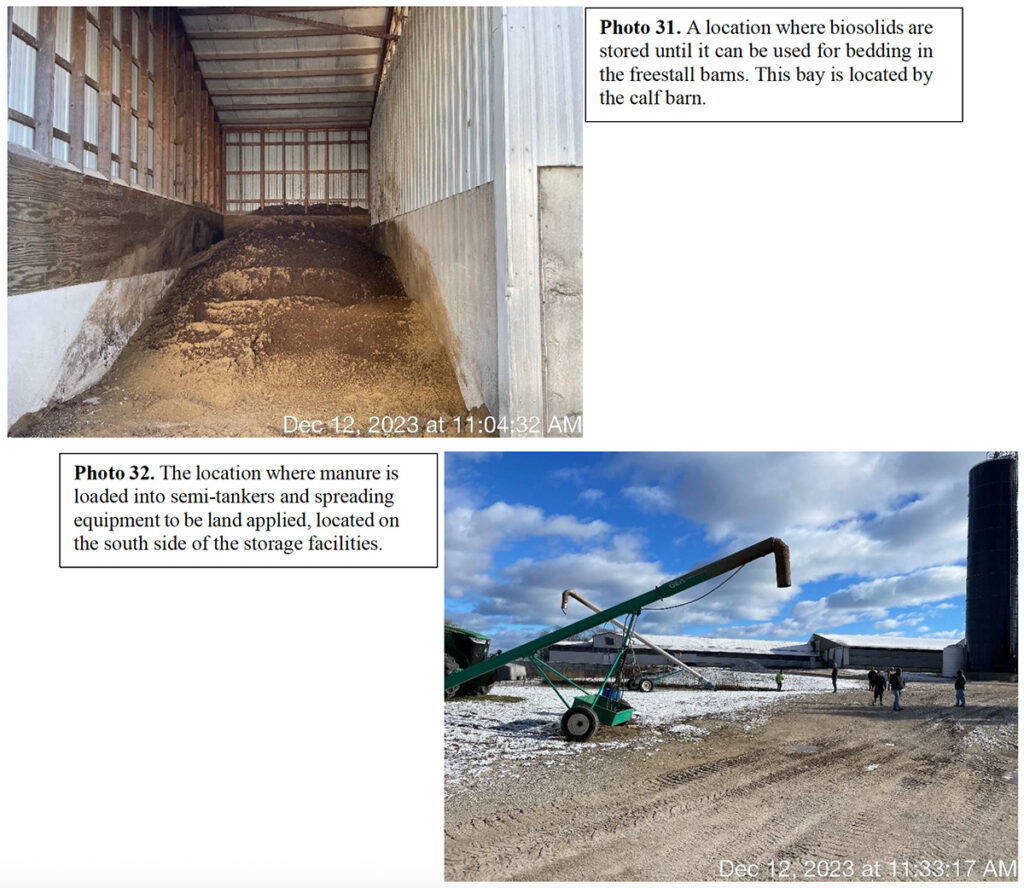
Once the farm has a WPDES permit, according to Dahl, it will be required to collect, store and treat, or land-spread leachate as well as manure. It is not required to do that under its current status. The 21 million gallons in the conditional approval letter refer to the total amount of wastewater generated by the farm once leachate is factored in, he said.
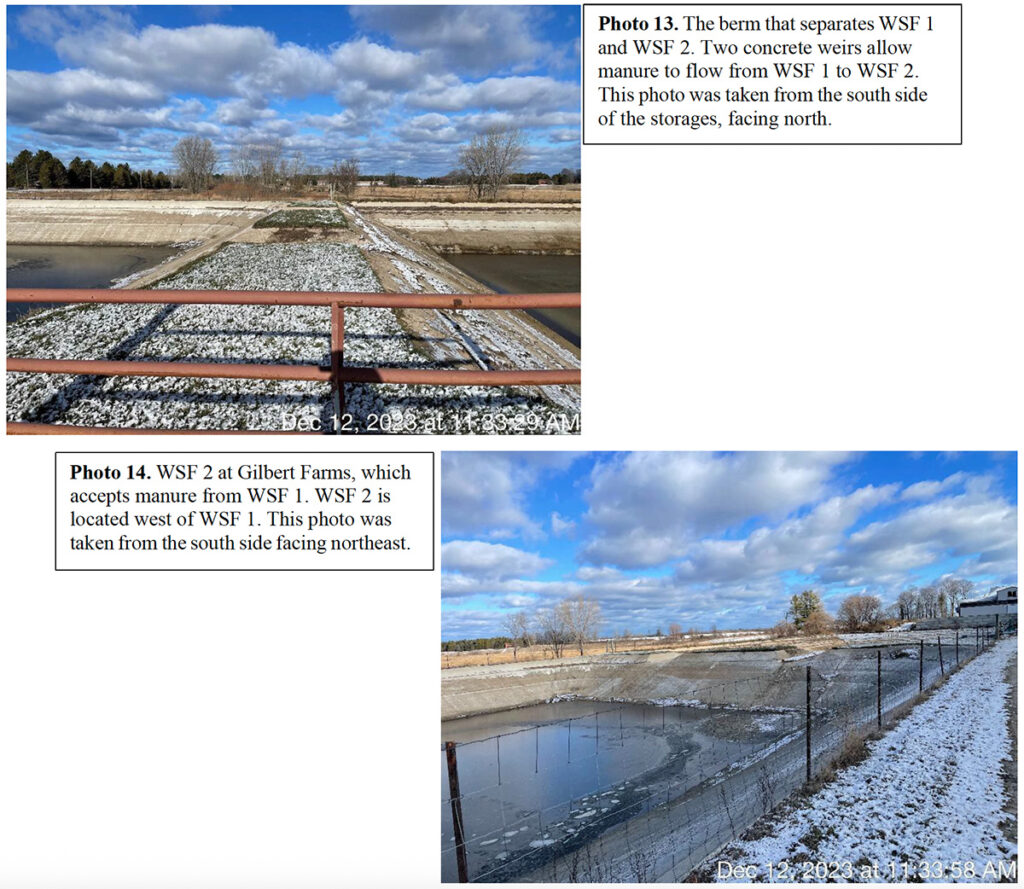
As a CAFO, Gilbert Farms will also not be able to landspread wastewater whenever they want. They must develop and follow Nutrient Management plans for land-spreading manure, and have storage capabilities for wastewater for at least 180 days. Right now they have storage capabilities for 94 days, according to inspection reports in the permit application documents. Appropriate storage will necessitate another eight million gallons of manure storage at the farm, and must be in place and operational by December 31, 2026.
Sinkhole
The county Soil and Water Department and the DNR are now aware of the sinkhole on the Gilbert Farms property, according to Dahl and Mueller.
Gilberts Farm is already classified as a sensitive environmental setting, Dahl said, and subject to an additional layer of requirements, including manure storage that must be “built to the strictest standards.”
Marking the sinkhole’s location as part of the farm’s emergency spill response plan might be necessary, he said, “so we know where to look first if something happens.”
He added that the Jacksonport manure spill in 2014 was a very different circumstance from how Gilbert Farms’ site is set up and it does not hold the same risk.
In recognition of the Gilbert Farms sinkhole and environmentally sensitive site conditions, the DNR has added regulatory measures as part of the WPDES permit process, Mueller wrote in an email.
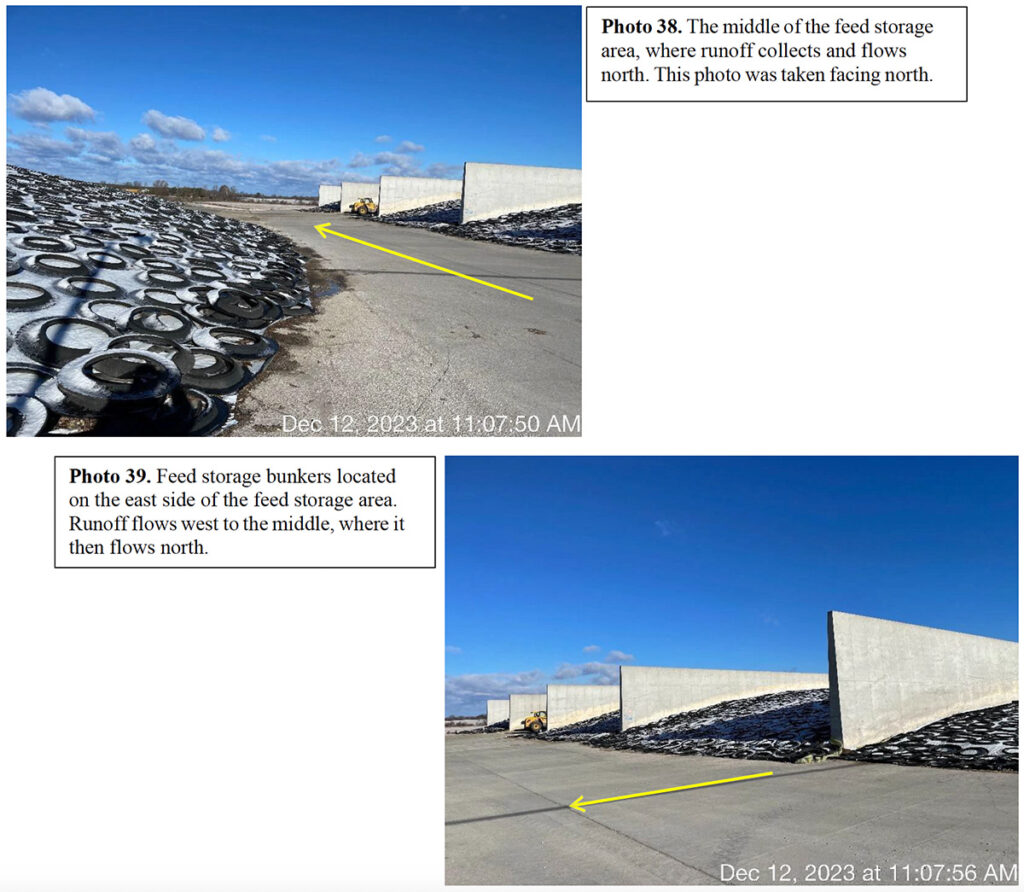
New waste storage facilities are to be constructed using liquid-tight concrete designed for sensitive environmental settings, according to Mueller. Extra groundwater monitoring is being required for existing storage structures, and the feed storage area will have a complete runoff collection system to safeguard water resources.
The farm will comply with every regulation set in place already, Gilbert said, and they are aware of the geology and environmental sensitivity of their land.
“To get a permit like this, we worked with engineers for over two years and have spent hundreds of thousands of dollars to get us up to DNR standards,” she said. “The requirements are set for us, and we are going to meet their goals.”
Enough oversight?
The DNR has no authority over odor at animal agriculture operations, according to Wisconsin law, but sometimes local governments have livestock siting (referring to the location and placement of facilities) ordinances which can regulate odor to some extent, Mueller said.
As far as local regulation of CAFOs, at least five counties have enacted or at least considered placing stricter regulations on them than state law dictates.
“It’s not true that towns and counties cannot do anything about CAFOs,” Mary Dougherty said. Dougherty is from Bayfield, Wis., and works with the Socially Responsible Agriculture Project, a national nonprofit that advocates for protecting public health and the environment from negative impacts of industrial livestock production.
She is also working with the Door County group opposed to Gilberts’ CAFO expansion.
Dougherty said towns can implement operations or “good neighbor” ordinances that require new or expanding factory farms to develop plans to address community concerns about manure, air pollution, road damage, fire risk, farm gas by-products, carcass disposal and more. Owners pay for enforcement of the plans, instead of taxpayers, and post a bond to cover clean-up, if they go out of business.
“The regulations that are put upon CAFOs (by the DNR) is a very narrow part of a spectrum of issues they bring to the environment,” Dougherty said. “CAFOs cast a long shadow in these rural spaces.”
“An operations ordinance covers gaps in the regulatory system,” she said. “And moves the cost of doing business solely onto the CAFO owner’s balance sheet.”
“No farm or any business really operates in a vacuum,” Gilbert said. “We do rely on public roads. So do other businesses. I mean, there’s garbage trucks that go by and other trucks that share the road.”
She explained their manure and crop hauling trucks only operate a few days every month, and the scale of their operation, even after expansion, will not be so large as to necessitate daily manure hauling.
As far as “good neighbor” ordinances, the family understands why some towns have them, according to Gilbert, and they are amenable to the idea.
“As long as they are based on sound science, not hearsay, and are not overlapping strict regulations we already have to follow,” she said. “And they are fairly applied.”
“We are not opposed to being proactive and transparent,” she added. “We welcome conversations with local leaders and neighbors to ensure accountability and trust.”
Trade-offs and unknowns; experts weigh in
Non-permitted farms are subject to less stringent rules than CAFOs, the DNR’s Mueller said, and CAFOs are actually better at protecting the environment because of the regulations they must adhere to.
Dr. Bahareh Hassanpour is an assistant professor of environmental engineering at UW-River Falls and an affiliate for the Dairy Innovation Hub at UW-Madison. She said there is some evidence that there is less environmental impact from CAFOs versus “regular farms,” due to those stricter regulations.
“It’s a tradeoff,” she said. “There’s more manure and more cows, but more regulation.”
Maureen Muldoon said it doesn’t matter whether it is ten farms with 200 cows or one farm with 2,000, the impact of manure on soil and water is the same. Muldoon is a licensed professional geologist and hydrologist in Wisconsin who has studied Door County’s soil and water for decades.
“Everyone is used to seeing small farms with small herds on the landscape, and it is well-documented that those small farms caused problems. They can do whatever they want.” she said. “Big farms? Nobody likes them, but they are held to standards the smaller ones are not.”
Muldoon also said Door County, as part of the Niagara escarpment, is “a bad area for CAFOs,” because of its karst geology and thin soils, echoing the overarching concern of opponents to Gilbert Farms’ expansion. The fields used by the Gilberts for spreading manure are located in Door County.
Well-monitoring programs are not going to capture the variability of water quality in the area because water moves swiftly and changes rapidly in the Niagara escarpment, Muldoon said.
Door County has two well-monitoring programs. The county board contracted with GZA GeoEnvironmental in 2023, and a UW-Oshkosh program has been monitoring wells in the county for almost a decade. Both programs sample private wells for contaminants like E.coli and other bacteria, PFAs, nitrate and phosphorus.
Public concern due to the vulnerability of the area is understandable, the DNR’s Mueller said, but some of the concern is due to limited public education and outreach – something she hopes to rectify as much as possible by being open and transparent about how the DNR oversees agriculture.
Additionally, Wisconsin Administrative Code NR 151 – known as Silurian standards – regulates areas like Door County, with sensitive geology, she said. Those rules apply to CAFOs and non-CAFOs and limit manure applications based on depth of bedrock, require additional setbacks from wells and other groundwater conduits and other safeguards.
There is no solid data or evidence showing the impact of NR 151 regulation, according to both Hassanpour and Muldoon. Muldoon had been performing research on the subject, but funding was changed and she was unable to collect enough data to answer the question of NR 151’s effectiveness at protecting groundwater.
Mueller is focused on education and public transparency as the Gilbert Farm permit moves forward, she said.
“Many residents aren’t familiar with the details of the WPDES permitting process or what measures are in place to protect drinking water,” Mueller wrote in an email. “That knowledge gap often leads to mistrust, even when farms are operating within legal limits. There’s a lot of misinformation that circulates around this topic.”
“While it’s completely fair for communities to ask tough questions, it’s equally important to base those conversations on facts,” she said.
Trust is a foundational issue in this situation, according to Mueller, and she encourages people to contact the DNR or a farm for a tour to see for themselves how CAFOs operate.